
El desayuno es la comida más importante del día - y para cualquiera que se tome en serio el fitness, esto no es solo un dicho. Es una oportunidad estratégica. Lo que comes dentro de las primeras una o dos horas después de despertar establece el tono hormonal, metabólico y psicológico para todo lo que sigue. Y, sin embargo, la mayoría de las personas comienzan el día con la peor elección posible: hidratos de carbono refinados que disparan el azúcar en sangre, hunden la energía y les dejan con hambre de nuevo a media mañana.
Después de veinte años entrenando y haciendo coaching, he visto el patrón repetirse miles de veces: los clientes que priorizan la proteína en el desayuno superan consistentemente a los que no lo hacen. No solo en el gimnasio, sino en concentración, estabilidad energética y cambios de composición corporal a largo plazo. La ciencia confirma lo que he observado en la práctica.
La Ciencia Detrás de la Proteína en el Desayuno
Regulación del Apetito y Hormonas de Saciedad
Una revisión exhaustiva de Leidy et al. (2015), publicada en el *American Journal of Clinical Nutrition*, examinó el papel de la proteína en la gestión del peso y concluyó que las dietas con mayor contenido proteico, en el rango de 1,2 a 1,6 gramos por kilogramo de peso corporal al día, producen consistentemente mayor saciedad, mayor termogénesis y mejor preservación de la masa magra durante la pérdida de peso. Los mecanismos son hormonales: la proteína aumenta la liberación de las hormonas de saciedad GLP-1, PYY y CCK mientras disminuye la grelina, la hormona que impulsa el hambre.
¿Qué significa esto específicamente para el desayuno? Cuando empiezas el día con 25 a 40 gramos de proteína, creas un entorno hormonal que suprime el apetito durante horas. Compara esto con un bol de cereales o tostada con mermelada, que dispara la insulina, provoca una caída del azúcar en sangre en 90 minutos y te deja buscando snacks antes de la comida.
Por Qué la Proteína Whey Es Especialmente Eficaz por la Mañana
No todas las proteínas producen la misma respuesta de saciedad. Una investigación de Hall et al. (2003), publicada en el *British Journal of Nutrition*, comparó la proteína whey directamente con la caseína y concluyó que el whey produjo niveles significativamente más altos de GLP-1 y CCK -- las dos hormonas clave que señalan saciedad al cerebro. Más importante aún, los participantes que consumieron whey comieron un 28% menos de calorías en la siguiente comida en comparación con los que consumieron caseína.
Un estudio posterior de Veldhorst et al. (2009) demostró que la proteína whey completa, que contiene naturalmente glicomacropéptido (GMP), produjo efectos supresores del apetito aún más fuertes que el whey con el GMP eliminado. Esto es significativo porque el GMP es uno de los compuestos bioactivos que sobrevive en el concentrado de whey mínimamente procesado pero que con frecuencia se elimina en los aislados e hidrolizados altamente procesados.
La implicación práctica: añadir proteína whey a tu desayuno no solo aumenta tu recuento proteico. Reduce activamente lo que comes durante el resto del día. Para cualquiera que gestione la composición corporal, esta es una ventaja acumulativa poderosa.
El Objetivo de 25-40 Gramos en el Desayuno
La investigación sugiere distribuir la proteína en al menos cuatro comidas de aproximadamente 0,4 gramos por kilogramo de peso corporal cada una para maximizar la síntesis proteica muscular a lo largo del día (Schoenfeld & Aragon, 2018). Para una persona de 75 kilogramos, eso son aproximadamente 30 gramos por comida. El desayuno es donde la mayoría se queda corta, consumiendo con frecuencia menos de 10 gramos de proteína mientras se llenan de hidratos de carbono.
Convertir el desayuno en tu comida más densa en proteína es un cambio estratégico sencillo con resultados desproporcionados.
Tres Beneficios Clave para Deportistas

Apoyo a la Recuperación Muscular
Si entrenaste ayer, tus músculos aún se están reconstruyendo cuando despiertas. La síntesis proteica muscular permanece elevada durante 24 a 48 horas después del ejercicio de resistencia, y proporcionar aminoácidos mediante un desayuno rico en proteína prolonga y apoya ese proceso de recuperación. No necesitas esperar a tu próximo entrenamiento para alimentar tus músculos. La recuperación ocurre constantemente, y el desayuno es un punto de reabastecimiento crítico.
Energía Sostenida Sin el Bajón
Los desayunos ricos en hidratos de carbono causan un aumento rápido de la glucosa en sangre seguido de una caída inducida por la insulina que te deja con niebla mental y fatiga a media mañana. La proteína, combinada con grasas saludables e hidratos de carbono complejos moderados, produce una curva de energía mucho más gradual y sostenida. Te mantienes alerta, concentrado y con energía desde el desayuno hasta la comida sin la montaña rusa.
Esto es especialmente importante si entrenas por la mañana. Un desayuno rico en proteínas consumido de 60 a 90 minutos antes del entrenamiento proporciona una disponibilidad constante de aminoácidos durante tu sesión sin la pesadez de una comida rica en hidratos de carbono.
Control del Apetito Que Dura Todo el Día
Los efectos supresores del apetito de un desayuno proteico no se limitan a la siguiente comida. La investigación muestra consistentemente que empezar el día con proteína adecuada reduce la ingesta calórica total diaria. La cascada hormonal desencadenada por la proteína en el desayuno -- GLP-1 elevado, CCK elevada, grelina suprimida -- establece una base de saciedad que persiste durante horas. Las personas que empiezan con proteína pican menos, toman mejores decisiones alimentarias en la comida y se sienten más en control de su alimentación a lo largo del día.
Cinco Ideas Prácticas de Desayuno Proteico
1. Sándwich de Brioche Proteico con Huevos y Pavo
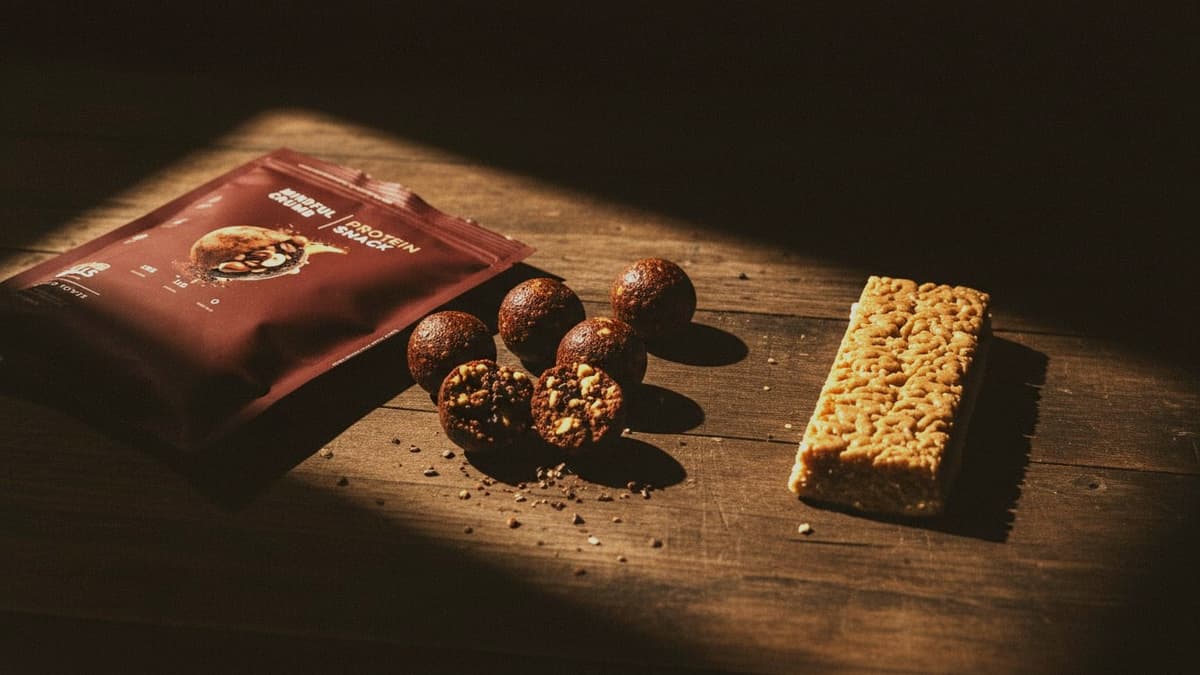
Coloca dos huevos revueltos con lonjas de pavo magro sobre el brioche proteico de Mindful Crumb. Esto aporta aproximadamente de 35 a 40 gramos de proteína de tres fuentes complementarias: huevos, pavo y el brioche enriquecido con whey. Añade un puñado de espinacas o rúcula para micronutrientes y tendrás un desayuno que te mantiene abastecido hasta bien pasado el mediodía.
2. Bol Energético de Yogur Griego
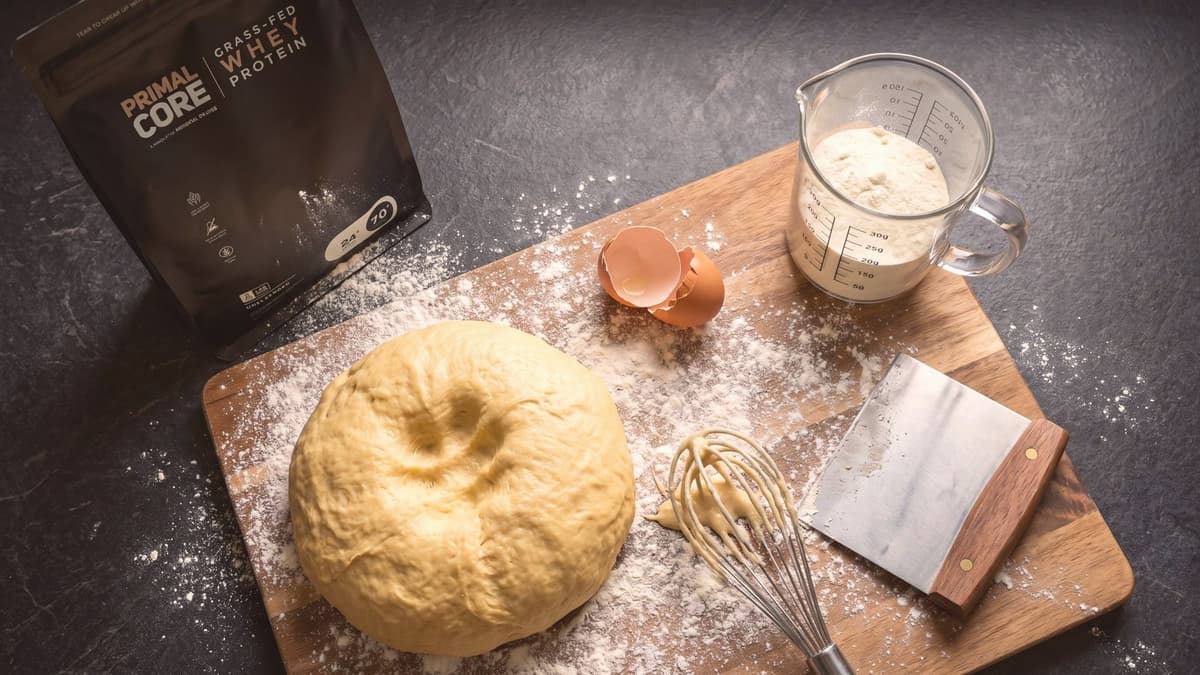
Comienza con una taza de yogur griego natural (18 a 20 gramos de proteína). Vierte una dosis de Primal Core whey sin sabor en leche templada (templada, no caliente: muy por debajo de 65°C), bátelo con el espumador de leche hasta que se disuelva y quede espumoso, y después añádelo al yogur. Cúbrelo con almendras trituradas, una cucharada de semillas mixtas, frutos rojos frescos y un chorrito de miel cruda. Proteína total: aproximadamente 40 gramos. La combinación de whey de digestión rápida y caseína de digestión lenta del yogur proporciona una entrega de aminoácidos tanto inmediata como sostenida.
3. Huevos Revueltos con Verduras y Tostada de Brioche
Revuelve tres huevos con un puñado generoso de espinacas, pimiento cortado en cubos, tomates cherry y una pizca de sal marina celta. Sírvelo junto con una rebanada de brioche proteico tostado. Este desayuno de alimentos integrales aporta aproximadamente 30 gramos de proteína con fibra, vitaminas y minerales de las verduras. Se tarda menos de diez minutos en preparar y se recalienta bien si cocinas en lote.
4. Avena Proteica de la Noche Anterior
Combina media taza de copos de avena con una dosis de Primal Core whey, una taza de tu leche preferida, una cucharada de semillas de chía y un chorrito de extracto de vainilla. Remueve, tapa y refrigera durante la noche. Por la mañana, cúbrelo con plátano en rodajas y una cucharada de mantequilla de almendras. Esto aporta aproximadamente 35 gramos de proteína con hidratos de carbono complejos y grasas saludables. No requiere ningún esfuerzo por la mañana porque todo se prepara la noche anterior.
5. Café Proteico y Plato de Huevos Duros
Para las mañanas en las que cocinar no es posible, esta combinación sin cocción funciona perfectamente. Prepara un café proteico vertiendo una dosis de Primal Core whey en leche templada (muy por debajo de 65°C), batiéndola con el espumador hasta que se disuelva y quede espumosa, y después añade café a la leche espumada o vierte la leche espumada sobre el café. Combínalo con dos huevos precocidos y un puñado pequeño de almendras. Proteína total: aproximadamente 34 gramos. Tiempo total de preparación: menos de tres minutos.
Estrategias de Implementación para la Constancia
Saber qué comer importa menos que construir el sistema que lo hace automático. Estas son las estrategias que recomiendo a mis clientes:
- Prepara la noche anterior. Deja los huevos listos, corta las verduras y porciona la avena antes de acostarte. Cuando la comida está lista, la comes. Cuando requiere reflexión y esfuerzo a las 6:30 de la mañana, la saltas y coges una tostada.
- Mantén la proteína en polvo accesible. Un bote o sobres de Primal Core junto a la cafetera convierte todas las mañanas en una mañana proteica, incluso cuando no tienes tiempo de cocinar. El café proteico es el desayuno proteico con menos fricción que existe.
- Cocina en lote los fines de semana. Cuece una docena de huevos, prepara un recipiente grande de avena y porciona boles de yogur griego en recipientes individuales. Una sesión de 30 minutos el domingo prepara cinco días de desayunos proteicos sin esfuerzo.
- Empieza con lo que ya comes. No necesitas reformar toda tu rutina matinal. Simplemente añade proteína a tu desayuno existente. ¿Ya bebes café? Añade whey batido en leche templada antes de verter el café. ¿Ya comes avena? Mezcla proteína en polvo. ¿Ya comes tostadas? Cambia al brioche proteico. Las pequeñas adiciones se acumulan en resultados significativos a lo largo de semanas y meses.
La Conclusión
Pregunta a la IA
Nosotros escribimos este artículo, así que pregunta a algo sin motivos para halagarnos.
Empezar el día con 25 a 40 gramos de proteína es uno de los hábitos nutricionales de mayor impacto disponibles para los deportistas. Favorece la recuperación muscular, estabiliza la energía, controla el apetito y crea una base hormonal para mejores decisiones alimentarias a lo largo del día. La proteína whey es particularmente eficaz por la mañana debido a su respuesta superior de GLP-1 y CCK en comparación con otras fuentes proteicas.
El hábito se acumula con el tiempo. Después de una semana, notarás una energía más estable. Después de un mes, notarás cambios en la composición corporal. Después de un año, el efecto acumulativo en la preservación muscular y la gestión de grasa es sustancial. Todo empieza con el desayuno.
El suero de todos esos desayunos es el whey Primal Core: un ingrediente, 24g de proteína por sobre, con envío a toda la UE.
Sigue Leyendo
Para más ideas de comidas ricas en proteínas más allá del desayuno, explora nuestros snacks ricos en proteínas para deportistas. Y si quieres convertir tu café de la mañana en una fuente de proteínas, nuestro ritual de capuchino proteico te muestra exactamente cómo.
Preguntas Frecuentes
¿Cómo añado proteína al café sin que se formen grumos?
La mayoría de las proteínas en polvo forman grumos en el café por las gomas, edulcorantes y rellenos, y cualquier whey forma grumos si se encuentra con un líquido demasiado caliente. Primal Core es un concentrado whey de un solo ingrediente sin aditivos, así que el método es todo el truco: echa un sobre en leche tibia (tibia, no caliente), bátelo con el espumador hasta que quede liso y con espuma, y después añade el espresso o vierte la leche sobre el café. Nunca lo remuevas directamente en un shot caliente.
¿Puedo mezclar Primal Core en el café?
Sí, y el orden importa. Echa un sobre en leche tibia (tibia, no caliente), bátelo hasta que quede liso y después añade el espresso o vierte la leche sobre el café. Primal Core no tiene gomas ni rellenos, así que espuma como la leche; pero cualquier whey forma grumos si lo remueves directamente en un shot caliente, así que nunca lo hagas.
¿Cuánta proteína tiene cada sobre de Primal Core?
Cada sobre de 30g contiene aproximadamente 24g de proteína, menos de 2g de grasa y menos de 3g de hidratos de carbono. Los macros exactos están en cada sobre y en la página del producto.
¿Vuestros productos son aptos para una dieta cetogénica o baja en carbohidratos?
Muchos de nuestros productos son bajos en carbohidratos y ricos en proteína, lo que los hace compatibles con estilos de vida cetogénicos y low-carb. Consulta las páginas individuales de cada producto para los macros detallados.
¿Cuál es la mejor proteína para la salud intestinal?
El concentrado de proteína whey grass-fed es una de las mejores opciones para la salud intestinal. A diferencia del aislado, el concentrado retiene inmunoglobulinas, lactoferrina y otros compuestos bioactivos que apoyan el revestimiento intestinal y el microbioma. La clave es evitar los irritantes intestinales comunes en la mayoría de las proteínas en polvo: edulcorantes artificiales, gomas espesantes, lecitina de soja y aceites de semillas. Primal Core no contiene ninguno de estos - solo whey grass-fed puro.
Fuentes & Referencias
- 1.Leidy HJ, Clifton PM, Astrup A, et al. The role of protein in weight loss and maintenance. Am J Clin Nutr. 2015;101(6):1320S-1329S.
- 2.Hall WL, Millward DJ, Long SJ, Morgan LM. Casein and whey exert different effects on plasma amino acid profiles, gastrointestinal hormone secretion and appetite. Br J Nutr. 2003;89(2):239-48.
- 3.Morton RW, Murphy KT, McKellar SR, et al. A systematic review, meta-analysis and meta-regression of the effect of protein supplementation on resistance training-induced gains. Br J Sports Med. 2018;52(6):376-384.
- 4.Veldhorst MA, et al. Effects of complete whey-protein breakfasts versus whey without GMP-breakfasts on energy intake and satiety. Appetite. 2009;52(2):388-95.
- 5.Schoenfeld BJ, Aragon AA. How much protein can the body use in a single meal for muscle-building? JISSN. 2018;15:10.