
Viajar a menudo pone en pausa tu rutina de salud. Entre los snacks del aeropuerto, los itinerarios apretados y las maratones de turismo, es fácil dejar que la nutrición se descuide. Eso normalmente significa gravitar hacia comidas de conveniencia ricas en carbohidratos que disparan el azúcar en sangre, te dejan sin energía y rompen la consistencia que tanto te ha costado construir.
Tras 20 años trabajando con clientes -- muchos de los cuales viajan frecuentemente por trabajo y ocio -- he visto este patrón repetirse cientos de veces. Alguien construye hábitos sólidos en casa, se va de viaje y vuelve sintiéndose como si empezara de cero. Pero tu ritual de salud no tiene que cambiar solo porque estás en movimiento.
Y hay un nutriente que puede cambiar la historia: la proteína. Puede sorprenderte, pero la proteína no es solo sobre construcción muscular. Es el macronutriente más eficaz para controlar el hambre, estabilizar la energía y preservar la masa magra -- todo lo que se vuelve más difícil de gestionar cuando tu rutina se ve alterada.
Por Qué la Proteína Debería Ser un Básico de Viaje
Cuando estás de viaje, la conveniencia normalmente gana. Desafortunadamente, eso a menudo significa opciones ricas en carbohidratos o azucaradas que disparan la glucosa y la insulina rápidamente. Solo hacen falta un par de horas para que los bajones de energía aparezcan, llevando a fatiga, niebla mental y antojos incesantes.
La proteína cambia la ecuación. La investigación publicada en el *British Journal of Nutrition* descubrió que la proteína whey desencadena niveles significativamente más altos de GLP-1 y CCK -- las hormonas de saciedad que le dicen a tu cerebro que estás lleno -- conduciendo a un 28% menos de ingesta alimentaria en la comida siguiente comparado con la caseína (Hall et al., 2003).
Una revisión exhaustiva en el *American Journal of Clinical Nutrition* confirmó que las dietas altas en proteína (1,2 a 1,6 g/kg/día) aumentan consistentemente las hormonas de saciedad como GLP-1 y PYY mientras suprimen la grelina, la hormona del hambre, creando un entorno hormonal que reduce naturalmente el apetito (Leidy et al., 2015).
En términos prácticos: un batido de 30 gramos de proteína antes de ir al aeropuerto puede ser la diferencia entre pasar de largo las cadenas de comida rápida y caer en un bocadillo grasiento porque estás hambriento.
¿Cuánta Proteína Necesitas Realmente?

La mayoría de la gente conoce la CDR de 0,8 gramos por kilogramo de peso corporal al día. Pero este es el mínimo para prevenir la deficiencia -- no la cantidad necesaria para una salud, composición corporal o rendimiento óptimos.
La Sociedad Internacional de Nutrición Deportiva (ISSN) publicó un posicionamiento exhaustivo recomendando que los adultos activos consuman de 1,4 a 2,0 gramos de proteína por kilogramo de peso corporal al día. Durante la restricción calórica -- que a menudo ocurre involuntariamente durante los viajes -- pueden necesitarse ingestas aún más altas (hasta 2,3-3,1 g/kg de masa libre de grasa) para preservar la masa magra (Jager et al., 2017).
El mayor meta-análisis sobre proteína y ganancia muscular, analizando 49 estudios con 1.863 participantes, descubrió que los beneficios de construcción muscular de la suplementación proteica se estabilizan en aproximadamente 1,6 g/kg/día (Morton et al., 2018).
Para objetivos diarios prácticos:
- Hombre de 70 kg: 98-112g proteína/día (a 1,4-1,6 g/kg)
- Mujer de 58 kg: 81-93g proteína/día (a 1,4-1,6 g/kg)
La investigación original de respuesta a la dosis descubrió que 20 gramos de proteína por comida estimulan al máximo la síntesis proteica muscular en adultos jóvenes y activos (Moore et al., 2009). Esto significa que distribuir la ingesta en las comidas importa: tres o cuatro raciones de 20-30g son más eficaces que una única comida masiva de proteína.
Cuando estás viajando y las comidas son impredecibles, tener una forma fiable de alcanzar estos objetivos se vuelve esencial.
Por Qué la Proteína Limpia Importa Aún Más de Viaje
No toda la proteína es igual. Muchos polvos de proteína populares contienen edulcorantes artificiales, rellenos, gomas y, en algunos casos, niveles preocupantes de metales pesados. Un informe del Clean Label Project analizó 160 polvos de proteína más vendidos y encontró niveles medibles de contaminantes incluyendo plomo y cadmio en muchos productos, con las proteínas vegetales generalmente puntuando peor que las opciones a base de whey (Clean Label Project, 2018).
Cuando tu digestión ya se está ajustando a comidas diferentes, agua y zonas horarias durante el viaje, lo último que necesitas es un polvo de proteína cargado de ingredientes artificiales que provocan hinchazón y malestar. El whey de alta calidad de vacas de pasto, sin aditivos artificiales, es mucho más suave con el intestino -- especialmente cuando tu sistema ya está bajo el estrés del viaje.
Busca:
- Whey de ingrediente único: Solo proteína, nada más
- Origen de pasto: Mejor perfil de ácidos grasos y normas más estrictas de bienestar animal
- Tests de terceros: Verificación independiente de lo que realmente contiene el producto
- Sin edulcorantes artificiales: Se ha demostrado en investigaciones que la sucralosa y el acesulfamo-K alteran las bacterias intestinales
¿Cuál Es el Mejor Formato de Proteína de Viaje?
Cualquiera que haya volado en low cost conoce la lucha -- apenas hay sitio en el equipaje de mano para ropa, mucho menos para un bote voluminoso de proteína en polvo. Es aquí donde los sobres individuales se vuelven esenciales.
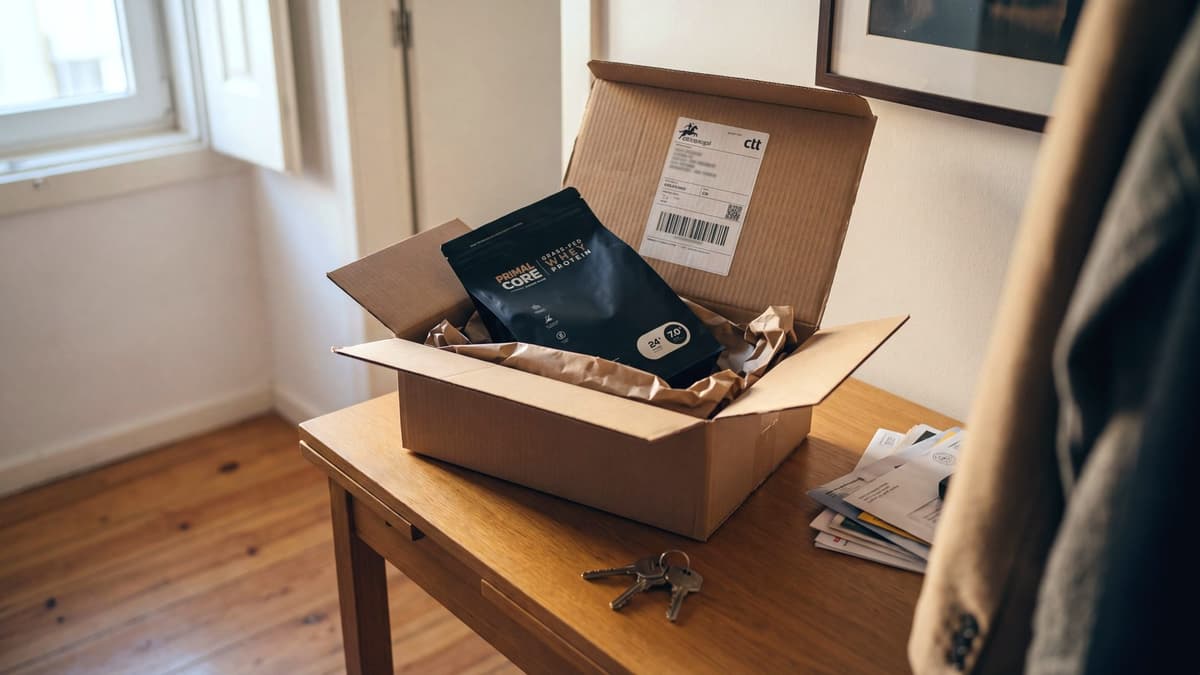
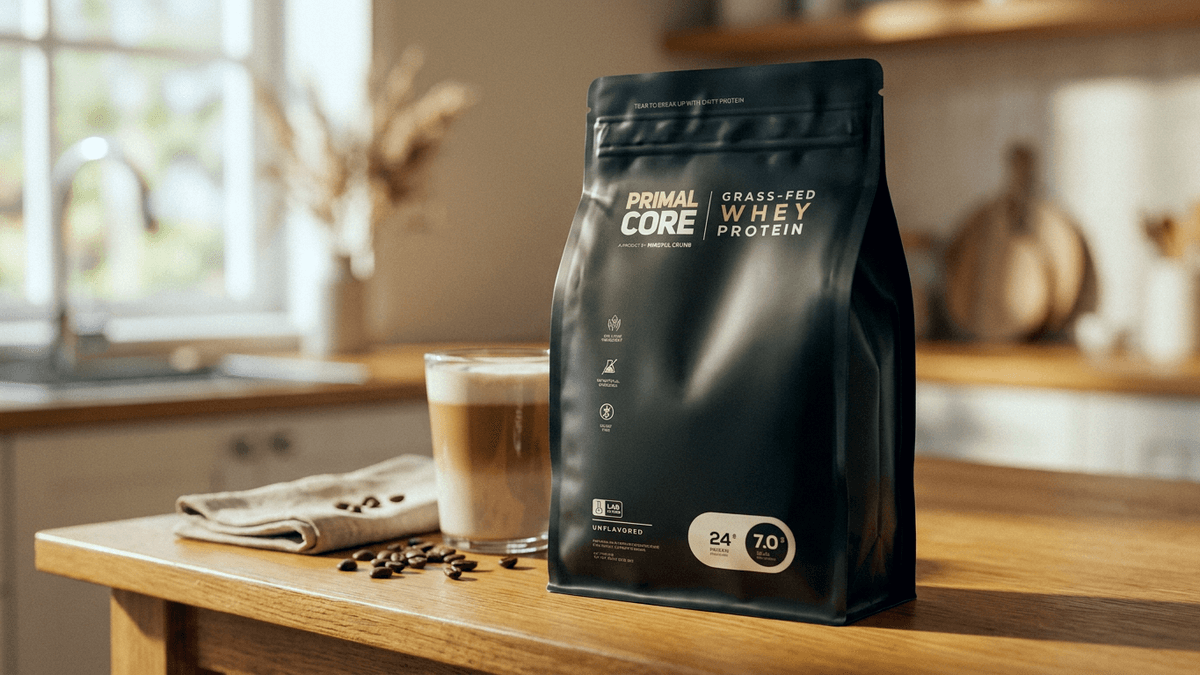
Productos como el Primal Core whey protein de Mindful Crumb ofrecen 30 gramos de proteína limpia, de pasto, en paquetes perfectamente dosificados. He aquí por qué los sobres son el formato de viaje superior:
- Aptos para seguridad aeroportuaria: Sin preocupaciones por envases abiertos o polvos sospechosos
- Porciones exactas: Sin cucharas medidoras, sin desorden, sin adivinanzas
- Ligeros: Ocupan menos espacio que un par de calcetines en tu maleta
- Frescura: Cada sobre está sellado individualmente, así la proteína se mantiene fresca en vez de exponerse al aire repetidamente como en un bote
- Versatilidad: Se mezcla en leche tibia espumada y luego se añade el café, o en batidos -- lo que haya disponible
Para mujeres, esto se traduce en 1-2 sobres al día (30-60g) junto con comidas que ya incluyan algo de proteína. Para hombres, 2-3 sobres diarios (60-90g) pueden cubrir eficazmente la brecha si las comidas son más ligeras en proteína durante el viaje.
Una Estrategia Práctica de Proteína para Viaje
Así es como aconsejo a mis clientes que usen los sobres de proteína mientras viajan:
Pregunta a la IA
Nosotros escribimos este artículo, así que pregunta a algo sin motivos para halagarnos.
Día de Viaje
- Antes de salir: Batido de proteína o desayuno rico en proteína en casa
- En el aeropuerto: Un sobre mezclado en leche tibia espumada con el café añadido después -- te mantiene satisfecho durante el vuelo
- Al llegar: Otro sobre si la cena va a retrasarse o ser impredecible
Durante el Viaje
- Mañana: Sobre en leche tibia espumada con el café añadido después, o con el desayuno -- asegura que empiezas el día con al menos 30g de proteína
- Días activos (turismo, senderismo, surf): Lleva un sobre para el mediodía cuando las opciones de almuerzo son inciertas
- Noche: Si la comida del restaurante es rica en carbohidratos, un sobre antes o después llena el hueco proteico
El objetivo no es la perfección. Es tener un recurso fiable para que las disrupciones del viaje no descarrilen completamente tu nutrición.
Elige Primal Core en Tus Viajes
Tu ritual de salud no tiene que detenerse solo porque estás fuera de casa. Al convertir la proteína en una parte innegociable de tu kit de viaje y al elegir opciones limpias y convenientes como los sobres de proteína de viaje Primal Core, puedes alimentar tu cuerpo, proteger tu energía y mantenerte en el buen camino sin importar adónde te lleve la vida.
La investigación es clara: una ingesta adecuada de proteína apoya desde la preservación muscular hasta el control del apetito y la energía sostenida. Cuando tu rutina se ve alterada, la proteína es la palanca más simple que puedes activar para mantenerte en el camino correcto.
Para una comparación más profunda de los formatos de proteína -- incluyendo frescura, control de porciones y coste -- lee nuestra guía completa sobre sobres de proteína vs botes.
Los sobres con los que viajo son el whey Primal Core: un ingrediente, 24g de proteína cada uno, con envío a toda la UE.
Preguntas Frecuentes
¿Puedo viajar con vuestros sobres de proteína?
¡Por supuesto! Nuestros sobres individuales de 30g están diseñados para viajar. Son compatibles con la seguridad de la TSA y de la UE, caben fácilmente en el equipaje de mano y eliminan la necesidad de llevar botes voluminosos. Cada sobre está sellado con nitrógeno para frescura, manteniendo la calidad total vayas donde vayas.
¿Qué es un sobre de proteína Primal Core?
Un sobre individual de 30g con un único ingrediente: concentrado de proteína whey grass-fed. Cada sobre aporta 24g de proteína y está sellado con nitrógeno para máxima frescura. Perfecto para viajes, bolsas de gimnasio o uso diario sin necesidad de un bote voluminoso.
¿Son mejores los sobres de proteína que los botes?
Los sobres ofrecen varias ventajas: control preciso de las porciones, sin oxidación (cada sobre está sellado), compatibles con equipaje de mano TSA y UE para viajes, y sin riesgo de contaminación por cucharas compartidas. La proteína en el interior es idéntica a la del bote - solo más cómoda.
¿Puedo llevar sobres de proteína en el avión?
Sí. Nuestros sobres de 30g cumplen con las normas de seguridad TSA y UE para equipaje de mano. Están sellados, claramente etiquetados y eliminan la necesidad de transportar proteína a granel por el control de seguridad.
¿Cuánta proteína tiene cada sobre de Primal Core?
Cada sobre de 30g contiene aproximadamente 24g de proteína, menos de 2g de grasa y menos de 3g de hidratos de carbono. Los macros exactos están en cada sobre y en la página del producto.
Fuentes & Referencias
- 1.Morton et al. (2018) - Protein supplementation and resistance training gains in muscle mass and strength: meta-analysis. British Journal of Sports Medicine.
- 2.Jager et al. (2017) - ISSN Position Stand: protein and exercise. Journal of the International Society of Sports Nutrition.
- 3.Moore et al. (2009) - Ingested protein dose response of muscle and albumin protein synthesis. American Journal of Clinical Nutrition.
- 4.The role of protein in weight loss and maintenance - American Journal of Clinical Nutrition (2015)
- 5.Casein and whey exert different effects on plasma amino acid profiles and gastrointestinal hormone secretion - British Journal of Nutrition (2003)
- 6.Clean Label Project (2018) - Protein Powder Study. cleanlabelproject.org.