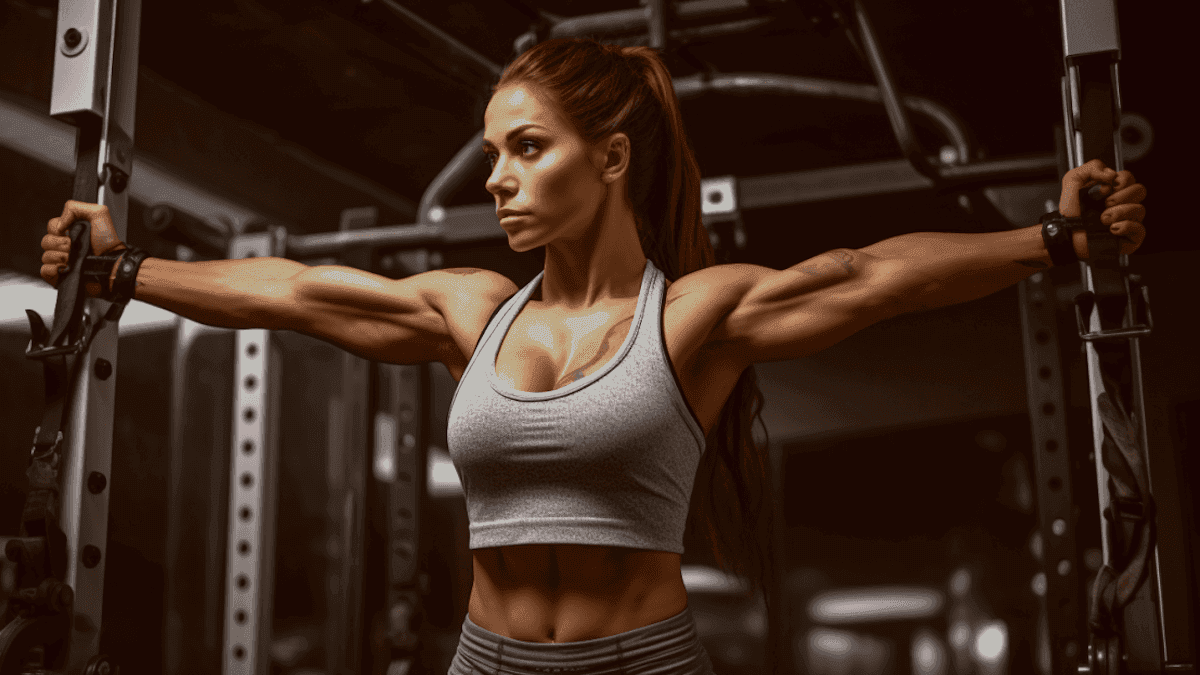
Envejecer con gracia no es solo cuestión de apariencia. Se trata de lo fuerte y capaz que te sientes cada día -- llevando las bolsas de la compra, subiendo escaleras, jugando con tus hijos o nietos, y viviendo sin miedo a las lesiones.
Para muchas mujeres, los años alrededor de la menopausia traen desafíos inesperados. Uno de los mayores es la pérdida silenciosa y constante de músculo que empieza a acelerarse a partir de los 40. No siempre se nota enseguida, pero con el tiempo va erosionando tu fuerza, tu energía y tu independencia.
Tras trabajar con cientos de clientes durante dos décadas, puedo decirte que el cambio individual más impactante que las mujeres de más de 40 pueden hacer es aumentar su ingesta de proteína. Esto no va de culturismo. Va de mantener el cuerpo que necesitas para vivir la vida que quieres. Y la ciencia lo respalda con contundencia.
¿Por Qué la Pérdida Muscular Se Acelera Después de los 40?
La menopausia es un punto de inflexión para la salud de las mujeres -- no solo hormonalmente, sino físicamente. Uno de los cambios más significativos es la aceleración de la pérdida muscular relacionada con la edad, clínicamente conocida como sarcopenia.
Esto ocurre por dos razones interconectadas:
Cambios hormonales. El estrógeno desempeña un papel directo en la regulación de la reparación muscular, la utilización de proteínas y la inflamación. A medida que los niveles de estrógeno disminuyen durante la perimenopausia y la menopausia, el cuerpo descompone el músculo más fácilmente y tarda más en recuperarse del ejercicio y la actividad diaria.
Resistencia anabólica. Este es un concepto que la mayoría de las mujeres nunca han oído, pero es central para entender por qué las necesidades proteicas cambian con la edad. La investigación publicada en *Nutrients* explica que el envejecimiento crea "resistencia anabólica" -- una respuesta atenuada de síntesis proteica muscular a la ingesta de proteína. En términos prácticos, esto significa que tus músculos se vuelven menos receptivos a la proteína que comes. Mientras que una persona de 25 años puede estimular al máximo la construcción muscular con 20 gramos de proteína, un adulto mayor necesita significativamente más para lograr la misma respuesta (Stokes et al., 2018).
Un estudio de 2024 confirmó esto directamente en mujeres posmenopáusicas: 15 gramos de proteína whey, suficientes para desencadenar la síntesis proteica muscular en mujeres más jóvenes, no produjeron la misma respuesta en las participantes posmenopáusicas (Smith et al., 2024). El mensaje es claro -- las cantidades de proteína que funcionaban en tus 20 y 30 ya no son suficientes.
Las mujeres de más de 50 pueden perder masa muscular a un ritmo más rápido que los hombres de la misma edad. Este declive no solo reduce la fuerza, sino que también afecta a la energía, el equilibrio y la densidad ósea, aumentando el riesgo de caídas, fracturas y fragilidad.
¿Cuánta Proteína Necesitan Realmente las Mujeres de Más de 40?

La mayoría de la gente conoce la Cantidad Diaria Recomendada (CDR) de proteína, fijada en 0,8 gramos por kilogramo de peso corporal al día. Pero este número se estableció para prevenir la deficiencia en la población general -- nunca fue diseñado para la salud óptima en adultos que envejecen.
El grupo internacional de estudio PROT-AGE publicó recomendaciones basadas en la evidencia en el *Journal of the American Medical Directors Association* que desafían esta directriz obsoleta. Su recomendación: los adultos mayores sanos necesitan al menos de 1,0 a 1,2 gramos de proteína por kilogramo de peso corporal al día -- un 25% a 50% más que la CDR estándar. Aquellos con enfermedad aguda o crónica necesitan 1,2 a 1,5 g/kg/día. Las recomendaciones por comida son 25-30 gramos de proteína de alta calidad conteniendo 2,5-2,8 gramos de leucina (Bauer et al., 2013).
Para una mujer de 65 kg, esto se traduce en:
- CDR (mínimo): 52g proteína/día
- Recomendación PROT-AGE: 65-78g proteína/día
- Objetivo por comida: 25-30g, tres a cuatro veces al día
La investigación sobre respuesta a la dosis en adultos mayores refuerza esto. Un estudio en el *American Journal of Physiology* descubrió que la ingesta de 35 gramos de proteína whey resultó en mayor absorción de aminoácidos y estimulación de la síntesis proteica muscular comparado con 10 o 20 gramos en adultos de más de 70, sugiriendo que los adultos mayores se benefician de dosis más altas de proteína por ración de lo que se recomienda habitualmente (Pennings et al., 2012).
Sin embargo, la realidad es que muchas mujeres ni siquiera alcanzan la CDR básica. Un estudio de mujeres posmenopáusicas de 60 a 90 años descubrió que una de cada cuatro mujeres consumía proteína insuficiente (Gregorio et al., 2014). Se trata de un déficit significativo con consecuencias reales.
¿Qué Ocurre Cuando las Mujeres Posmenopáusicas Comen Más Proteína?
El mismo estudio de Gregorio y colegas, publicado en el *Journal of Nutrition, Health & Aging*, descubrió que las mujeres posmenopáusicas que consumían más proteína (una media de 1,1 g/kg/día) tenían significativamente menos grasa corporal, mejor composición corporal y rendimiento físico superior en comparación con las que comían por debajo de la CDR (Gregorio et al., 2014).
Los beneficios de aumentar la ingesta proteica por encima del mínimo son sustanciales:
- Músculos más fuertes: La masa magra preservada apoya la actividad diaria y protege huesos y articulaciones.
- Mejor composición corporal: Una ingesta proteica más alta está consistentemente asociada con porcentajes de grasa corporal más bajos y ratios magro-graso más favorables.
- Mejor rendimiento funcional: Velocidad de marcha, fuerza de agarre, equilibrio e independencia general están todos positivamente asociados con una ingesta adecuada de proteína.
- Apoyo a la densidad ósea: La proteína contribuye a la formación de la matriz ósea, reduciendo el riesgo de osteoporosis -- una preocupación importante para las mujeres posmenopáusicas.
- Recuperación mejorada: Ya sea del ejercicio, enfermedad o lesión, una proteína adecuada acelera los procesos de reparación del cuerpo.
¿Se Puede Revertir la Sarcopenia?
Sí. La buena noticia es que la pérdida muscular no es del todo inevitable. Aunque la sarcopenia es una parte natural del envejecimiento, puede ralentizarse significativamente y, en muchos casos, revertirse parcialmente. Los investigadores destacan consistentemente dos herramientas clave:
Ingesta de proteína por encima de la CDR. El mayor meta-análisis sobre proteína y ganancia muscular, publicado en el *British Journal of Sports Medicine*, descubrió que la suplementación proteica aumenta significativamente la masa libre de grasa y la fuerza durante el entrenamiento de resistencia. Los beneficios se estabilizaron en aproximadamente 1,6 g/kg/día (Morton et al., 2018). Para mujeres de más de 40 que lidian con la resistencia anabólica, apuntar al límite superior de las recomendaciones PROT-AGE (1,2 g/kg/día) es un buen punto de partida.
Entrenamiento de resistencia. Esto amplifica el efecto de la proteína al estimular directamente las fibras musculares para que crezcan más fuertes y se adapten. Incluso rutinas sencillas con pesas ligeras, bandas de resistencia o ejercicios con el peso corporal pueden marcar una diferencia notable. La combinación de proteína adecuada y entrenamiento de resistencia es mucho más eficaz que cualquiera de las dos intervenciones por separado.
Consejos Prácticos: Cómo Alcanzar Tus Objetivos Proteicos
Alcanzar objetivos proteicos más altos no requiere una revisión total de la dieta. Pequeños cambios constantes se acumulan:
Desayuno (Objetivo: 25-30g proteína)
- Tres huevos con verduras sobre pan integral (21g + proteína del pan)
- Yogur griego (170g) con frutos secos y semillas (20-25g)
- Batido proteico con whey, frutos rojos y leche de avena (30g)
Comida y Cena (Objetivo: 25-30g cada una)
- Porción del tamaño de la palma de pescado, pollo o legumbres en cada comida
- Añade alubias o lentejas a sopas y ensaladas para 8-15g extra
Snacks y Suplementos
- Un batido de whey limpio entre comidas es una forma sencilla y fiable de cerrar la brecha -- especialmente en días ajetreados cuando preparar comida no es una opción.
- Busca un whey de ingrediente único, de pasto, sin edulcorantes artificiales ni rellenos, que aporte al menos 25g de proteína por ración.
La clave es distribuir la proteína a lo largo del día en lugar de concentrarla toda en la cena. Tus músculos solo pueden procesar una cierta cantidad de una vez, y repartir la ingesta en tres o cuatro comidas asegura un estímulo anabólico más constante.
La Conclusión
Pregunta a la IA
Nosotros escribimos este artículo, así que pregunta a algo sin motivos para halagarnos.
Envejecer no tiene por qué significar perder fuerza, independencia o vitalidad. La ciencia es inequívoca: las mujeres de más de 40 necesitan más proteína de lo que sugiere la CDR estándar, y las consecuencias de quedarse cortas son reales -- desde pérdida muscular acelerada hasta mayor riesgo de fracturas.
Centrándose en 1,0 a 1,2 gramos de proteína por kilogramo al día, distribuyendo 25-30 gramos en cada comida, y combinando la nutrición con entrenamiento de resistencia regular, las mujeres pueden reducir significativamente el impacto de la sarcopenia y seguir viviendo con fuerza y confianza.
Si estás tomando medicación GLP-1 como Ozempic o Wegovy, la conversación sobre proteína se vuelve aún más urgente. Nuestra guía de snacks proteicos para GLP-1 cubre exactamente cómo proteger la masa muscular mientras tomas estas medicaciones.
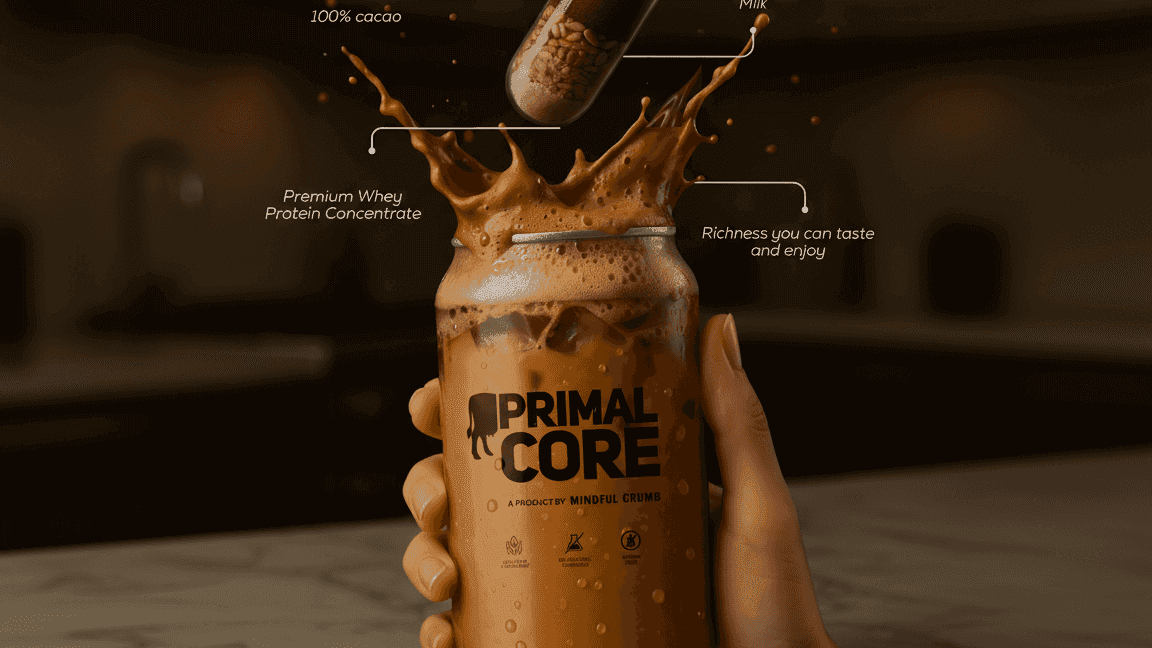
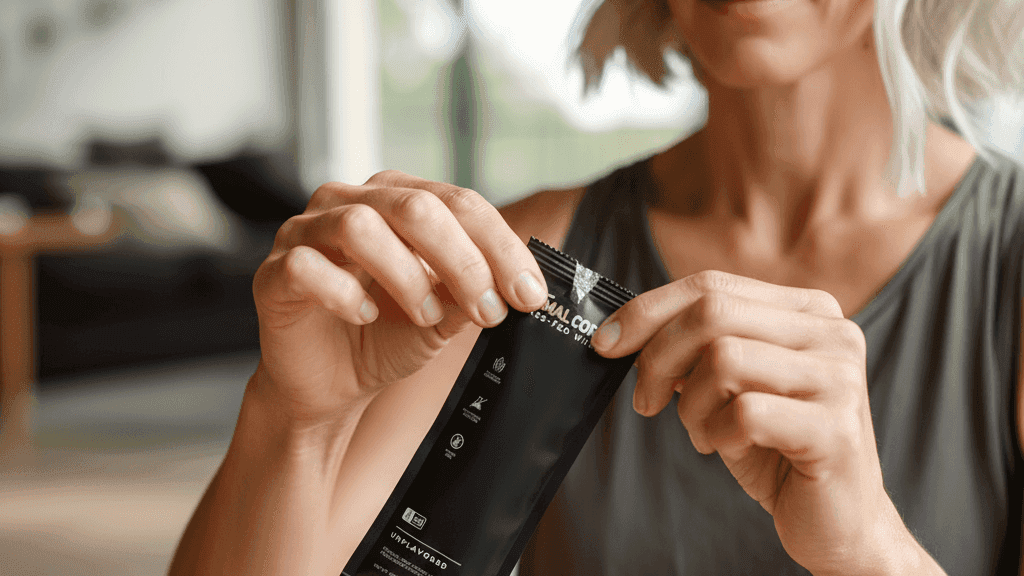
El suero que hago para esto es el whey Primal Core: un ingrediente, lactasa añadida, 24g de proteína por sobre, con envío a toda la UE.
Preguntas Frecuentes
¿Cuál es la mejor proteína para la salud intestinal?
El concentrado de proteína whey grass-fed es una de las mejores opciones para la salud intestinal. A diferencia del aislado, el concentrado retiene inmunoglobulinas, lactoferrina y otros compuestos bioactivos que apoyan el revestimiento intestinal y el microbioma. La clave es evitar los irritantes intestinales comunes en la mayoría de las proteínas en polvo: edulcorantes artificiales, gomas espesantes, lecitina de soja y aceites de semillas. Primal Core no contiene ninguno de estos - solo whey grass-fed puro.
¿Por qué la proteína whey causa hinchazón y en qué se diferencia la vuestra?
La mayoría de las proteínas whey causan hinchazón debido a ingredientes añadidos: edulcorantes artificiales (sucralosa, acesulfamo-K), gomas espesantes (xantana, guar), lecitina de soja y exceso de lactosa por procesamiento de baja calidad. Primal Core evita todo esto. Es un concentrado de ingrediente único, suavemente procesado, con niveles de lactosa naturalmente más bajos, razón por la cual los clientes informan consistentemente de cero hinchazón.
¿Concentrado o aislado de whey: cuál es mejor?
El concentrado es superior para la salud general. El aislado de whey pasa por un procesamiento agresivo que elimina inmunoglobulinas, lactoferrina y otros compuestos bioactivos - exactamente lo que hace del whey un alimento funcional más allá del simple contenido proteico. El concentrado retiene el espectro completo de proteínas beneficiosas, factores de crecimiento y compuestos de apoyo inmunitario. El aislado tiene ligeramente más proteína por gramo (90% vs 80%), pero pierdes los beneficios para la salud intestinal, inmunitaria y antiinflamatorios.
¿Qué contiene la proteína whey Primal Core?
Exactamente un ingrediente: concentrado de proteína whey de vacas alimentadas con pasto. Sin edulcorantes, sin aromas, sin emulsionantes, sin gomas, sin rellenos. Es la proteína whey más limpia que puedes comprar.
¿Utilizáis edulcorantes artificiales?
No. Nunca utilizamos edulcorantes, colorantes ni aromatizantes artificiales. Cualquier dulzor en nuestros productos proviene de fuentes naturales.
¿Cuál es la proteína en polvo con menos ingredientes?
Primal Core tiene exactamente un ingrediente: concentrado de proteína whey grass-fed. Sin edulcorantes, sin aromatizantes, sin emulsionantes, sin gomas, sin rellenos. La mayoría de las proteínas en polvo tienen de 10 a 25 ingredientes. Creemos que la proteína más limpia es la que no tiene nada que ocultar.
Fuentes & Referencias
- 1.Bauer et al. (2013) - Evidence-based recommendations for optimal dietary protein intake in older people: PROT-AGE position paper. JAMDA.
- 2.Dietary protein and the promotion of muscle hypertrophy with resistance exercise - Nutrients (2018)
- 3.Gregorio et al. (2014) - Adequate dietary protein is associated with better physical performance among post-menopausal women 60-90 years. J Nutr Health Aging.
- 4.Pennings et al. (2012) - Amino acid absorption and subsequent muscle protein accretion following graded intakes of whey protein in elderly men. Am J Physiol.
- 5.Smith et al. (2024) - Postabsorptive and postprandial myofibrillar protein synthesis rates in postmenopausal women. Am J Physiol.
- 6.Morton et al. (2018) - Protein supplementation and resistance training gains: meta-analysis. British Journal of Sports Medicine.