
The most popular protein snack flavors among gym-goers right now are peanut butter, chocolate, and vanilla - because they taste good without feeling like punishment. But here's what matters more than flavor: what's actually in the snack. Most "high-protein" options are loaded with seed oils, artificial sweeteners, and fillers that sit in your stomach like cement. Real protein snacks should fuel your workouts, not wreck your gut.
One thing that makes shopping easier here: EU rules require every sweetener to be named on the label, not buried under "natural flavors." If a gym snack lists sucralose or acesulfame-K, you'll see it printed, which makes comparing options at the vending machine a lot less guesswork.
After more than twenty years of training clients and building my own nutrition protocols, I have seen a consistent pattern: the people who make the most progress are not the ones with the most intense workouts. They are the ones who dial in what happens between meals. Snacking is where most nutrition plans succeed or fail, and protein-rich options are the difference maker.
Why High-Protein Snacks Matter for Gym-Goers
Muscle Recovery and Growth
After resistance training, your muscles enter a period of elevated muscle protein synthesis (MPS) that can last 24 to 48 hours. Providing your body with high-quality protein during this window supports the repair and growth of muscle fibers damaged during exercise. Research by Moore et al. (2009), published in the *American Journal of Clinical Nutrition*, found that approximately 20 grams of high-quality protein per serving is the threshold for maximizing MPS in young, active adults. This means a well-timed protein snack delivering 15 to 25 grams of protein can meaningfully contribute to your recovery between main meals.
The Anabolic Window: What the Science Actually Says
For years, gym culture pushed the idea that you had exactly 30 minutes after a workout to consume protein or lose your gains. This created anxiety around timing and led people to chug shakes in the locker room before even stretching. The science tells a different story.
A landmark meta-analysis by Schoenfeld, Aragon, and Krieger (2013), published in the *Journal of the International Society of Sports Nutrition*, analyzed the combined data from multiple studies and found no significant effect of protein timing on muscle strength or hypertrophy when total daily protein intake was adequately controlled. In their words, the results "refute the commonly held belief that the timing of protein intake in and around a training session is critical to muscular adaptations."
A companion review by Schoenfeld and Aragon (2013) further clarified that the so-called "anabolic window" is not 30 minutes but likely extends 4 to 6 hours on either side of your training session. The practical takeaway is straightforward: total daily protein intake is far more important than rushing to eat within minutes of your last set. A protein-rich snack an hour or two after training is just as effective as one consumed immediately.
This does not mean timing is irrelevant. If you train fasted in the morning, getting protein relatively soon afterward makes sense. But for most people who eat regular meals, the emphasis should be on hitting daily targets consistently rather than stressing over exact timing.
Satiety and Weight Management
Protein is the most satiating macronutrient. Higher-protein diets, in the range of 1.2 to 1.6 grams per kilogram of body weight daily, consistently increase satiety hormones like GLP-1 and PYY while suppressing ghrelin, the hunger hormone (Leidy et al., 2015). This hormonal environment means protein-rich snacks keep you fuller for longer, reducing the likelihood of reaching for processed, calorie-dense alternatives that derail your goals.
For those pursuing body recomposition, where the goal is building muscle while managing body fat, protein snacking is especially valuable. Each snack becomes an opportunity to move toward your daily protein target without adding excessive calories.
Convenience for Demanding Schedules
Between work, training, commuting, and life, sitting down for a full meal every three hours is unrealistic. High-protein snacks bridge the gap. They are portable, require minimal preparation, and ensure your muscles always have amino acids available for repair and growth.
Top High-Protein Snack Ideas

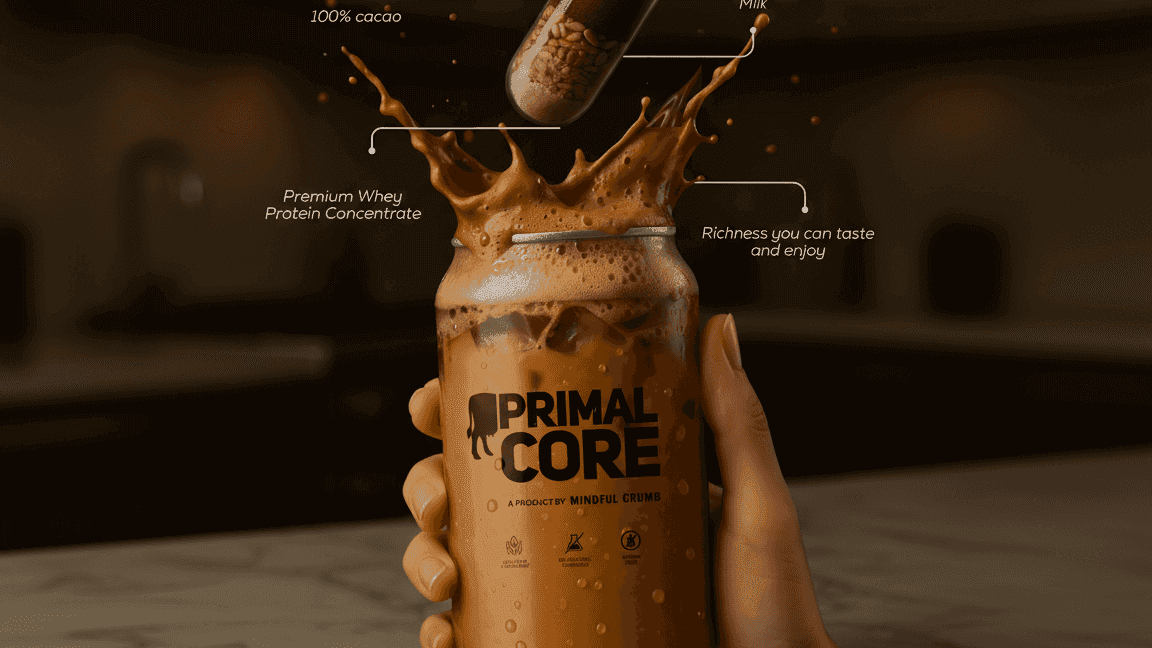
Mindful Crumb Primal Core Protein Shake
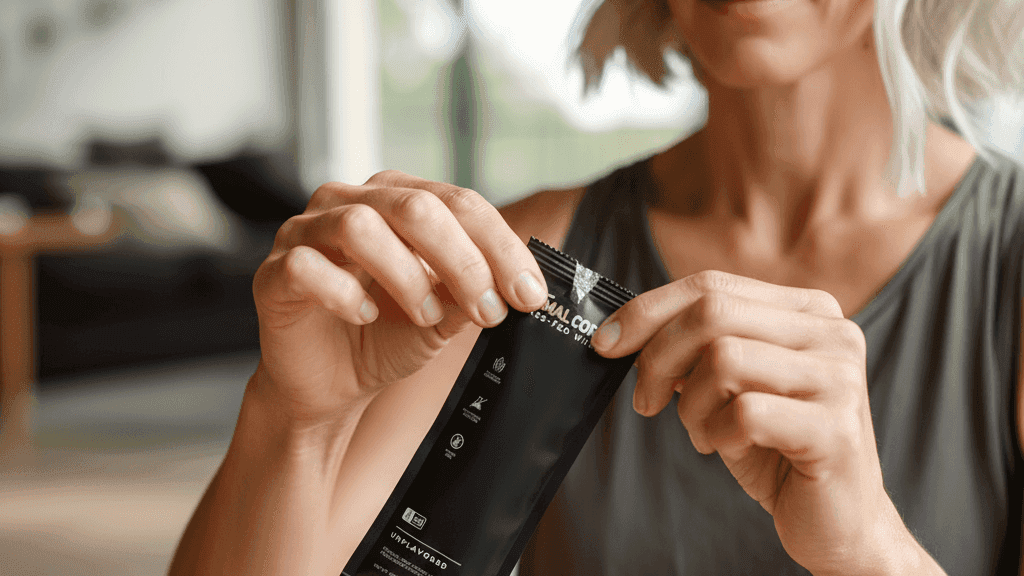
A single 30-gram sachet of Primal Core grass-fed whey mixed with water or milk delivers approximately 22 grams of complete protein with zero artificial sweeteners, fillers, or additives. It is the simplest possible snack: tear, pour, shake, drink. Because it is unflavored, it mixes cleanly into coffee, smoothies, or just plain water without the chemical sweetness that dominates most commercial protein powders.
Greek Yogurt Parfait
Plain Greek yogurt delivers 15 to 20 grams of protein per cup. Layer it with a handful of berries and a drizzle of raw honey for antioxidants and natural sweetness. Add a tablespoon of crushed almonds for healthy fats and crunch. This combination provides protein, fiber, and micronutrients in a format that keeps you satisfied for hours.
Hard-Boiled Eggs or Egg Muffins
Two hard-boiled eggs provide roughly 12 grams of protein plus choline, which supports brain function and muscle contraction. For variety, make egg muffins by whisking eggs with spinach, diced bell peppers, and a pinch of sea salt, then baking them in a muffin tin. They keep in the fridge for days and taste good cold, making them ideal for grab-and-go situations.
Protein Coffee
Adding a scoop of unflavored whey protein to your morning coffee turns an existing habit into a protein snack. The technique is simple: pour the protein into warm milk (warm, not hot: well under 65°C), froth it with a milk frother until dissolved and foamy, then add your coffee to the frothed milk. You get approximately 20 grams of protein without changing the flavor of your coffee. We tested this approach at Studio React in Porto and the consistent feedback was: "This does not taste like protein."
Trail Mix with Intention
Standard trail mix is mostly sugar and fat. A gym-friendly version focuses on protein: almonds (6 grams per ounce), pumpkin seeds (9 grams per ounce), walnuts (4 grams per ounce), and roasted edamame (14 grams per half cup). Skip the candy pieces and chocolate chips. Add dried tart cherries in small amounts for antioxidants and natural sweetness. A quarter-cup serving delivers 10 to 15 grams of protein with healthy fats that provide sustained energy.
Cottage Cheese with Everything
Cottage cheese has made a comeback, and for good reason. A single cup provides 25 to 28 grams of protein with a casein-dominant amino acid profile that digests slowly, making it ideal for between-meal snacking or before bed. Top it with everything seasoning for a savory option, or pair it with sliced peaches and cinnamon for something sweeter.
The Protein Bar Problem: What the Science Reveals
Many gym-goers default to protein bars as their primary snack, but emerging research suggests they may not deliver what the label promises. A 2025 study published in *Scientific Reports* (Keller et al., 2025) evaluated the protein quality of commercial protein bars using the DIAAS scoring system and found that protein digestibility ranged from just 47% to 81%. The highest-scoring bar, based on milk protein, achieved a DIAAS of only 61%.
What does this mean practically? A protein bar claiming 20 grams of protein may only deliver 9 to 16 grams of usable, digestible protein. The food matrix matters: sugars, fats, binding agents, and processing methods like baking create Maillard reactions that reduce amino acid availability, particularly lysine.
This does not mean protein bars are useless. They have genuine advantages in portability and shelf stability. But if you are relying on them as your primary protein snack, you may be consistently falling short of your actual protein targets without realizing it. Whole-food protein sources and minimally processed protein powders retain significantly higher bioavailability.
How Much Protein Do You Actually Need Between Meals?
The largest meta-analysis on protein and muscle gain, published in the *British Journal of Sports Medicine* (Morton et al., 2018), found that total daily protein intake of at least 1.6 grams per kilogram of body weight maximizes the muscle-building response to resistance training. For a 75-kilogram person, that is 120 grams of protein per day.
If you eat three main meals, each providing 25 to 30 grams of protein, you are at 75 to 90 grams. That leaves a gap of 30 to 45 grams that needs to come from somewhere. Two well-chosen protein snacks, each delivering 15 to 25 grams, close that gap entirely.
Think of snacks not as extras but as strategic tools for hitting your daily target.
Making Protein Snacking a Sustainable Habit
Knowing what to eat is the easy part. Consistency is what separates results from intentions. Here are practical strategies that work over the long term:
- Batch prepare on Sundays. Hard-boil a dozen eggs, portion trail mix into small containers, and prepare a few days of cottage cheese servings. When the snack is ready, you eat it. When it requires effort, you skip it.
- Keep protein visible. Store snacks at eye level in the fridge and keep sachets of Primal Core in your gym bag, desk drawer, and car. Proximity drives behavior.
- Pair protein snacks with existing habits. Have a Greek yogurt after every training session. Add protein to every coffee. Eat eggs every time you get home from the gym. Anchoring protein to routines you already have eliminates the need for willpower.
- Listen to your body. Hunger and energy dips between meals are signals, not failures. Responding to them with protein rather than processed carbohydrates keeps your blood sugar stable and your recovery moving forward.
The Bottom Line
Consistent protein snacking is one of the simplest, most effective nutritional strategies available to gym-goers. It supports muscle recovery, manages appetite, and ensures you hit your daily protein targets without heroic effort at mealtimes.
The key is choosing snacks that deliver real, bioavailable protein from quality sources. Prioritize whole foods, minimally processed protein powders, and simple preparations over heavily processed bars and flavored products. Your muscles cannot tell the difference between protein consumed at a meal and protein consumed as a snack. They only care that it arrives.
Curious how protein balls stack up against protein bars? Our complete comparison of protein balls vs protein bars breaks down ingredients, macros, and digestion side by side.
The whey behind most of these is Primal Core grass-fed whey: one ingredient, 24g of protein a sachet, shipped across the EU.
Frequently Asked Questions
Are protein balls healthier than protein bars?
Generally, yes - and it comes down to ingredients. Most protein bars rely on sugar alcohols (maltitol), seed oils, soy protein isolate, and binding agents. Protein balls like our Crumb Balls use whole-food ingredients: real nut butters, raw honey, and grass-fed whey. You get cleaner macros, better digestion, and no ultra-processed fillers.
What makes your protein balls different from others?
Our Crumb Balls are handcrafted in small batches using artisan methods - not mass-produced on factory lines. Every ball uses grass-fed whey protein, real nuts, raw honey, and dark chocolate. Zero seed oils, zero artificial sweeteners, zero gums. They're designed to taste like a premium truffle while delivering clean protein.
How much protein is in each Crumb Ball?
Each Crumb Ball contains approximately 5g of protein from grass-fed whey concentrate. A serving of 3 balls gives you 15g of clean protein as a snack.
Are Crumb Balls a good alternative to protein bars?
Yes. Most protein bars contain 10-20 ingredients including seed oils, artificial sweeteners, and emulsifiers. Crumb Balls have 4 whole-food ingredients and deliver real protein without the gut disruption.
What are the ingredients in Crumb Balls?
Our Crumb Balls are made with real, whole-food ingredients - including grass-fed whey protein, natural nut butters, raw honey, and dark chocolate. Every flavour uses clean fats and zero seed oils. Check each product page for the full ingredient list and macros.
Can I travel with your protein sachets?
Yes! Our individual 30g sachets are designed for travel. They're TSA and EU security compliant, fit easily in hand luggage, and eliminate the need to carry bulky tubs. Each sachet is also nitrogen-sealed for freshness, so they maintain full quality wherever you go.
Most popular protein snack flavors for gym goers?
Peanut butter, chocolate, and vanilla dominate because they're familiar and actually taste good. But check the label - most brands hide junk ingredients behind those flavors. If it lists maltodextrin, sucralose, or soy lecithin, it's not as clean as the packaging suggests.
Sources & References
- 1.Schoenfeld BJ, Aragon AA, Krieger JW. The effect of protein timing on muscle strength and hypertrophy: a meta-analysis. JISSN. 2013;10(1):53.
- 2.Moore DR, Robinson MJ, Fry JL, et al. Ingested protein dose response of muscle and albumin protein synthesis after resistance exercise in young men. Am J Clin Nutr. 2009;89(1):161-8.
- 3.Keller J, et al. Evaluation of protein quantity and protein nutritional quality of protein bars with different protein sources. Sci Rep. 2025;15:8742.
- 4.Schoenfeld BJ, Aragon AA. Nutrient timing revisited: is there a post-exercise anabolic window? JISSN. 2013;10(1):5.
- 5.Morton RW, Murphy KT, McKellar SR, et al. A systematic review, meta-analysis and meta-regression of the effect of protein supplementation on resistance training-induced gains. Br J Sports Med. 2018;52(6):376-384.
- 6.Leidy HJ, Clifton PM, Astrup A, et al. The role of protein in weight loss and maintenance. Am J Clin Nutr. 2015;101(6):1320S-1329S.