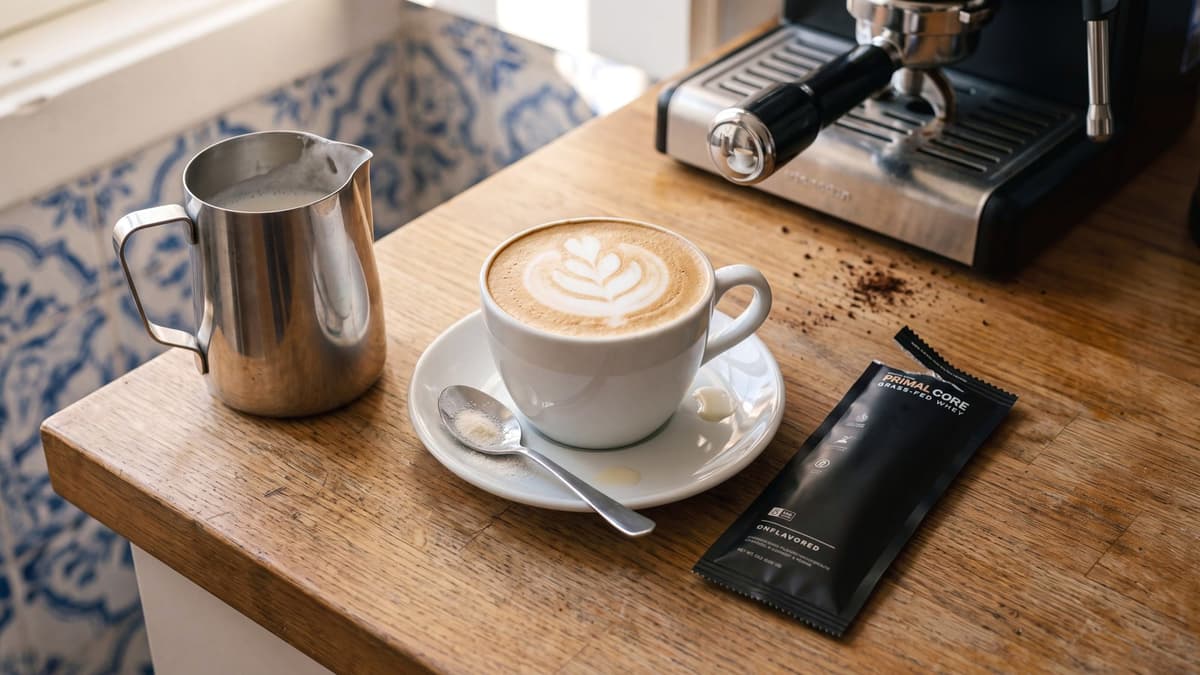
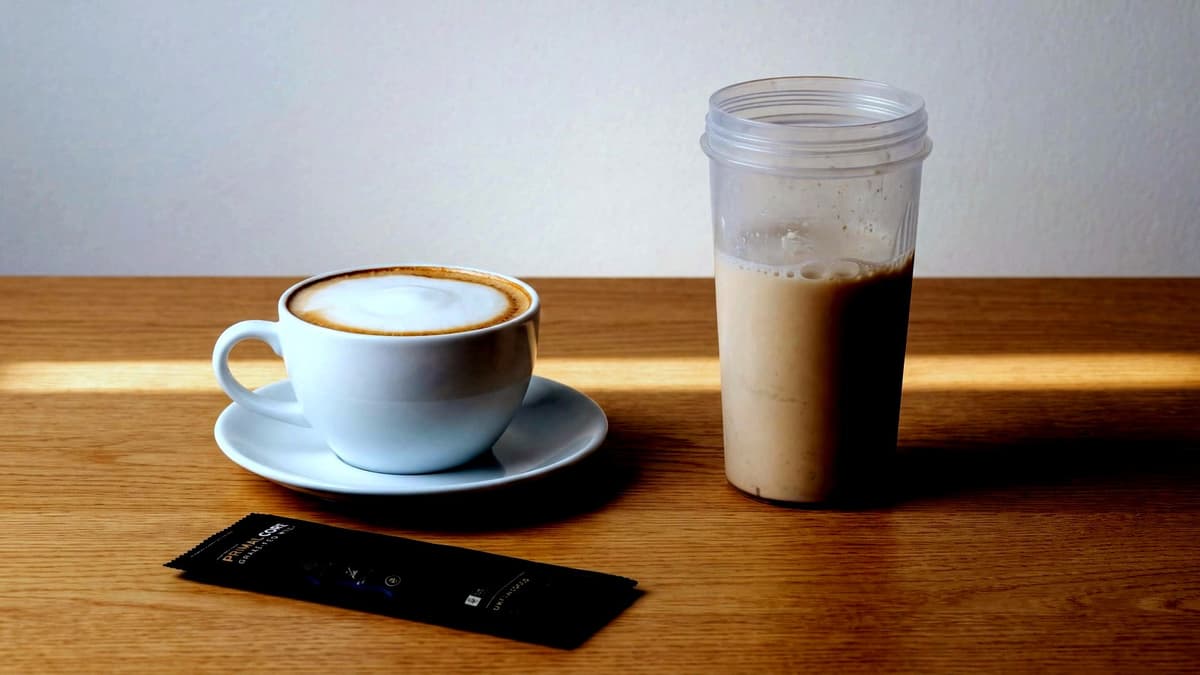
Whey protein stirred into warm milk and frothed, then combined with espresso, gives you 25g of protein in a drink you actually want to finish. A protein shake in a blender bottle gives you the same macros but takes longer to make, needs cleanup, and sits heavier. Both work. The coffee version fits tighter routines and doesn't feel like a supplement ritual.
If you land on the coffee side, the powder you use decides whether it works. The guide to the best whey protein for coffee has the test.
Key facts
- Protein yield: 25-30g per serving in both formats when using one 30g scoop of whey concentrate
- Prep time: Protein coffee takes 90 seconds (warm milk, froth whey in, add coffee, drink). Shakes take 3-5 minutes including cleanup.
- Digestion speed: Coffee format absorbs slightly faster due to heat and smaller volume
- Satiety: Shakes with added fats (nut butter, avocado) keep you fuller 60-90 minutes longer
- Cost per serving: Identical when using the same whey base (€2.30-2.60 per 30g scoop across most brands)
What is protein coffee?
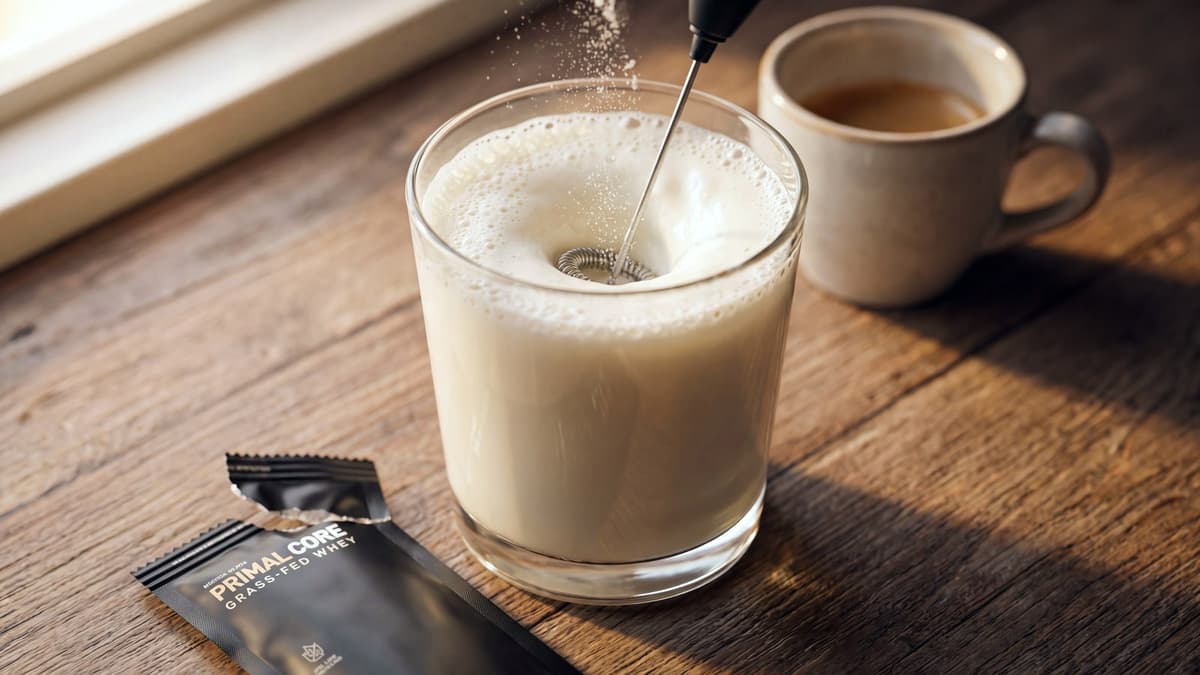
A 30g scoop of unflavored whey protein concentrate frothed into 200ml of warm milk with a milk frother, then combined with hot espresso or brewed coffee. The protein dissolves without clumping when you froth it into warm (not hot) milk first - well under 65°C. Then you add the espresso shot to the frothed milk, or pour the frothed milk over the coffee.
The result tastes like a protein-fortified cappuccino. About 25g protein, 150-200 calories depending on the milk, and you're done in under two minutes.
No blender. No shaker bottle. No ice.
What is a protein shake?

Whey protein powder blended with 250-400ml of liquid (water, milk, or a milk alternative), often with add-ins like frozen fruit, nut butter, oats, or spinach. The standard formula is one scoop of protein, one cup of liquid, and whatever else makes it taste less like chalk.
Most people use a blender bottle or an immersion blender. The shake sits thicker than coffee and takes 3-5 minutes start to finish when you count cleanup.
Side-by-side comparison
| Factor | Protein Coffee | Protein Shake |
|---|---|---|
| Protein per serving | 24-26g (one 30g scoop + milk) | 25-30g (one scoop + optional add-ins) |
| Prep time | 90 seconds | 3-5 minutes |
| Equipment needed | Espresso machine or brewed coffee, milk frother | Blender bottle or blender |
| Cleanup | Rinse one cup and frother | Wash bottle or blender |
| Temperature | Hot | Cold |
| Texture | Smooth, low-viscosity like a latte | Thick, shake-like |
| Fullness duration | 2-3 hours | 3-4 hours (with fats/fiber) |
| Portable | Yes, in a travel mug | Yes, in a sealed bottle |
| Taste flexibility | Limited to coffee + milk variations | Unlimited (fruit, PB, cocoa, etc.) |
| Best for | Morning routine replacement, post-workout if you drink coffee anyway | Meal replacement, post-workout if you want volume and satiety |
Protein absorption: does temperature matter?
Heat does not denature whey protein in a way that reduces bioavailability. A 2017 study in the *Journal of the International Society of Sports Nutrition* confirmed that cooking whey (even baking it at 180°C) does not impair leucine content or muscle protein synthesis response.
Hot liquid may speed gastric emptying slightly, meaning the amino acids hit your bloodstream 10-15 minutes faster than a cold shake. For most people, this difference is irrelevant unless you're timing protein intake within a 30-minute anabolic window (which newer research suggests is wider than previously thought).
Which one keeps you full longer?
A shake wins if you add fats or fiber. A 300-calorie shake with a tablespoon of almond butter and half a banana will keep you satisfied 60-90 minutes longer than a 200-calorie protein coffee with just milk.
Protein coffee delivers fast-digesting protein with minimal volume. You absorb it quickly, but hunger returns sooner. If you're replacing breakfast, the shake gives you more runway before lunch.
If you're supplementing an existing meal or need post-workout protein without extra calories, the coffee format makes more sense.
Taste and texture: the real deciding factor
Protein coffee tastes like a normal cappuccino if you use unflavored whey with no gums or thickeners. It dissolves smooth when frothed into warm milk first - no chalky aftertaste, no grit. You drink it the same way you'd drink any coffee.
Protein shakes taste like whatever you blend into them. Chocolate whey with frozen banana and peanut butter tastes like a milkshake. Unflavored whey with just water tastes like wet cardboard unless you add fruit or cocoa.
The texture gap is real. Coffee is low-viscosity. A shake is thick. Some people want that thickness because it feels more like a meal. Others find it heavy and prefer something they can sip fast.
When to choose protein coffee
Pick the coffee version when you already drink coffee in the morning and want to skip the extra step of making a separate shake. It replaces your breakfast drink and your protein supplement in one move.
Also useful post-workout if you're heading to work and don't want to carry a shaker bottle. A travel mug with protein coffee looks like a normal commute. A protein shake in your bag at 9am looks like you're trying.
Best for people on GLP-1 medications (semaglutide, tirzepatide) who need high protein but can't handle volume. A 200ml protein coffee delivers 25g without triggering nausea the way a 400ml shake might.
When to choose a protein shake
Use a shake when you're replacing a full meal and need the calories, fiber, and fats to stay full for 4+ hours. Blend in oats, nut butter, and fruit, and you've built a 400-500 calorie meal that covers more macros than coffee ever will.
Also better if you don't drink coffee, or if you train in the evening and don't want caffeine late in the day. A shake gives you the same protein yield without the stimulant load.
If you like thick textures and want to feel like you "ate" something, a shake satisfies that better than a hot drink.
Can you do both?
Yes. They're not competing habits. Protein coffee in the morning, protein shake post-workout or as a snack. Or protein coffee six days a week and a shake on rest days when you have time to blend something.
The whey base is identical - it's just the delivery format that changes. Keep a bag of unflavored whey, and you can switch between both depending on the day.
What to look for in whey protein for coffee
Single-ingredient whey dissolves clean when frothed into warm milk first, but additives (lecithin, gums, flavoring agents) clump worse. If you're making protein coffee, you need a whey that froths smooth without fillers.
Checklist for coffee-compatible whey:
- Single ingredient: Just whey protein concentrate, no fillers
- Unflavored: Sweeteners break down in heat and leave a bitter film
- No lecithin or gums: These thicken and create lumps even when frothed into warm milk
- Cold-processed: Heat-processed whey can have a "cooked" smell when re-heated
Primal Core checks all four. One ingredient (grass-fed whey concentrate), no flavoring, no gums. Froths smooth into warm milk, then combines clean with espresso. €35 per 450g pouch on subscription, ships across the EU. Third-party tested by Eurofins for heavy metals and amino profile.
You can also use it in shakes - it's the same base either way.
Bottom line
Protein coffee gives you the same protein yield as a shake in half the time with less cleanup. You're adding protein to a drink you already make instead of building a second ritual. If you want fast absorption, low volume, and no extra meal prep, it's the tighter option.
A shake makes more sense when you need a full meal replacement, want to stay full for 4+ hours, or prefer thick textures. Add fats and fiber, and it becomes a 400-500 calorie meal that covers more than just protein.
Both deliver 25-30g of protein per serving. Pick the one that fits your actual morning, not the one Instagram says you should be drinking.
Either way, the powder decides it. Primal Core grass-fed whey is one ingredient, 24g of protein a sachet, and it ships across the EU.
Frequently Asked Questions
Does protein coffee have the same protein as a shake?
Protein coffee delivers 24-25g protein per serving, slightly less than a typical shake's 30-40g. The difference comes from portion size, not effectiveness. Both hit your daily protein target.
Can you make protein coffee with any whey protein?
Only unflavored whey concentrate works consistently. Flavored whey isolates contain sweeteners that break down under heat and turn grainy. Concentrate dissolves smooth when frothed with warm milk (well under 65°C / 150°F), then combined with espresso.
Is protein coffee better than a shake for weight loss?
Protein coffee has fewer calories (220-250 vs 300-500) and less volume, making it easier to drink on GLP-1 medication or when appetite is low. Shakes work better as meal replacements when you need more calories.
How long does it take to make protein coffee vs a shake?
Protein coffee takes under 2 minutes with no cleanup. A shake takes 3-5 minutes including blending and washing the blender cup. The time difference adds up over a week.
Can you have both protein coffee and a shake in the same day?
Yes. Many people drink protein coffee in the morning for a fast 24g protein, then have a post-workout shake with carbs and 30-40g protein. They solve different parts of the day.