Whey protein concentrate vs isolate - the difference is processing. Isolate is filtered harder to strip out lactose and fat, so you get ~90% protein vs concentrate's ~80%. Concentrate keeps the bioactive compounds (immunoglobulins, lactoferrin) that isolate processing removes. For most people, concentrate is the better everyday choice - it's cheaper, easier on your gut, and you're not missing out unless you're actually lactose-intolerant or cutting hard. Here's what actually matters.
In the EU, protein content on the label has to match what's actually in the tub - it's tested, not just claimed. That matters when you're comparing concentrate to isolate by the numbers, because the gram counts on a European label are the ones you can actually trust.
I spent years reading labels before I made my own protein, and this is the question I get more than any other. So here is the honest version, with a table you can screenshot.
Concentrate vs isolate at a glance

| Factor | Whey Concentrate | Whey Isolate |
|---|---|---|
| Protein per 100g | about 70-80% | about 90% or more |
| Processing | minimal - filtered and dried | extra filtration to strip fat and lactose |
| Bioactives (immunoglobulins, lactoferrin) | kept | mostly stripped |
| Lactose | low in clean concentrates | very low |
| Gut-friendliness | high when single-ingredient | high, but the bioactives are gone |
| Carbs and fat | slightly higher | near zero |
| Cost | lower | higher |
| Best for | everyday clean protein, gut health | true lactose intolerance, cutting |
What the processing actually changes
Both start as the same thing - the liquid whey left over when milk is turned into cheese. Concentrate is filtered and dried and that is mostly it, so it lands around 70 to 80 percent protein with a little natural fat and lactose left in. Isolate gets pushed through extra filtration to strip almost everything except the protein, which is how it reaches 90 percent and above.
That extra step sounds like a pure upgrade, and the marketing treats it that way. The catch is that the same processing that removes the fat and lactose also removes the fragile bioactive compounds - the immunoglobulins and lactoferrin - that make whey more than a protein number on a label. A good concentrate keeps them. A heavily processed isolate does not.
Why concentrate usually wins for your gut
Here is the part that surprises people: the bloating most of us blame on "whey" is usually not the whey at all. It is the additives - the gums, the sucralose, the maltodextrin, the cheap fillers - that get blended into both concentrates and isolates to fix taste and texture.
Strip those out and a single-ingredient concentrate is gentle on most stomachs, lactose and all. My friend Rosa had failed on a dozen powders, most of them isolates, before she tried the plain grass-fed concentrate I was using, and she digested it fine. That one conversation is the reason Mindful Crumb exists. The lesson was never "isolate is bad" - it was that the ingredient list matters far more than the concentrate-versus-isolate label on the front of the tub.
When isolate is genuinely the right call
I am not anti-isolate. If you are properly lactose-intolerant, a clean isolate removes nearly all the lactose and is the safer pick. If you are deep in a cut and counting every gram of carbohydrate, isolate's near-zero carbs and fat genuinely help. And if you react to even small amounts of lactose, isolate buys you headroom a concentrate cannot.
Outside those cases you are usually paying more for a thinner product that lost its bioactives. For everyday protein, that is a poor trade.
The thing nobody tells you
Concentrate versus isolate is the wrong first question. The first question is how many ingredients are in the bag. A twelve-ingredient isolate loaded with sucralose and gums will upset your gut faster than a clean one-ingredient concentrate ever will. Read the back of the bag before you argue about filtration.
FAQ
Is whey concentrate or isolate better for your gut? A clean single-ingredient concentrate is usually gentler, because it keeps whey's natural bioactives and skips the additives that actually cause bloating. Isolate is only clearly better if you are properly lactose-intolerant.
Does whey isolate have more protein? Yes - isolate is about 90 percent protein or more versus roughly 70 to 80 percent for concentrate. But the same extra processing that raises the number also strips the immunoglobulins and lactoferrin a concentrate keeps.
Why does whey protein make me bloated? Usually the additives, not the whey - gums, sweeteners like sucralose, and fillers are common gut irritants. A single-ingredient concentrate removes those variables, which is why many people who think they "can't tolerate whey" do fine on a clean one.
Is grass-fed whey concentrate worth it? For an everyday protein, yes - you keep the bioactives, pay less than isolate, and a clean grass-fed concentrate is easy on the gut. Reserve isolate for true lactose intolerance or a strict cut.
Bottom line
For most people a clean single-ingredient whey concentrate is the better, cheaper, more complete choice, and it is kinder to your gut than the additive-loaded products on either side of the concentrate-isolate line. Save isolate for real lactose intolerance or a serious cut.
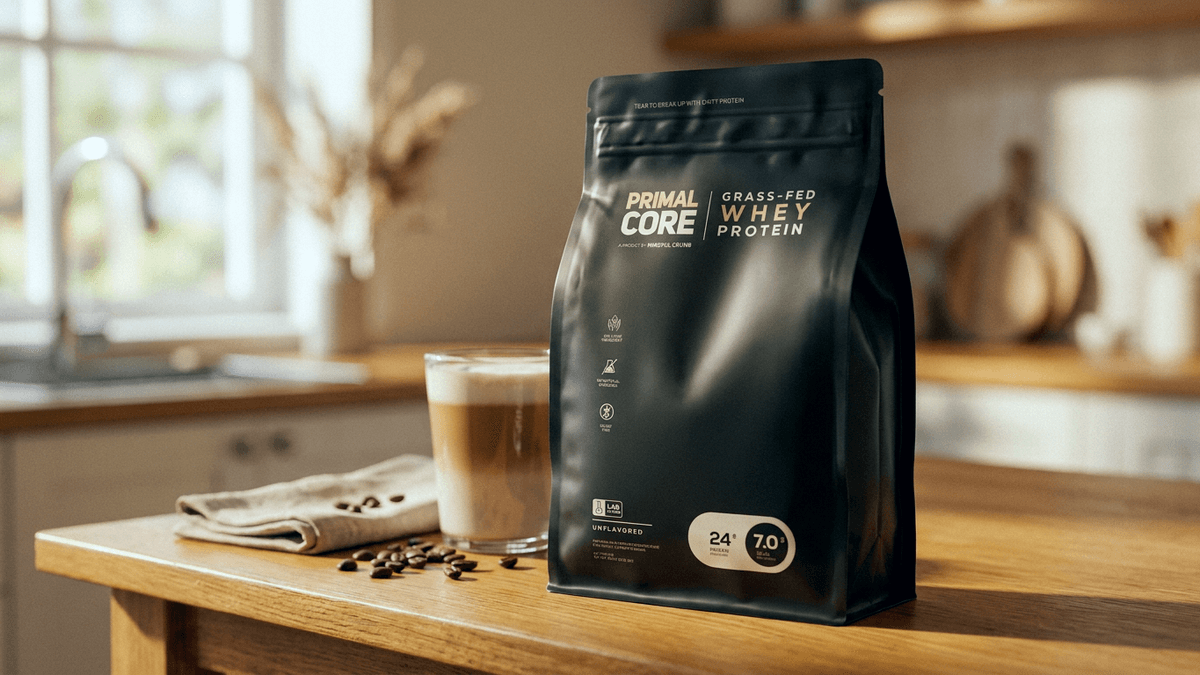
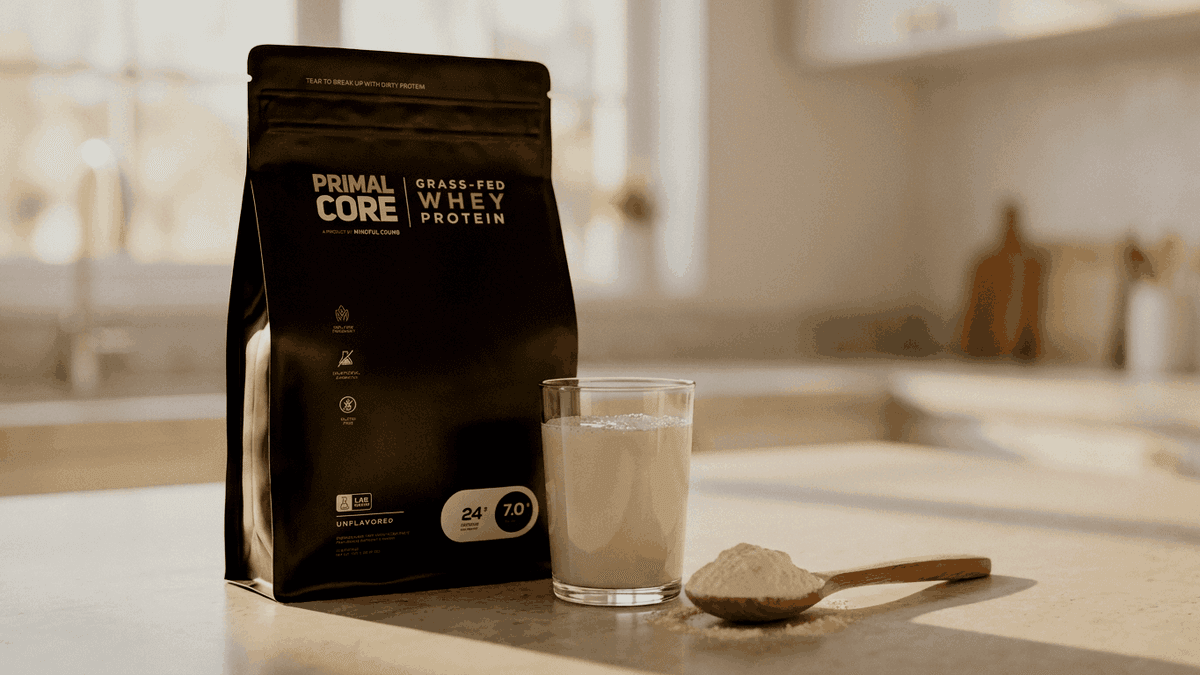
If you want a concentrate with exactly one ingredient on the back of the bag, that is what we make - Primal Core is grass-fed whey concentrate and nothing else. If you are still deciding what counts as clean, our guide to the cleanest whey in Europe walks through the four-line label test.
Frequently Asked Questions
Is whey concentrate or isolate better?
Concentrate is superior for overall health. Whey isolate undergoes aggressive processing that strips out immunoglobulins, lactoferrin, and other bioactive compounds - the very things that make whey a functional food beyond just protein content. Concentrate retains the full spectrum of beneficial proteins, growth factors, and immune-supporting compounds. Isolate has slightly more protein per gram (90% vs 80%), but you lose the gut health, immune, and anti-inflammatory benefits.
Why does whey protein cause bloating and how is yours different?
Most whey proteins cause bloating due to added ingredients: artificial sweeteners (sucralose, acesulfame-K), thickening gums (xanthan, guar), soy lecithin, and excess lactose from low-quality processing. Primal Core avoids all of these. It's a single-ingredient, gently processed concentrate with naturally lower lactose levels, which is why customers consistently report zero bloating.
What is the best protein for gut health?
Grass-fed whey protein concentrate is one of the best options for gut health. Unlike isolate, concentrate retains immunoglobulins, lactoferrin, and other bioactive compounds that support the gut lining and microbiome. The key is avoiding common gut irritants found in most protein powders: artificial sweeteners, thickening gums, soy lecithin, and seed oils. Primal Core contains none of these - just pure grass-fed whey.
Does Primal Core cause bloating?
No. Most protein powders cause bloating due to artificial sweeteners, thickening gums, soy lecithin, and excess lactose. Primal Core contains none of these - just pure, gently processed grass-fed whey with naturally lower lactose levels.
What does "grass-fed whey" mean?
Our Primal Core whey protein comes from grass-fed, pasture-raised cows. This means higher-quality protein with a better amino acid profile, and no hormones or antibiotics.
What protein powder has the fewest ingredients?
Primal Core has exactly one ingredient: grass-fed whey protein concentrate. No sweeteners, no flavoring, no emulsifiers, no gums, no fillers. Most protein powders have 10 to 25 ingredients. We believe the cleanest protein is the one with nothing to hide.
Whey concentrate vs isolate?
Concentrate is less processed (~80% protein, keeps bioactives like lactoferrin), cheaper, and easier to digest for most people. Isolate is more filtered (~90% protein, almost no lactose or fat) - worth it if you're lactose-intolerant or need the lowest-carb option while cutting. Otherwise, concentrate is the simpler choice.