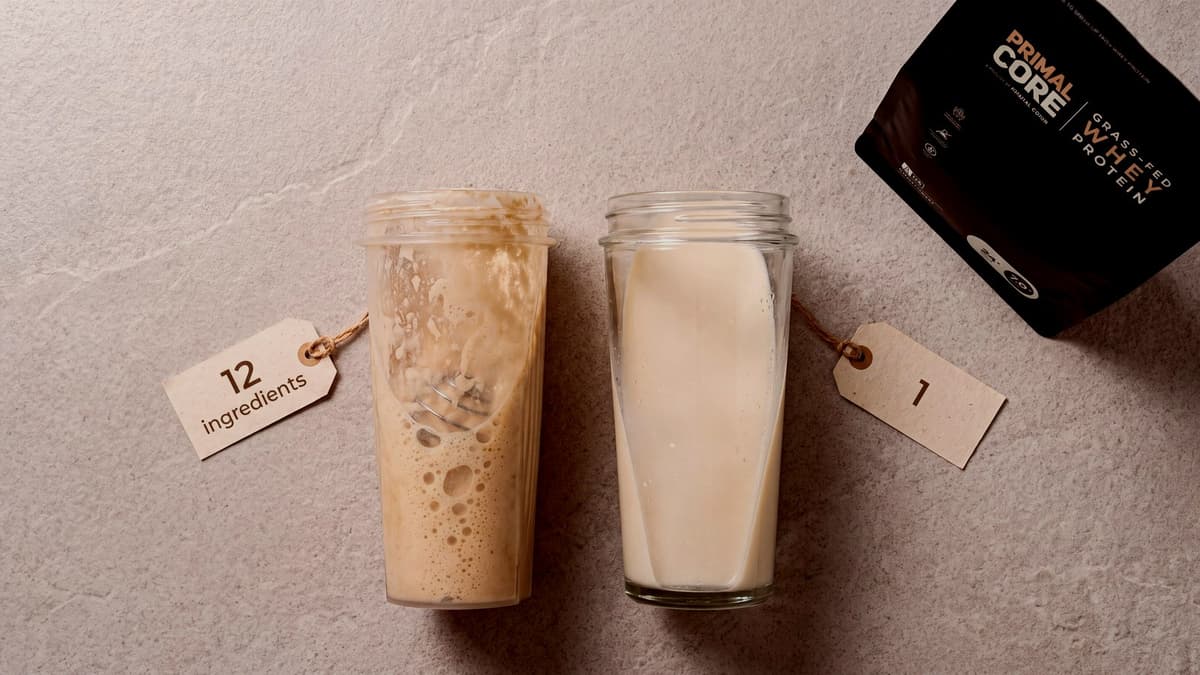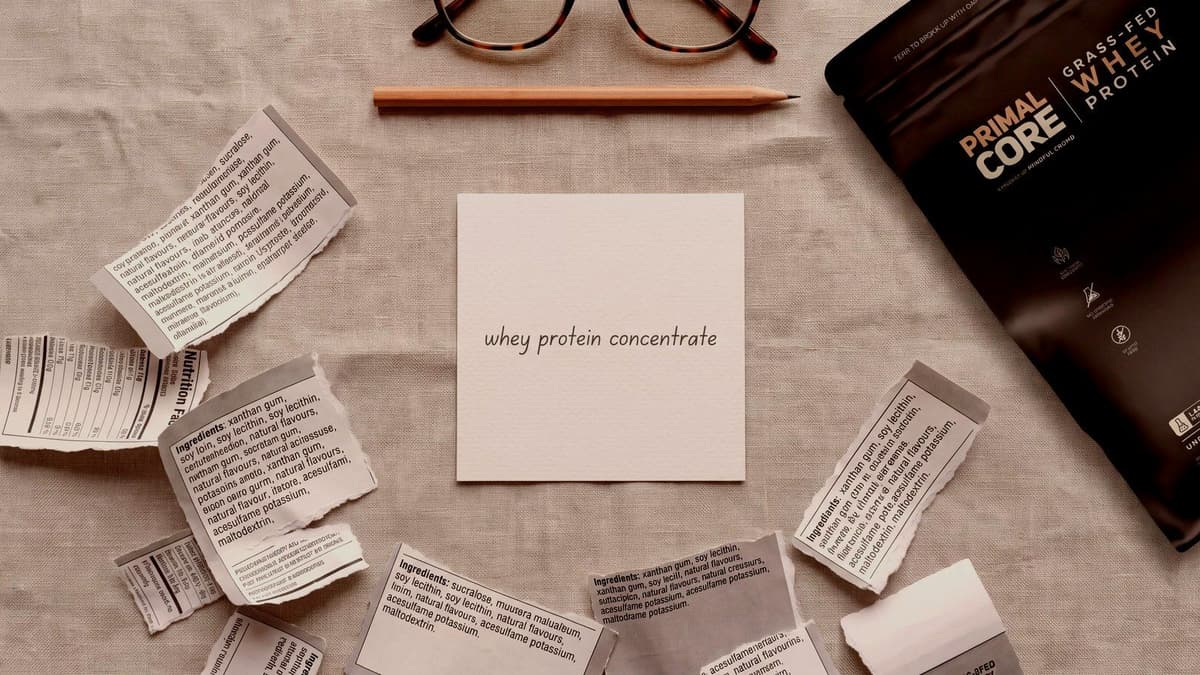

The best protein drink for digestive health is unflavored grass-fed whey protein concentrate with zero additives - no gums, no artificial sweeteners, no soy lecithin. If you're lactose-intolerant, look for one with added lactase enzyme so your gut can break down the milk sugar without bloating.
This is the drink version of a longer answer. The full buying guide, with the label red flags and the comparison table, is the best protein powder for gut health.
Key facts
- Whey concentrate keeps immunoglobulins and lactoferrin that support gut lining health - isolates strip these out during processing
- Guar gum, xanthan gum and carrageenan (common in flavored protein) trigger inflammation and bloating in sensitive guts
- Artificial sweeteners (sucralose, acesulfame-K) alter gut bacteria composition within 2 weeks of daily use
- Lactase enzyme added to whey lets lactose-intolerant people digest it comfortably - about 65% of adults lose lactase production after childhood
- Cold-processed whey preserves more beneficial peptides than heat-treated versions
- Single-ingredient products force you to add your own flavor (cacao, cinnamon, vanilla extract) but your gut doesn't pay the price
Why most protein drinks wreck your digestion
I spent two years reading labels in Porto health shops and online. 80% of protein powders have the same problem: they're engineered for shelf appeal, not your stomach.
Here's what I kept finding:
Gums and thickeners. Guar gum. Xanthan gum. Carrageenan. Cellulose gum. They make the shake creamy. They also sit in your gut and ferment. If you've ever felt bloated three hours after a protein shake, that's why.
Artificial sweeteners. Sucralose and acesulfame-K are in nearly every flavored protein. A 2022 study in Cell showed daily sucralose changes gut bacteria composition in just 14 days. Your microbiome doesn't recover fast.
Soy lecithin. Used as an emulsifier so the powder mixes easily. Sounds harmless. But if you're sensitive to soy or have thyroid issues, it adds up over months of daily shakes.
Flavoring agents. "Natural flavors" is a catch-all term that can mean 50+ different chemical compounds. You'll never know which ones your gut reacts to.
The worst part? These ingredients are there to fix problems created by over-processing. Isolate protein is so stripped down it doesn't mix or taste like anything, so brands add gums to thicken it and sweeteners to mask the taste.
Concentrate vs isolate: what actually matters for your gut

Whey isolate is 90%+ protein. Whey concentrate is 70-80% protein. The supplement industry taught everyone isolate is "better" because higher protein percentage.
That's backwards for digestive health.
Concentrate keeps the stuff isolate throws away: immunoglobulins (IgG, IgA), lactoferrin, glycomacropeptides. These aren't filler. They support gut lining integrity and immune function.
A 2014 study in the British Journal of Nutrition found that lactoferrin in whey concentrate reduces gut inflammation markers. Isolate doesn't have lactoferrin - it's removed during the extra filtration steps.
The lactose argument is real but solvable. Concentrate has 3-4g lactose per 30g serving. If you're lactose-intolerant, that's a problem - unless the manufacturer adds lactase enzyme to break it down before it hits your colon.
Most brands don't. They just make an isolate instead, strip out the beneficial compounds, and add gums to fix the texture.
What to look for (and what to avoid)
| Product type | Gut-friendly? | Why or why not |
|---|---|---|
| Single-ingredient concentrate (grass-fed, unflavored) | Yes | Keeps immunoglobulins and lactoferrin; no gums or sweeteners to ferment |
| Concentrate + lactase enzyme | Yes | Same benefits as above, plus lactose-intolerant people can digest it |
| Flavored concentrate (any brand) | No | Gums, sweeteners and "natural flavors" trigger bloating and alter microbiome |
| Isolate (unflavored) | Neutral | High protein but strips out gut-supporting compounds; usually fine if you tolerate it |
| Flavored isolate | No | Same additives as flavored concentrate, without even the immunoglobulin benefit |
| Plant-based blends (pea, rice, hemp) | Depends | Often loaded with gums to mask chalky texture; check the label carefully |
If the ingredient list is longer than three items, your gut is probably going to complain.
The protein cappuccino method (and why it works)
I don't drink protein shakes. I make a protein cappuccino every morning at VARD, the cafe down the street from my place in Porto.
Here's why it's easier on digestion than a shake:
Warm milk, not hot. Heat the milk to about 55-60°C - warm to the touch, not scalding. Whey protein clumps above 65-70°C no matter what the label says. The clean ingredient list explains the lack of gum slime, it doesn't make heat magically safe.
Froth first, coffee second. Pour the protein sachet into the warm milk. Froth it with a milk frother until it's fully dissolved and foamy - takes about 20 seconds. Then add your espresso shot or pour the frothed milk over your coffee.
Why this beats a shake. The milk fat slows digestion. The coffee speeds gut motility. The protein is already dissolved in liquid so your stomach doesn't have to work as hard. And you're drinking it over 10 minutes instead of chugging 500ml of cold sludge in 30 seconds.
I've had people tell me they can't do protein shakes without bloating. They try the cappuccino method. No bloating.
The delivery format matters as much as the ingredient list.
Baking with whey (the other gut-friendly option)
The second thing people do with single-ingredient whey: bake with it.
Protein muffins. Protein pancakes. Protein banana bread. It works because there are no sweeteners or gums to break down in the oven, and the whey is dispersed through flour and fat instead of sitting in hot liquid.
I used the same whey in sourdough brioche before I started Mindful Crumb. Slow-fermented dough, enhanced with whey protein. It was incredible. People loved it.
The logistics were a nightmare - real food with no preservatives doesn't scale easily - but the concept was sound. Protein in baked goods is easier on your gut than protein in a shaker bottle because your digestion gets help from the other macros (fat, fiber, complex carbs).
If you're someone who can't do shakes or cappuccinos, try baking. Use the protein as a flour substitute at about 25-30% of total flour weight. It'll keep you full without wrecking your stomach.
What Mindful Crumb actually is (and why I'm telling you this)
I started Mindful Crumb because I got tired of reading labels and finding garbage.
Every protein powder I tried made me bloated. Whey isolate with sucralose. Whey concentrate with xanthan gum and "natural vanilla flavor." Plant blends with nine ingredients I couldn't pronounce.
I have a background in nutrition and fitness. I know what maltodextrin does to your gut over time. I know what carrageenan does to your colon. The market is 80% garbage dressed up in wellness packaging.
So I made Primal Core: grass-fed whey protein concentrate from pasture-raised European cows. One ingredient. Cold-processed. Lactase enzyme added so lactose-intolerant people can digest it without bloating.
No gums. No sweeteners. No soy lecithin. No flavoring. Just whey.
450g pouch, 15 individually sealed 30g sachets. Each sachet is 24g protein, about 5.5g BCAA, under 1g sugar, 120 calories. €39 one-time or €35 per month on subscription.
Third-party tested by Eurofins for heavy metals and full amino profile. Ships across the EU - Portugal €7, Spain €8, rest of EU €12-20, free over €100 to Portugal and Spain.
I'm not saying it's the only clean whey out there. I'm saying if you want a protein drink that doesn't wreck your digestion, this is what to look for: single ingredient, grass-fed, lactase enzyme if you need it, no additives.
You can find it on specialty health shop sites, brand direct sites, and some online marketplaces. Read the label. If it's longer than three lines, keep looking.
GLP-1 users: why this matters even more for you
If you're on semaglutide (Ozempic, Wegovy) or tirzepatide (Mounjaro, Zepbound), you already know: your digestion is slower. Food sits in your stomach longer. You're more sensitive to fat, fiber, and anything that ferments.
That makes gums and artificial sweeteners worse.
Guar gum and xanthan gum slow gastric emptying even in people who aren't on GLP-1 medication. Add a GLP-1 agonist on top and you're looking at hours of bloating and nausea.
Artificial sweeteners are worse because they trigger your gut to release incretin hormones (the same ones the medication is mimicking). Your body gets confused. You feel full but also vaguely nauseous. Not fun.
Single-ingredient whey in warm milk (the cappuccino method) works because:
- The protein is already dissolved so your stomach doesn't have to churn it
- Warm liquid moves through your system faster than cold
- No gums or sweeteners to sit there and ferment
- The milk fat helps absorption without overwhelming a slow gut
A bunch of people on GLP-1s have told me the cappuccino is the only way they can get 24g of protein in the morning without feeling sick. I'm not a doctor. But if protein shakes make you nauseous and you're on semaglutide, try this.
How to read a protein label in 10 seconds
Flip to the ingredients. Ignore the front of the package. Ignore the marketing.
Good label: Whey protein concentrate (milk), lactase enzyme. That's it.
Bad label: Whey protein isolate, natural flavors, xanthan gum, sucralose, soy lecithin, silicon dioxide.
If you see guar gum, xanthan gum, carrageenan, cellulose gum - your gut will react. Maybe not today. Maybe not this week. But it adds up.
If you see sucralose, acesulfame-K, aspartame - your microbiome will shift. Two weeks of daily use changes bacterial composition. It doesn't bounce back overnight.
If you see "natural flavors" - you'll never know what you're reacting to. Could be 50 different compounds. Could be none. You won't know until you cut it out for a month and see if the bloating stops.
The ingredient list tells you everything. The front label tells you nothing.
The real answer
The best protein drink for digestive health is the one with the shortest ingredient list.
Single-ingredient grass-fed whey concentrate. Lactase enzyme if you need it. Nothing else.
Mix it into warm milk and froth it. Add your espresso. Drink it over 10 minutes.
Or bake with it. Protein muffins, pancakes, banana bread - the fat and flour make it easier to digest than a cold shake.
Skip the flavored stuff. Skip the isolates loaded with gums. Skip the plant blends with twelve ingredients.
Your gut will thank you.
The drink I make for this is Primal Core grass-fed whey. One ingredient, added lactase, 24g of protein a sachet, shipped across the EU.
Frequently Asked Questions
Is whey protein concentrate or isolate better for sensitive stomachs?
Concentrate is better if it includes lactase enzyme - it keeps gut-supporting immunoglobulins and lactoferrin that isolate strips out. Without lactase, isolate is easier for lactose-intolerant people, but you lose the beneficial compounds.
Why does my protein shake make me bloated?
Usually gums (xanthan, guar, carrageenan) or artificial sweeteners (sucralose, acesulfame-K). Both ferment in your gut and trigger bloating. Check the ingredient list - if it's longer than three items, that's probably why.
Can lactose-intolerant people drink whey protein concentrate?
Yes, if the whey includes added lactase enzyme to break down the milk sugar before it reaches your colon. Without lactase, concentrate has 3-4g lactose per serving and will cause gas and cramping in lactose-intolerant people.
What's the best way to drink protein without upsetting your stomach?
Mix unflavored whey into warm (not hot) milk, froth it with a milk frother, then add espresso. The warm liquid and milk fat slow digestion and the protein is already dissolved, so your stomach doesn't have to work as hard as with a cold shake.
Is plant-based protein easier on digestion than whey?
Not usually - most plant protein blends (pea, rice, hemp) are loaded with gums and thickeners to mask the chalky texture. Check the label carefully. If it has more than three ingredients, it'll probably cause the same bloating as flavored whey.