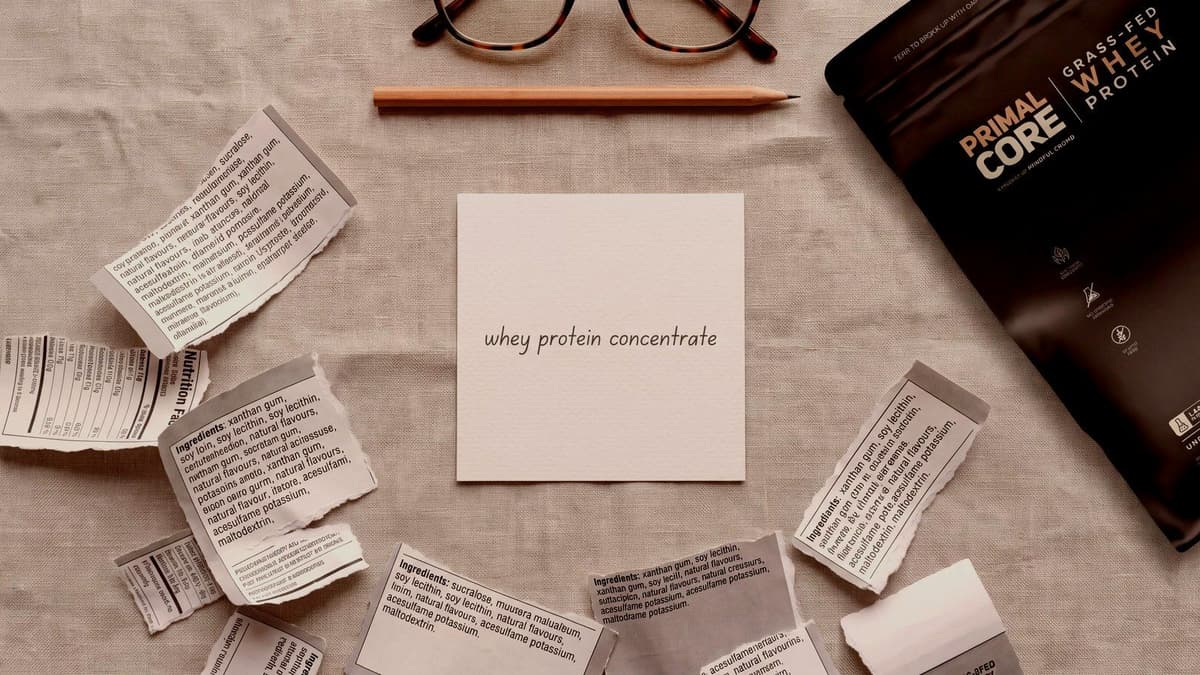

Whey protein *can* cause stomach issues - but the culprit is usually the additives (gums, artificial sweeteners, soy lecithin) or lactose, not the whey itself. Clean whey concentrate with lactase enzyme added, mixed into warm milk rather than hot water, is far easier to digest.
If the symptom you actually have is bloating after every shake, that has its own page: the best protein powder for a sensitive gut, with the five additives behind it.
Key facts about whey protein and digestion
- Isolate strips out the good stuff: Whey isolate removes immunoglobulins and lactoferrin along with most of the lactose
- Gums cause bloating: Xanthan gum, guar gum and cellulose gum are added to cheap whey to mask clumping - they ferment in your gut
- Artificial sweeteners feed the wrong bacteria: Sucralose and acesulfame-K shift your microbiome toward gas-producing strains
- Hot liquid makes whey clump: Whey denatures above 65°C, forming hard-to-digest clumps no matter how clean the ingredient list
- Lactase enzyme solves lactose intolerance: Added lactase breaks down the small amount of lactose in concentrate before it reaches your gut
- Drinking too fast overwhelms digestion: 30g of protein in 90 seconds puts more stress on your digestive enzymes than the same amount sipped over 10 minutes
Why most whey protein causes bloating and gas

The whey itself - the actual dairy protein - is highly bioavailable and well-tolerated by most people. Your stomach and small intestine break it down into amino acids efficiently.
The problem starts when manufacturers add ingredients to make the whey cheaper to produce, easier to mix, or sweeter to taste.
Thickening agents are the first culprit. Xanthan gum, guar gum, cellulose gum - these are added so cheap whey doesn't clump in cold water. They work by forming a slimy gel around the protein particles. That same gel coats your intestinal lining and ferments in your colon, producing gas and triggering inflammation.
Artificial sweeteners are the second. Sucralose, acesulfame-K, aspartame - these pass through your small intestine unabsorbed and land in your colon, where they feed specific bacterial strains that produce hydrogen and methane. The result is bloating, cramping, and the kind of gas that clears a room.
Soy lecithin is added as an emulsifier so the whey mixes instantly. It works, but for people sensitive to soy (more common than most realize), it triggers low-grade inflammation in the gut lining.
Then there's lactose. Whey concentrate contains about 4-5% lactose. If you're lactose intolerant and the brand hasn't added lactase enzyme, that lactose reaches your colon undigested and ferments, causing gas and diarrhea.
Whey isolate vs concentrate: which is easier to digest?
Most people assume isolate is the safer choice because it's 90%+ protein and stripped of almost all lactose and fat.
That's true - if lactose is your only issue and you're not sensitive to any of the additives isolate brands load in to make up for the lack of flavor.
But here's what gets stripped out along with the lactose: immunoglobulins (IgG, which supports gut barrier function) and lactoferrin (which has antimicrobial and anti-inflammatory effects in the gut). Concentrate keeps those intact.
If you're lactose intolerant, a clean whey concentrate with added lactase enzyme is easier on your gut than a heavily processed isolate with gums and sweeteners.
| Factor | Whey Isolate | Whey Concentrate (+ lactase) |
|---|---|---|
| Protein content | 90%+ | 70-80% |
| Lactose | <1% | 4-5%, pre-digested by lactase |
| Immunoglobulins (IgG) | Stripped out | Intact |
| Lactoferrin | Stripped out | Intact |
| Typical additives | Gums, sweeteners, flavoring | None (if clean-label) |
| Digestion ease | Depends on additives | High if single-ingredient |
| Price | Higher | Lower |
How to mix whey protein so it doesn't clump or cause bloating
The mixing method matters as much as the ingredient list.
Never mix whey into hot coffee, hot water, or boiling milk. Whey protein denatures (unfolds and coagulates) above about 65-70°C. The result is rubbery clumps that sit in your stomach like cement. This happens with any whey, no matter how clean the label.
The method that works: add the whey to warm milk (well under 65°C), froth it with a milk frother until dissolved and foamy, then add your espresso shot or pour the frothed milk over the coffee. The whey disperses in the fat and stays smooth. This is how the protein cappuccino method works - whey dissolved in frothed warm milk, coffee added after.
If you're making a shake, add the whey to room-temperature or cold liquid, shake hard for 15-20 seconds, then drink it slowly over 10 minutes. Drinking 30g of protein in 90 seconds floods your small intestine faster than your enzymes can work. Sipping it gives your digestive system time to keep up.
What to look for in a gut-friendly whey protein
- Single ingredient, or ingredient + enzyme. Grass-fed whey protein concentrate. Lactase enzyme if you're lactose intolerant. Nothing else. If the label lists gums, lecithin, or sweeteners, it will likely cause bloating.
- Unflavored. Flavoring almost always means sweeteners (artificial or natural) and often seed oils or gums to carry the flavor. Plain whey dissolved in milk or used in baking is far easier to digest.
- Cold-processed. High heat during processing denatures the protein and destroys the bioactive compounds (immunoglobulins, lactoferrin) that support gut health.
- Third-party tested. A lab report (Eurofins, Labdoor, NSF) confirms what's actually in the tub matches the label - and that heavy metals are below safety limits.
- European or New Zealand dairy. Grass-fed, pasture-raised cows produce whey with a better fatty acid profile and fewer contaminants than grain-fed industrial herds.
What about other protein sources - pea, rice, collagen?
Pea and rice protein are harder to digest than whey for most people. They contain fiber and antinutrients (phytic acid, lectins) that can irritate the gut lining if you're sensitive. They also taste earthy, so brands load them with sweeteners and gums to mask it - which brings you back to the same bloating problem.
Collagen is easy to digest and has benefits for gut lining repair, but it's not a complete protein (low in tryptophan and branched-chain amino acids). It works well as a supplement to whey, not a replacement.
Egg white protein is a solid alternative if you can't tolerate dairy at all, but it's expensive, chalky, and most brands add the same gums and sweeteners to make it drinkable.
If your gut tolerates dairy, clean whey concentrate with lactase is the most bioavailable, affordable, and gut-friendly protein source available.
What Mindful Crumb's Primal Core does differently
Primal Core is grass-fed whey protein concentrate from pasture-raised European dairy cows. One ingredient: whey. Lactase enzyme added so lactose-intolerant people can digest it comfortably. Cold-processed to keep the immunoglobulins and lactoferrin intact.
Sold as a 450g pouch of 15 individually sealed 30g sachets. Each sachet: 24g protein, about 5.5g BCAA, under 1g sugar, 120 calories. Third-party tested by Eurofins for heavy metals and full amino profile. Trustpilot 4.4 from 15 verified reviews.
Most customers make the protein cappuccino: pour the sachet into warm milk, froth it with a milk frother until dissolved and foamy, add the espresso shot. Others use it in baking - it holds up in the oven because there are no sweeteners or gums to break down.
EUR 39 one-time, EUR 35 on subscription. Ships across the EU (Portugal EUR 7, Spain EUR 8, rest of EU EUR 12-20, free over EUR 100 to Portugal and Spain).
The ingredient list is one line. That's the point.
That is the whole reason Primal Core grass-fed whey exists: one ingredient, added lactase, 24g of protein a sachet, shipped across the EU.
Frequently Asked Questions
Why does whey protein make me bloated?
Usually it's the additives - gums (xanthan, guar), artificial sweeteners (sucralose, acesulfame-K), or soy lecithin. These slow digestion, ferment in your gut, and cause gas. Try a single-ingredient whey with no fillers. If you're still bloated, it might be lactose - add a lactase enzyme or switch to isolate.
Is whey isolate better for sensitive stomachs than concentrate?
Not necessarily. Isolate has less lactose but it's more processed and loses beneficial compounds (immunoglobulins, lactoferrin). A better option: concentrate with lactase enzyme added. You keep the gut-supporting compounds and break down the lactose.
Can I use whey protein if I'm lactose intolerant?
Yes - either use an isolate (under 1% lactose) or use a concentrate with lactase enzyme added. Whey concentrate has 3-4g lactose per 30g serving, about half a glass of milk. If you can tolerate a cappuccino, the lactose in concentrate isn't your problem.
Why does my protein shake give me diarrhea?
Artificial sweeteners (sucralose, sugar alcohols) pull water into your intestines and mess with gut bacteria. Gums can also cause loose stools in sensitive people. Switch to unflavored, single-ingredient whey and see if it stops.
How can I drink whey protein without stomach pain?
Use a clean whey (one ingredient, no gums or sweeteners), mix it into warm milk (not hot - under 65°C) with a frother, and sip it slowly over 10-15 minutes. Chugging 50g of protein in 30 seconds will bloat you no matter how clean the powder is.