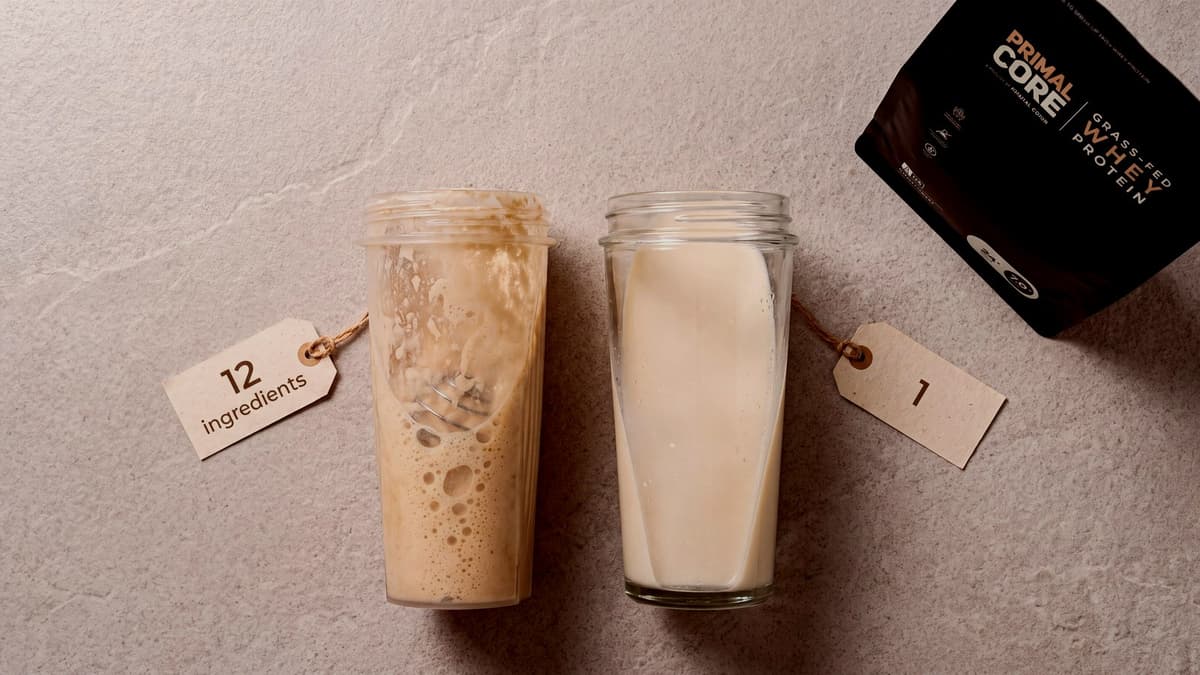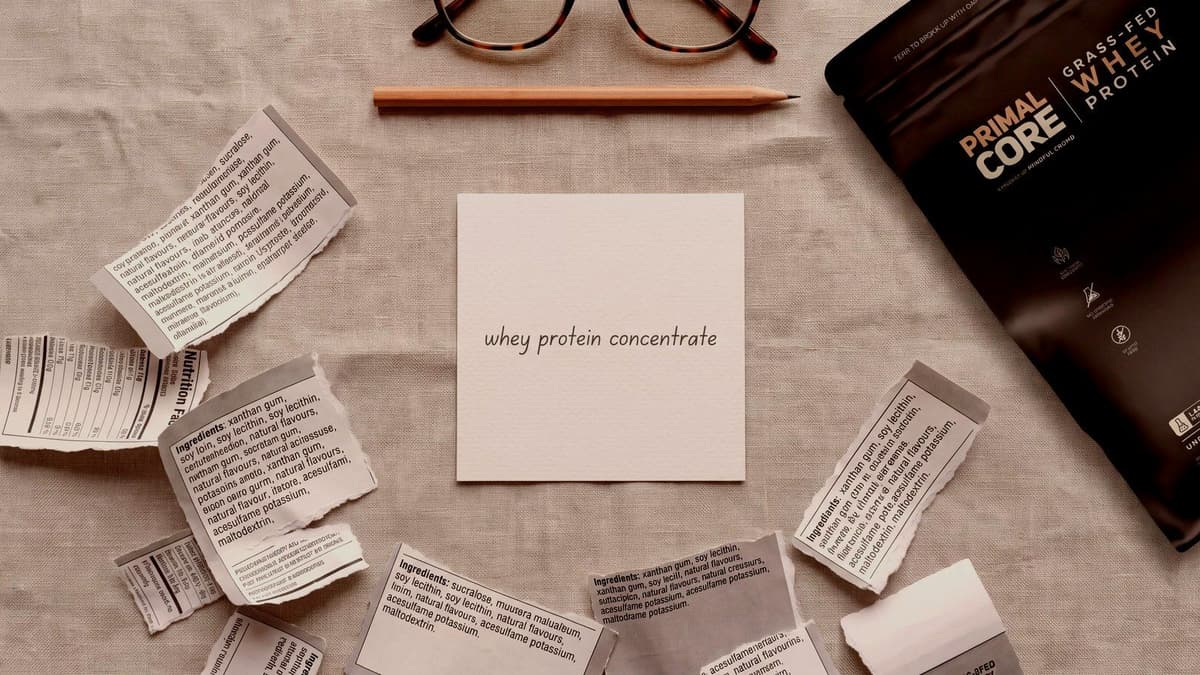

Whey protein concentrate is the best protein powder for IBS because it's naturally lower in lactose than isolate, keeps gut-supporting immunoglobulins intact, and - when cold-processed with added lactase like Mindful Crumb's Primal Core - digests without the bloating, gas or cramping that come from gums, sweeteners and over-refined isolates.
IBS is the narrow case. The wider buying guide, with the label red flags and the DIAAS numbers, is the best protein powder for gut health.
Key facts:
- Concentrate retains immunoglobulins (IgG) and lactoferrin that support gut barrier function
- Added lactase enzyme breaks down remaining lactose for comfortable digestion
- Cold processing preserves bioactive peptides that isolate heat-denatures
- Single-ingredient formulas eliminate common IBS triggers: gums, lecithin, artificial sweeteners
- Trustpilot 4.4 from 15 verified reviews, several from people who couldn't tolerate other proteins
Why most protein powders trigger IBS symptoms
The problem with most protein powders starts with the ingredient list - seed oils, gums, artificial sweeteners and soy lecithin add up to a gut-bomb for anyone with IBS.
Xanthan gum and guar gum are added to thicken shakes and prevent clumping. But both are FODMAPs that ferment in your gut and produce gas. If you have IBS-D, they can trigger cramping and loose stools. If you have IBS-C, they can slow transit and make bloating worse.
Sucralose and acesulfame-K (the sweeteners in most flavored proteins) alter gut bacteria composition and increase gut permeability in animal studies. Even stevia - marketed as "natural" - causes bloating in about 15-20% of people because gut bacteria ferment the steviol glycosides.
Soy lecithin is an emulsifier that helps fat and water mix. It's in about 80% of protein powders. But it's also a known gut irritant for people with IBS, and it's usually sourced from GMO soy treated with hexane during extraction.
Then there's the protein itself. Most brands use whey protein isolate because it sounds premium. But isolate is over-processed - the high heat and filtration strip out the immunoglobulins, lactoferrin and bioactive peptides that actually support gut health. You're left with 90%+ protein and nothing else. For someone with IBS, that concentrated protein load can sit in your stomach like cement.
Why whey protein concentrate works better for IBS than isolate

Whey protein concentrate keeps the stuff isolate throws away - and that matters for your gut.
Concentrate is about 70-80% protein. The rest is naturally occurring immunoglobulins (IgG, IgA), lactoferrin, glycomacropeptides and growth factors. These compounds support gut barrier function, modulate inflammation and help repair the intestinal lining.
A 2019 study in *Nutrients* found that lactoferrin reduces gut inflammation and improves symptoms in people with IBS. Another study in *The American Journal of Gastroenterology* showed that immunoglobulins from whey concentrate reduced abdominal pain and bloating in IBS patients over 8 weeks.
Isolate strips all of that out to hit a higher protein percentage. You're paying more for less.
The lactose concern is real, but fixable. Concentrate contains about 4-5% lactose (roughly 1-1.5g per 30g serving). For most people with IBS, that's not enough to trigger symptoms - especially if the whey includes added lactase enzyme, which breaks lactose down into glucose and galactose before it reaches your colon.
Cold processing matters too. Heat-treated whey (which is most isolates and cheaper concentrates) denatures the bioactive peptides and makes the protein harder to digest. Cold-processed concentrate keeps those peptides intact, so your gut has an easier time breaking it down.
What to look for in a protein powder if you have IBS
Start with the ingredient list. If it's more than 2-3 ingredients, put it back.
A clean whey protein for IBS should be:
- Grass-fed whey protein concentrate (not isolate)
- Unflavored (no sweeteners, natural or artificial)
- Cold-processed (not heat-treated)
- Free of gums, lecithin, seed oils and flavoring agents
- Lactase-enhanced if you're sensitive to lactose
Then check the sourcing. Grass-fed dairy from pasture-raised cows in Europe tends to be cleaner than conventional US whey, which often comes from cows treated with rBGH and fed GMO corn.
Third-party lab testing is non-negotiable. You want a certificate of analysis (COA) from a real lab like Eurofins or Labdoor that confirms heavy metal levels, amino acid profile and absence of contaminants. If the brand doesn't publish this, assume they're hiding something.
Packaging matters more than most people think. Whey oxidizes when exposed to air, which makes it rancid and harder to digest. Individual sachets (like Mindful Crumb's 30g servings) keep each dose sealed until you use it. Big tubs expose the entire batch to air every time you open the lid.
Whey protein concentrate vs isolate for IBS
| Factor | Whey Protein Concentrate | Whey Protein Isolate |
|---|---|---|
| Protein content | 70-80% | 90%+ |
| Lactose per serving | 1-1.5g (with lactase: negligible) | <0.5g |
| Immunoglobulins (IgG, IgA) | Retained | Stripped out |
| Lactoferrin | Retained | Stripped out |
| Bioactive peptides | Intact (if cold-processed) | Denatured (heat-treated) |
| Gut barrier support | Strong | Minimal |
| Digestibility for IBS | High (if single-ingredient) | Lower (protein too concentrated) |
| Processing | Minimal filtration | Multiple filtration + heat |
| Cost | Lower | Higher |
How to use whey protein if you have IBS
The way you drink it matters as much as what's in it.
The protein cappuccino method:
- Heat 200ml milk (dairy or oat) to warm - well under 65°C, just above room temperature
- Pour one 30g sachet into the warm milk
- Froth with a milk frother until the whey dissolves and the milk is foamy, about 30 seconds
- Add an espresso shot or pour the frothed milk over your coffee
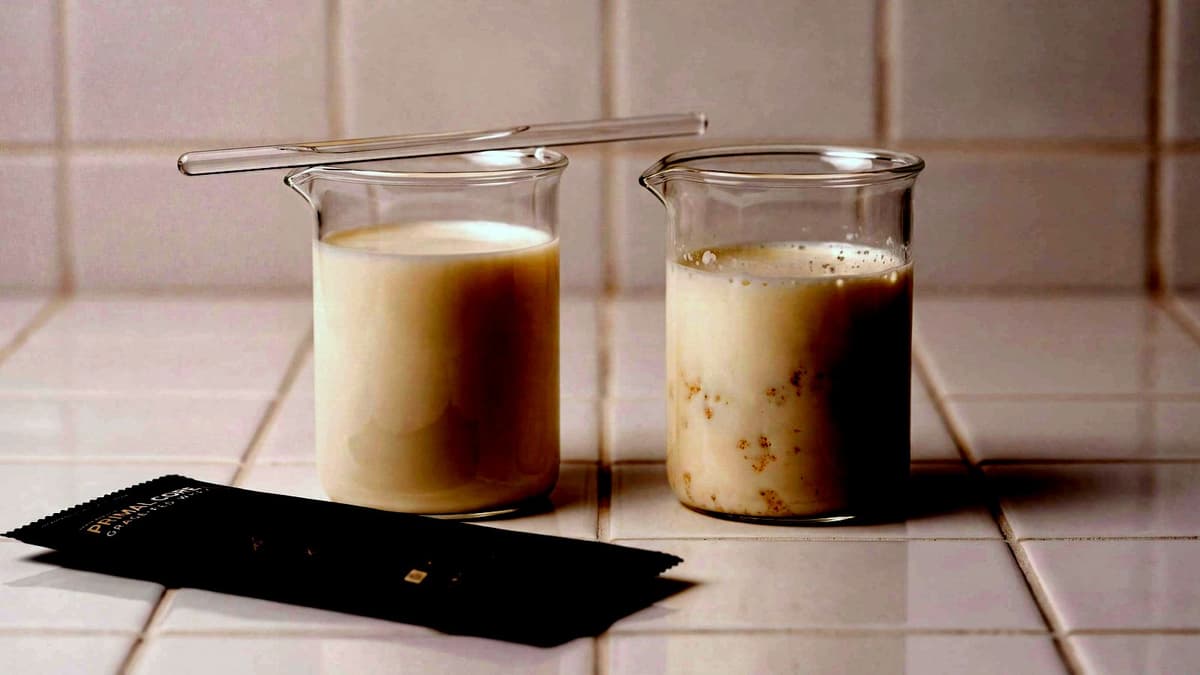
Never add whey to hot coffee or boiling water. Even clean-label whey will clump above 65-70°C because the protein denatures on contact with heat. The reason most proteins don't clump in hot liquid has nothing to do with the whey - they're loaded with gums that keep the clumps suspended. You're drinking slime.
Start with half a serving (15g protein) if you're new to whey or coming off a flare. Work up to a full 30g sachet over 7-10 days. Your gut needs time to adjust to any new protein source, even a clean one.
Take it with food, not on an empty stomach. Protein digests slower when paired with fat and fiber. A cappuccino with breakfast, or a post-workout shake with a handful of almonds, is easier on your gut than a standalone shake at 3pm.
Why Mindful Crumb's Primal Core works for people with IBS
Primal Core is a single-ingredient grass-fed whey protein concentrate with added lactase enzyme. One ingredient. That's it.
The whey comes from pasture-raised European dairy cows. It's filtered once (not multiple times like isolate) and processed below 10°C to keep the immunoglobulins and lactoferrin intact. Each 30g sachet delivers 24g protein, about 5.5g BCAA, under 1g sugar and 120 calories.
The lactase enzyme breaks down whatever lactose remains in the concentrate before it reaches your colon, so even people who are lactose-intolerant can digest it comfortably. That's why the reviews mention "no bloating" over and over.
It's sold as a 450g pouch of 15 individually sealed sachets. EUR 39 one-time, EUR 35 on subscription. Ships Portugal EUR 7, Spain EUR 8, rest of EU EUR 12-20, free over EUR 100 to Portugal and Spain. Third-party tested by Eurofins for heavy metals and full amino profile - the lab report is public.
The two things people do with it: the protein cappuccino (above) and baking. Because there are no sweeteners or gums to break down, it holds up in the oven - protein pancakes, muffins, bread.
If you've been avoiding protein powder because everything you've tried bloats you, try this. It's the one William built because he couldn't find a whey he could drink without his gut shutting down.
If you want the bag that matches everything above, it is Primal Core grass-fed whey. One ingredient, added lactase, 24g of protein a sachet, shipped across the EU.
Frequently Asked Questions
Can I drink protein powder if I have IBS?
Yes, if you choose unflavored whey concentrate with lactase enzyme and zero additives. Avoid gums, artificial sweeteners, seed oils, and flavoring - all common IBS triggers. Start with half a serving and work up.
Is whey isolate or concentrate better for IBS?
Concentrate with added lactase is better. It keeps the immunoglobulins and lactoferrin that support gut health, while lactase breaks down the 4-5% lactose. Isolate is stripped of these beneficial compounds and usually contains gums that trigger IBS symptoms.
Why does my protein powder make me bloated?
Likely the gums (xanthan, guar), artificial sweeteners (sucralose, acesulfame-K), or seed oils (soy lecithin, sunflower lecithin). These additives ferment in the colon and cause gas and bloating in IBS patients. Switch to a single-ingredient product.
What is the best time to take protein powder with IBS?
Take it 30-60 minutes after a flare-up subsides, not during. Your gut needs to calm down first. Morning or post-workout are best for most IBS patients when the gut is least reactive.
Should I avoid whey protein if I'm lactose intolerant with IBS?
No. Choose whey concentrate with added lactase enzyme - it breaks down the lactose so you can digest it comfortably. About 65% of adults are lactose intolerant to some degree, and lactase-enhanced whey solves the problem without stripping beneficial compounds.