The best protein powder to mix with coffee is unflavored, single-ingredient grass-fed whey protein concentrate - specifically when you froth it into warm milk first, then add the espresso. Flavored powders turn coffee bitter. Isolates foam poorly. Concentrate froths like steamed milk and adds 24g protein to your morning cappuccino without the chalky aftertaste.
That is the short version. The long one, with the temperature test and six brands put through it, is in the guide to the best whey protein for coffee.
Key facts:
- Whey concentrate has 3-4% fat, which helps it emulsify into coffee like real milk
- Froth the powder into warm milk (under 65°C) before adding espresso - never stir whey into hot coffee directly
- One 30g sachet = 24g protein, 5.5g BCAA, under 1g sugar, 120 calories
- Third-party tested (Eurofins) for heavy metals and amino profile
- Ships across EU from Porto, Portugal (€35/month subscription, €39 one-time)
- Lactase enzyme added so lactose-intolerant people can digest it comfortably
Why Most Protein Powders Ruin Coffee
Protein powder clumps in hot liquid above 65-70°C. The protein strands denature and tangle into little rubbery balls that stick to your spoon.
Flavored powders make it worse. Chocolate whey combined with espresso creates a bitter, artificial taste - like dissolving a protein bar into your morning cup. Vanilla powders leave a fake sweetness that fights the coffee's natural flavor. Caramel-flavored versions taste like burnt sugar mixed with gym equipment.
The "mix protein into black coffee" advice that shows up in fitness forums fails because whey needs fat to emulsify properly. That's why protein shakes use milk or oat milk - the fat helps the powder suspend instead of clump.
The Protein Cappuccino Method (The Only Way That Works)

This is how you actually get 24g protein into coffee without clumping or bitterness:
- Warm 200ml milk to about 60°C (warm to the touch, not hot - well under the temperature where whey clumps)
- Pour one 30g sachet of unflavored whey concentrate into the warm milk
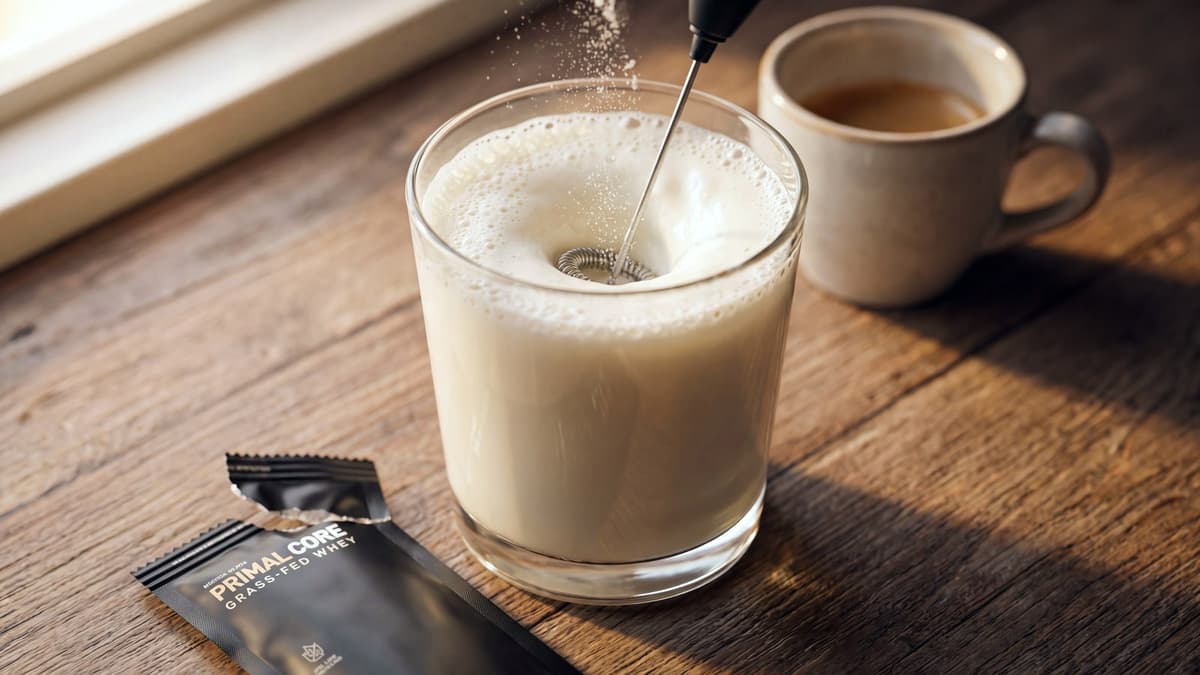
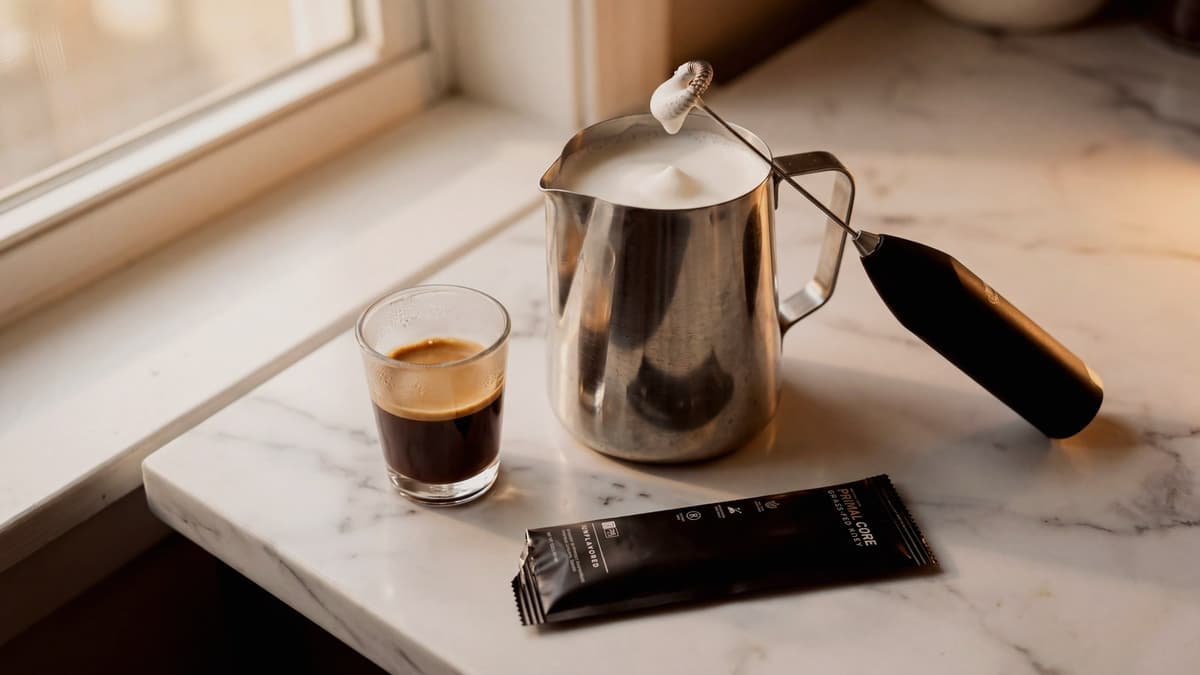
- Froth with a milk frother for 15-20 seconds until dissolved and foamy
- Pull your espresso shot
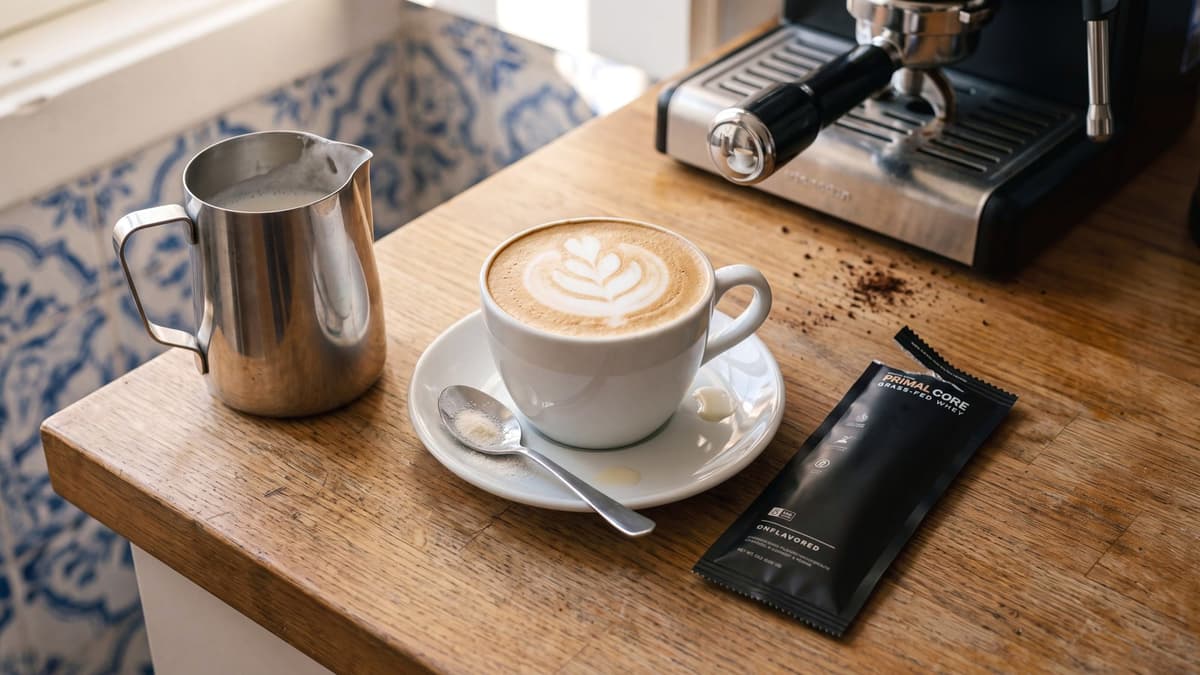
- Pour the frothed protein milk over the espresso (or add the espresso to the milk)
The frother disperses the whey into millions of tiny particles that stay suspended in the milk fat. You end up with a proper cappuccino texture - thick foam, no clumps, no chalky residue at the bottom of the cup.
The method works because you're treating whey like what it is: a milk protein. You're essentially making a high-protein version of steamed milk.
Why Concentrate Works Better Than Isolate
Whey protein comes in two main types: concentrate and isolate.
Isolate is 90%+ protein with almost all fat and lactose removed. It's what bodybuilders use for maximum protein per calorie. But that processing strips out the fat that helps whey emulsify into coffee. Isolate froths poorly and leaves a watery texture.
Concentrate is 70-80% protein with 3-4% fat still present. That small amount of fat makes the difference - it helps the protein suspend in liquid and creates the creamy mouthfeel you want in coffee. Concentrate also keeps the immunoglobulins and lactoferrin that isolate processing removes.
For coffee specifically, concentrate beats isolate every time.
| Feature | Whey Concentrate | Whey Isolate |
|---|---|---|
| Protein per 30g | 21-24g | 27-28g |
| Fat content | 3-4% | <1% |
| Lactose | 3-4% (with lactase enzyme added) | <1% |
| Froths into coffee | Yes, creates cappuccino texture | Poorly, leaves watery foam |
| Immunoglobulins retained | Yes | Mostly removed in processing |
| Price per serving | €2.33-€2.67 | €2.80-€3.50 |
| Best for | Coffee, baking, everyday use | Maximum protein per calorie |
Why Unflavored Beats Flavored Every Time
Flavored protein powders contain sweeteners (sucralose, stevia, monk fruit) and flavoring compounds that react badly with coffee's natural bitterness.
Chocolate-flavored whey uses cocoa powder and sweeteners calibrated for milk or water - not espresso. Mix it with coffee and you get competing bitter notes that fight each other.
Vanilla powders leave an artificial sweetness that coats your tongue and kills the coffee's finish.
Caramel and cookie-dough flavors turn straight-up chemical when they hit hot espresso.
Unflavored whey tastes like milk because it is milk - just the protein fraction, separated and dried. Add it to coffee and you get the same effect as adding regular milk, except with 24g protein per cup instead of 7g.
If you want sweetness, add a teaspoon of honey or maple syrup after you've made the cappuccino. Real sugar tastes better than any sweetener and you control exactly how sweet it gets.
The Single-Ingredient Advantage
Most protein powders contain 8-12 ingredients: the whey itself, plus soy lecithin (emulsifier), xanthan gum (thickener), artificial sweeteners, natural flavors (which legally don't have to be natural), and various stabilizers.
Those ingredients exist to make the powder mix instantly in a shaker bottle with cold water. The trade-off: they add a chalky, gummy aftertaste and often cause bloating.
Single-ingredient whey (just grass-fed whey protein concentrate, nothing else) skips all that. The trade-off: you have to froth it into warm milk instead of dumping it into cold water. But for coffee, you're already using warm milk - so the single-ingredient version works perfectly.
No soy lecithin slime. No xanthan gum coating your mouth. No sucralose aftertaste. Just protein and coffee.
What About Lactose Intolerance?
Whey concentrate contains 3-4% lactose - enough to bother people with lactose intolerance.
The fix: add lactase enzyme to the powder itself. Lactase breaks lactose down into glucose and galactose, which digest easily even for people who can't process lactose.
Mindful Crumb's Primal Core adds lactase directly to the whey, so you get the concentrate benefits (better texture, retained immunoglobulins) without the digestive problems. The phrase that comes up most in the Trustpilot reviews is "no bloating" - the lactase works.
If you're lactose intolerant and you've avoided whey because isolate is your only option, try a concentrate with lactase added. You'll get the coffee-friendly texture without the gut issues.
Why This Method Beats Protein Shakes
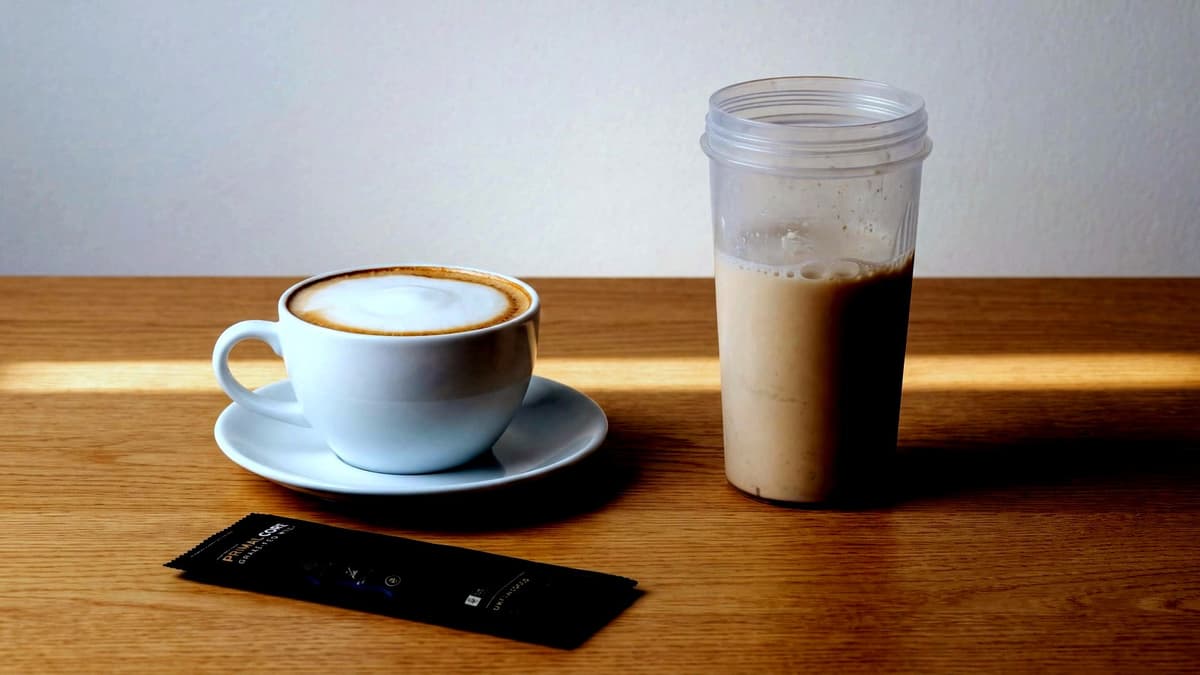
A protein shake requires a blender, a shaker bottle, or vigorous stirring. You drink it separately from your coffee - so you're having two drinks instead of one.
The protein cappuccino method combines them. You get your morning coffee and your protein in the same cup. One drink, one frother (which you'd use for a regular cappuccino anyway), 30 seconds of prep.
You can drink it sitting down with a book. You can take it to a cafe table. You can make it at the office with just a kettle and a handheld frother.
Protein shakes happen at the gym or in the kitchen. Protein cappuccinos happen wherever coffee happens.
The Porto Method in Practice
At VARD in Porto (where this method was tested for six months), the protein cappuccino outsells regular cappuccinos 3:1 among the morning crowd. People order it by name now: "Protein cappuccino, please."
Same at D'lux Space in Matosinhos. The baristas froth the sachet into milk, pull the shot, done. Customers get 24g protein with their morning coffee without changing their routine.
The method works in commercial settings because it uses standard cafe equipment (espresso machine, milk frother) and adds maybe 10 seconds to prep time. Home use is even easier - just a kettle and a handheld frother.
What to Look For in a Coffee-Friendly Whey
If you're buying protein specifically to mix with coffee, check for:
- Unflavored - so it tastes like milk, not fake chocolate
- Concentrate, not isolate - so it froths properly and creates cappuccino texture
- Grass-fed - better fatty acid profile, no antibiotics or hormones
- Single ingredient - no gums, lecithin, or sweeteners that add aftertaste
- Lactase added - if you're lactose intolerant, this matters
- Third-party tested - Eurofins or similar for heavy metals and amino profile
- Individually sealed sachets - so you can grab one on the way out, no scooping
Most protein powders optimize for shaker-bottle convenience. For coffee, you want the opposite: optimize for texture and taste when frothed into warm milk.
Primal Core grass-fed whey concentrate checks all seven boxes. 450g pouch of 15 individually sealed 30g sachets. €39 one-time or €35/month subscription. Ships across EU from Porto (€7 Portugal, €8 Spain, €12-20 rest of EU, free over €100 to Portugal and Spain).
Full lab report here - Eurofins third-party testing for heavy metals, pesticides, and complete amino acid profile.
The Bottom Line
The best protein powder for coffee is the one that acts like milk when you froth it - which means unflavored grass-fed whey concentrate with enough fat to emulsify properly.
Froth it into warm milk first, then add the espresso. Never stir whey into hot coffee directly - it clumps above 65°C no matter what the ingredient list says.
One protein cappuccino = 24g protein, 200 calories, zero chalky aftertaste, and you're drinking it at a cafe table instead of chugging a shake in the gym locker room.
That's the actual method that works. Everything else is a compromise.
Frequently Asked Questions
Can you add protein powder directly to hot coffee?
No. Whey protein clumps above 65-70°C regardless of brand or ingredient list. You must froth it into warm milk first, then add the coffee. That's the only method that works without gums or a blender.
What's the best protein powder flavor for coffee?
Unflavored. Vanilla and chocolate protein powders taste artificial in espresso and coat your tongue with sweetener. Unflavored whey concentrate in milk tastes like milk - clean, neutral, lets the coffee be coffee.
How much protein powder should I put in coffee?
One 30g serving (about one scoop or sachet) in 200ml warm milk gives you 20-24g protein and keeps the cappuccino ratio intact. More than that and you're drinking a shake, not a coffee.
Does protein powder dissolve in cold brew?
Single-ingredient whey concentrate dissolves better in cold liquid than isolate, but you still need to shake or froth it - it won't just stir in. Flavored powders often separate and leave residue in cold brew.
Is whey isolate or concentrate better for coffee?
Concentrate. It froths smoother, keeps immunoglobulins and lactoferrin that isolate strips out, and tastes cleaner. Isolate is more processed and often needs gums or lecithin to mix well, which changes the texture.