Yes, whey protein causes bloating in most people - but not because of the protein. The lactose, artificial sweeteners, gums, soy lecithin and other fillers in nearly every commercial whey powder are what wreck your gut. Strip those out and the protein digests clean.
Key facts:
- Lactose intolerance affects 65-70% of adults worldwide - most whey concentrates contain 4-8g lactose per serving
- Artificial sweeteners (sucralose, acesulfame-K) ferment in your colon and produce gas
- Gums (xanthan, guar) slow gastric emptying and trap air in your digestive tract
- Whey concentrate keeps immunoglobulins and lactoferrin that support gut health - isolates strip them out
- Adding lactase enzyme to concentrate gives you the best of both: easy digestion and gut support
Why most whey powders bloat you
I spent two years reading labels before I found a whey I could drink without feeling like I swallowed a balloon.
Every powder had the same junk:
- Lactose - 4 to 8 grams per scoop in most concentrates. If you're one of the 65% of adults who don't produce enough lactase enzyme, that lactose ferments in your gut and makes gas. A lot of gas.
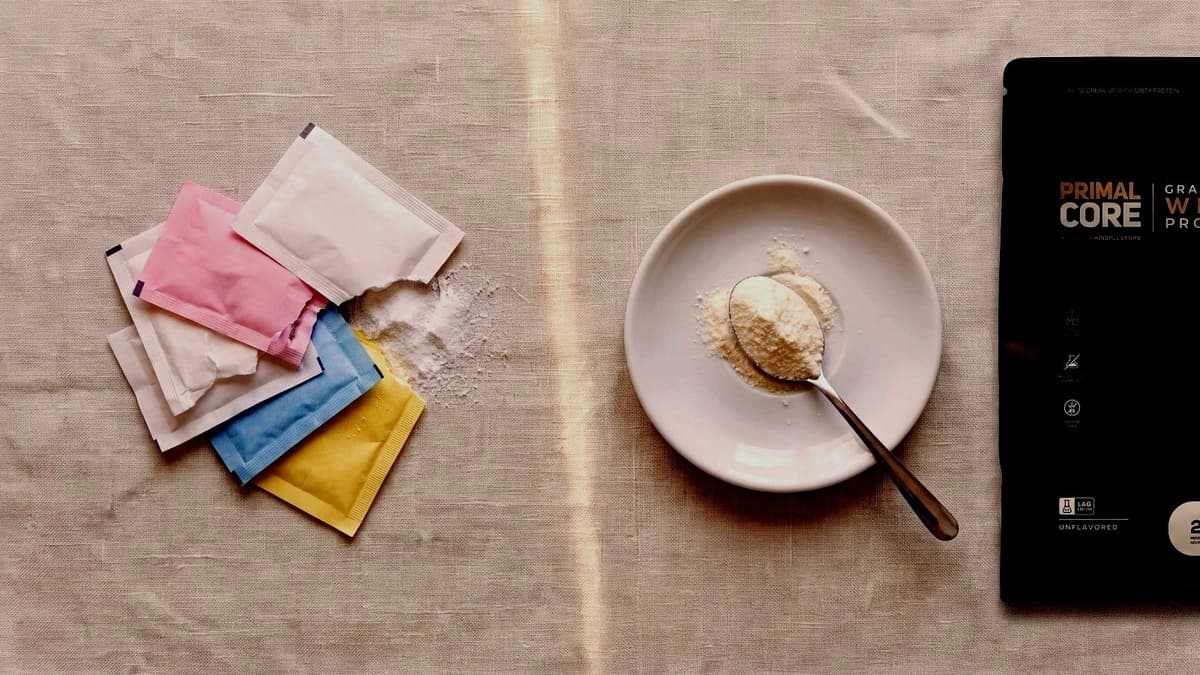
- Artificial sweeteners - Sucralose and acesulfame-K don't digest. They pass into your colon where bacteria break them down and produce hydrogen and methane. That's the bloat.
- Gums - Xanthan gum, guar gum, carrageenan. They're thickeners. They slow down how fast food moves through your stomach (delayed gastric emptying) and trap air bubbles. You feel full and gassy for hours.
- Soy lecithin - An emulsifier that helps powder mix into liquid. Also a common gut irritant.
- "Natural flavors" - Could be anything. The term covers thousands of compounds. Many of them ferment.
That's five gut irritants before you even get to the protein.
Concentrate vs isolate - the bloating difference

Most people think isolate is cleaner because it has less lactose. That's half true.
| Feature | Whey Concentrate | Whey Isolate |
|---|---|---|
| Protein per 100g | 70-80g | 90-95g |
| Lactose per serving | 4-8g (unless lactase added) | <1g |
| Immunoglobulins & lactoferrin | Kept intact | Mostly stripped out |
| Processing | Cold-filtered once | Processed 2-3 times (ion exchange or microfiltration) |
| Digestion (no lactase) | Bloats lactose-intolerant people | Easier on lactose |
| Digestion (with lactase) | Clean, keeps gut-supporting compounds | Clean, but missing bioactives |
| Price | Lower | Higher |
Isolate has almost no lactose, so it won't ferment. But the extra processing removes the immunoglobulins, lactoferrin and bioactive peptides that actually support your gut lining and immune function.
Concentrate keeps those. Add lactase enzyme and you get the best of both - easy digestion and the stuff that helps your gut.
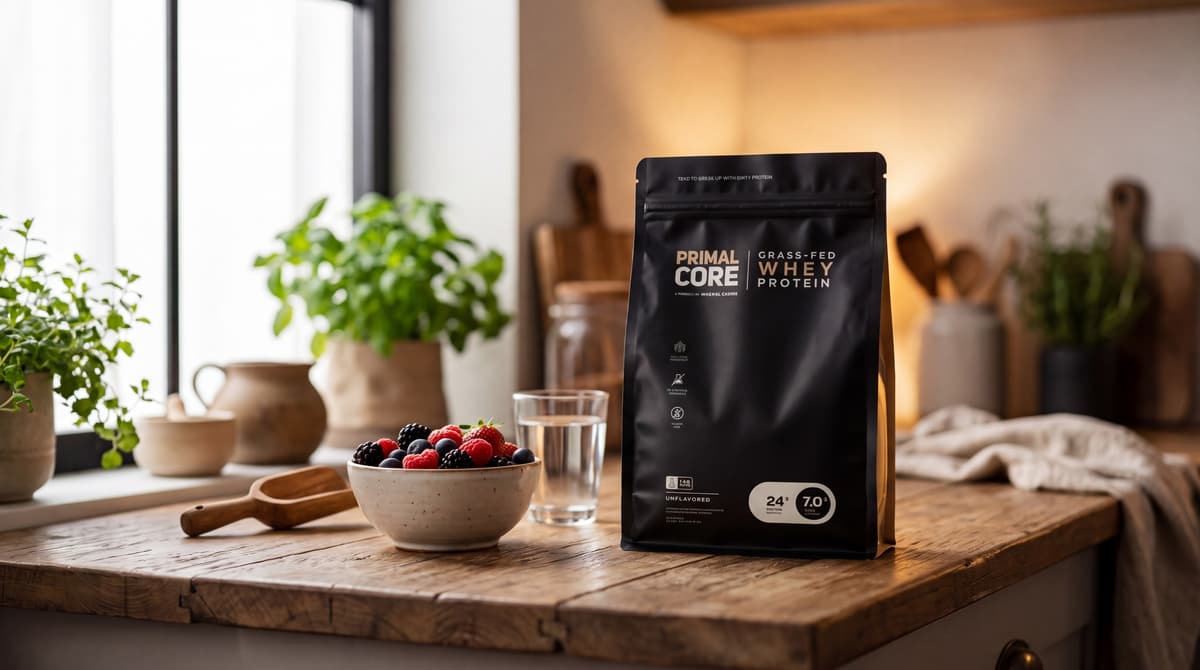
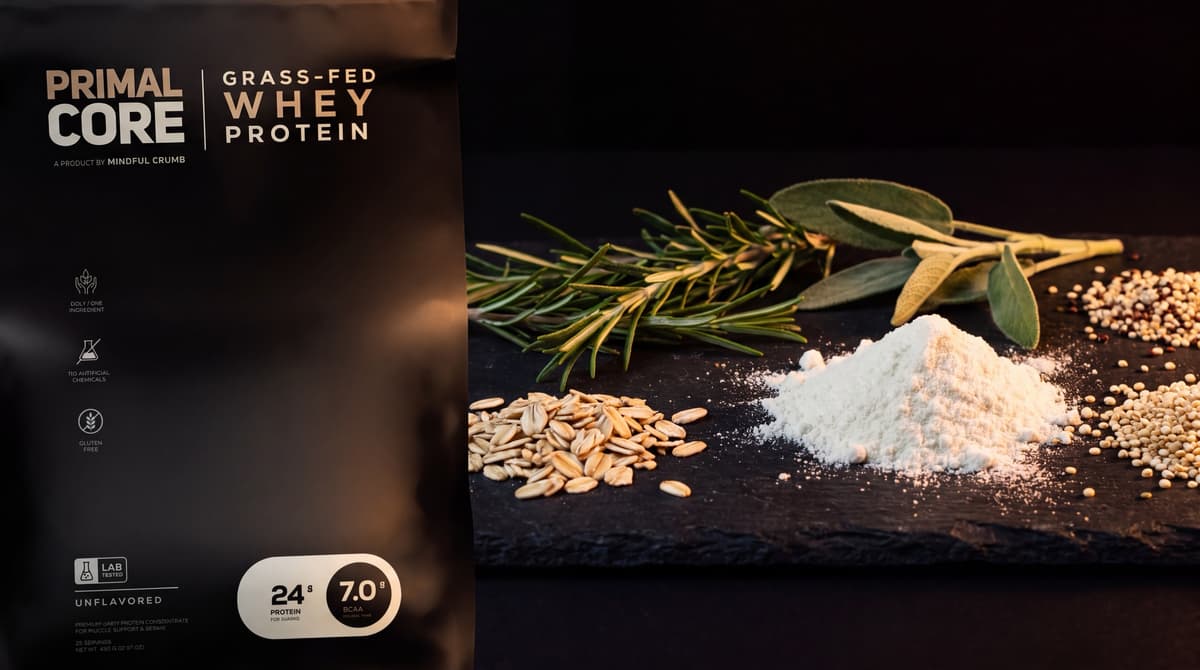
That's what I did with Primal Core. One ingredient (grass-fed whey concentrate) plus lactase enzyme in every sachet. No lactose fermentation. No gums. No bloat.
The filler problem nobody talks about
Even "clean label" whey powders sneak in gums and emulsifiers to make the powder mix smooth.
Xanthan gum is in everything. It's FDA-approved. It's vegan. It sounds harmless.
But here's what it does: it forms a gel in your stomach that slows gastric emptying. Food (and air) sits there longer. You feel bloated. Some people also react to the fermentation byproducts - xanthan is made by fermenting sugar with *Xanthomonas campestris* bacteria.
Guar gum does the same thing. So does carrageenan.
If your whey has any of these, that's probably why you're bloated three hours after your shake.
Sweeteners are worse than you think
Sucralose (Splenda) and acesulfame-K are in 80% of flavored whey powders.
They're 200-600 times sweeter than sugar. Zero calories. Sounds great.
Except your body doesn't digest them. They pass through your stomach and small intestine untouched. When they hit your colon, gut bacteria ferment them. That fermentation produces gas - hydrogen, methane, sometimes hydrogen sulfide.
That's the bloat. That's also why some people get diarrhea.
Stevia does this too, by the way. It's natural, but it still ferments in your colon if you use enough of it.
Unflavored whey has none of this. You taste the whey (slightly sweet, slightly creamy). No fermentation. No gas.
How I fixed the bloat (and why I started Mindful Crumb)
In 2024 I was using whey in a sourdough brioche recipe. Slow fermented dough, enhanced with protein. People loved it.
But I couldn't drink any whey powder without bloating.
I tried fifteen brands. Isolates, concentrates, hydrolysates. Flavored, unflavored. Organic, grass-fed, whatever.
Same result every time - I'd feel fine for an hour, then my stomach would inflate like I ate a Thanksgiving dinner.
Then my friend Rosa tried the whey I was using in the brioche. She has IBS. She's tried dozens of protein powders. Most of them wreck her.
She said: *"This is different. I don't feel bloated. I actually digest this. Why aren't you selling it?"*
That whey had two things going for it:
- Lactase enzyme - broke down the lactose before it hit her colon
- Nothing else - no gums, no sweeteners, no soy lecithin, no "natural flavors"
Just whey and lactase.
I sold the first batch in February 2025. Fifteen 30g sachets in a 450g pouch. Grass-fed European dairy. Cold-processed so the immunoglobulins stay intact. Unflavored.
People who'd given up on whey started using it in their morning cappuccino (pour the sachet into warm milk, froth it, add the espresso shot). No bloat. No gas. Just protein that works.
That's Primal Core. One ingredient plus lactase. 24g protein per sachet. Under 1g sugar. 120 calories.
What to look for if you want to avoid bloating
If you're buying whey and you want to actually digest it:
- Check the lactose - If you're lactose intolerant, either buy isolate or buy concentrate with added lactase enzyme. Don't assume "grass-fed" or "organic" means low lactose. It doesn't.
- Count the ingredients - One ingredient is ideal. Two (whey + lactase) is fine. Twelve ingredients means twelve things that might ferment in your gut.
- Avoid sweeteners - Sucralose, acesulfame-K, stevia - they all ferment to some degree. If you want flavor, add your own (cinnamon, cacao, vanilla extract).
- Skip the gums - Xanthan, guar, carrageenan. If it's on the label, it's slowing your digestion.
- Unflavored beats flavored - "Natural flavors" is a black box. You don't know what's in there. Unflavored whey tastes like slightly sweet milk. If you can't handle that, you probably can't handle dairy.
The cappuccino method (how to actually use unflavored whey)
Most people fail with unflavored whey because they dump it into hot coffee and it clumps into rubber.
Whey denatures (clumps) above 65-70°C. Doesn't matter how clean the ingredient list is - heat kills the texture.
Here's what works:
- Pour the sachet (or your scoop) into warm milk - warm, not hot, well under 65°C
- Froth it with a milk frother until dissolved and foamy (20-30 seconds)
- Add your espresso shot or pour the frothed milk over your coffee
You get a creamy protein cappuccino. 24g protein. No bloat. No clumps. No chalky aftertaste.
That's how most of my customers use it. Some bake with it (it holds up in the oven because it's dispersed in flour and fat, not sitting in hot liquid). But the cappuccino is the move.
When whey protein is actually the problem
Sometimes it's not the fillers. Sometimes it's the protein.
If you've tried unflavored whey isolate (no lactose, no gums, no sweeteners) and you still bloat, you might have a casein or whey allergy. That's rare - about 2-3% of adults - but it happens.
Symptoms: bloating, cramps, diarrhea, sometimes hives or throat tightness within 30 minutes to 2 hours of drinking whey.
If that's you, whey isn't your protein. Try pea protein, rice protein or egg white protein instead. All three digest clean if you buy unflavored versions with no gums.
But for most people, the whey itself isn't the problem. The junk in the whey is the problem.
The bottom line
Whey protein causes bloating when it's loaded with lactose, sweeteners, gums and fillers that ferment in your gut.
Strip those out and whey digests clean - especially concentrate with added lactase, which keeps the gut-supporting immunoglobulins an isolate would strip away.
If you're still searching for a whey that doesn't wreck your stomach, that's what I built Primal Core for. Grass-fed whey concentrate. Lactase enzyme. Nothing else. Ships across the EU from Porto.
Or just read the label on whatever you're buying now. Count the ingredients. If there are more than two, that's probably your answer.
Frequently Asked Questions
Does whey protein isolate cause less bloating than concentrate?
Yes, if you're lactose intolerant - isolate has under 1g lactose per serving while concentrate has 4-8g. But if your concentrate has added lactase enzyme, they digest the same. Concentrate also keeps immunoglobulins and lactoferrin that support gut health, which isolate strips out.
Why does whey protein make me gassy?
Usually it's not the protein - it's the lactose, artificial sweeteners (sucralose, stevia), gums (xanthan, guar) or soy lecithin in the powder. These ferment in your colon and produce gas. Unflavored whey with no fillers and added lactase won't make you gassy.
Can I fix whey protein bloating by taking digestive enzymes?
Yes, if the bloating is from lactose - take a lactase enzyme supplement with your shake or buy whey that already has lactase added. If the bloating is from gums or sweeteners, enzymes won't help. You need to switch to a cleaner powder.
Is grass-fed whey easier to digest?
No. Grass-fed means the cows ate pasture, which improves the omega-3 and CLA content. It doesn't reduce lactose or remove fillers. If you're bloating from grass-fed whey, check the ingredient list - it probably has the same gums and sweeteners as conventional whey.
How long does whey protein bloating last?
Usually 2-6 hours, depending on what's causing it. Lactose fermentation peaks around 2-3 hours. Sweetener fermentation can last longer. Gums slow gastric emptying for 4-6 hours. If you're still bloated after 8 hours, that's not normal - see a doctor.