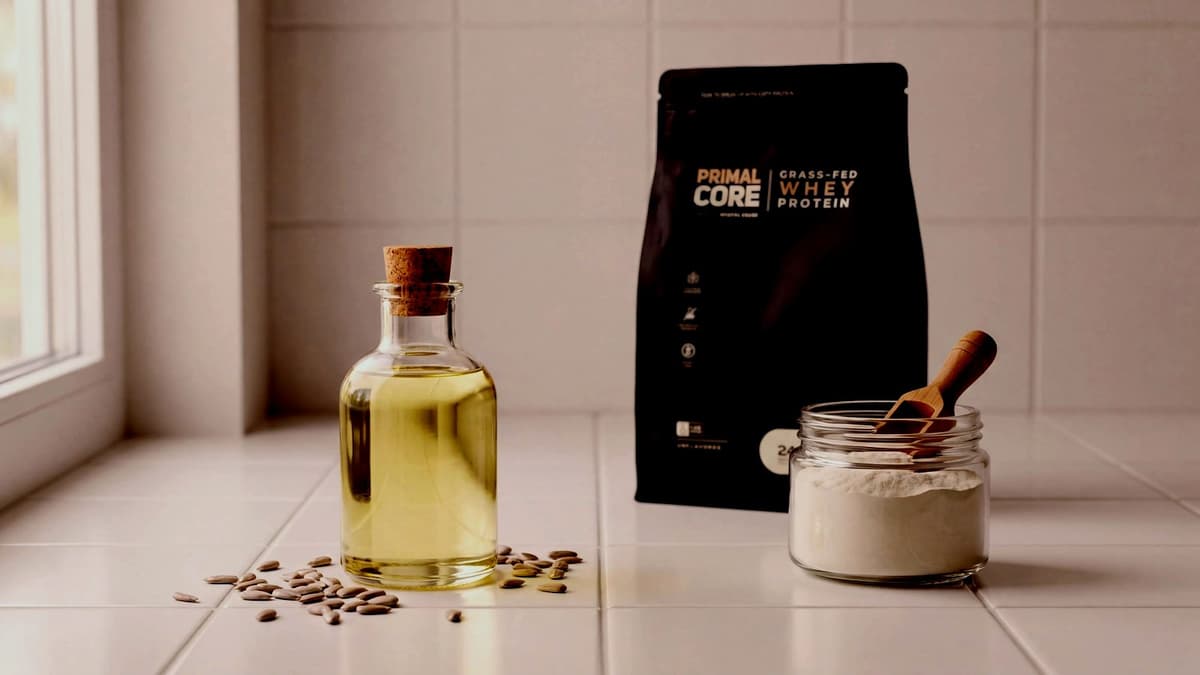
Protein powder without sunflower oil exists, but you have to read the label. Most brands use sunflower lecithin as an emulsifier to make their powder mix smoothly in water. It shows up as "sunflower lecithin," "sunflower oil," or buried in "natural flavors." Single-ingredient whey protein concentrate - unflavored, nothing added - skips it entirely.
Sunflower is one name on a longer list. Canola and rapeseed hide the same way, and the guide to protein powder without seed oils has all of them.
Key facts about sunflower oil in protein powder
- Sunflower lecithin appears in about 70% of flavored protein powders as an emulsifier
- It's extracted using hexane, a petroleum solvent, then refined
- Single-ingredient whey concentrate (unflavored) contains zero lecithin or oil
- Isolates often add lecithin back in to improve mixability after processing
- Cold-pressed sunflower oil (whole food) is different from the lecithin isolate used in supplements
- EU regulations allow lecithin without listing the extraction method on the label
Why protein powder contains sunflower oil or lecithin
Lecithin is an emulsifier. It stops powder from clumping and helps it dissolve in liquid without a blender.
When a brand adds cocoa, vanilla, stevia or any flavoring, the powder gets hydrophobic - it repels water. Lecithin bridges that gap. The powder mixes smooth. The customer is happy.
But here's what they don't put on the front of the bag: most sunflower lecithin is made by soaking sunflower seeds in hexane (a petroleum-derived solvent), then heating and bleaching the extract. The final product contains trace hexane residue - usually under regulatory limits, but it's there.
Soy lecithin used to be the standard. Then the "soy-free" wave hit and brands switched to sunflower. Same process. Different seed.
If you see "instantized" whey protein, that's code for lecithin. Instantized means the manufacturer spray-dried the whey with lecithin so it dissolves instantly in cold water. Convenient, but you're drinking the oil.
What sunflower lecithin does in your body

Lecithin itself isn't poison. Your liver makes lecithin. Egg yolks contain lecithin. The issue is the processed, solvent-extracted version in supplements.
Hexane residue aside, here's what happens when you consume refined lecithin daily:
Gut irritation. Emulsifiers disrupt the mucus layer in your intestines. A 2015 study in *Nature* (Chassaing et al.) showed that synthetic emulsifiers like lecithin changed gut bacteria and increased inflammation in mice. Human studies are smaller but point the same direction - regular emulsifier intake correlates with IBS symptoms and leaky gut markers.
Omega-6 overload. Sunflower lecithin is about 60% omega-6 fatty acids (linoleic acid). Most people in Portugal and Spain already get 15-20 times more omega-6 than omega-3 from seed oils in processed food. Adding more tips the ratio further. Chronic inflammation, insulin resistance, and fat storage all rise with high omega-6 intake.
Oxidized fats. Sunflower oil oxidizes easily when exposed to heat or light during manufacturing. Oxidized fats create free radicals. Free radicals damage cell membranes. You feel it as bloating, brain fog, or fatigue after your shake.
None of this kills you overnight. But if you drink a protein shake every day for two years, you're consuming about 730 servings of hexane-extracted, omega-6-heavy emulsifier. That adds up.
How to find protein powder without sunflower oil
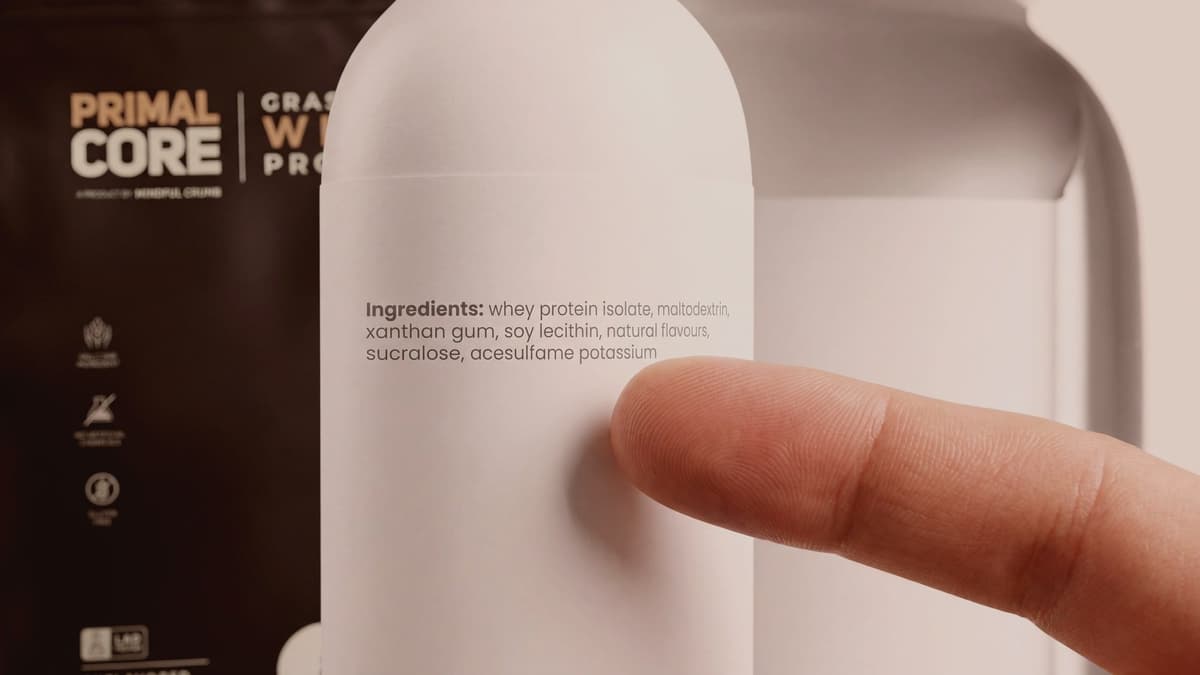
Read the ingredients. Not the marketing. The actual list on the back.
What to look for:
- One ingredient: whey protein concentrate (or isolate, though concentrate is less processed)
- No lecithin of any kind (soy, sunflower, rapeseed)
- No "natural flavors" (lecithin hides there)
- Unflavored (flavoring requires emulsifiers)
- Cold-processed or low-heat processed
- Grass-fed source (optional but usually signals a cleaner supply chain)
Where to look:
| Channel type | What you'll find | Why it matters |
|---|---|---|
| Brand direct sites | Single-ingredient options exist but rare; most brands sell flavored blends | You see the full ingredient list and lab reports |
| Health food specialty shops | Higher chance of clean labels; staff may know the difference | You can ask questions before buying |
| Chain pharmacies | Almost all contain lecithin, gums, or sweeteners | Formulated for convenience, not ingredient quality |
| Online marketplaces | Mix of everything; hard to verify claims | Easy to compare but check the seller's return policy |
Most single-ingredient whey comes unflavored. That means you flavor it yourself - mix it into warm milk and coffee (a protein cappuccino), blend it into oatmeal, bake with it. You won't chug it with water like a flavored isolate. Different use case.
The protein cappuccino method (no lecithin needed)
This is how I use Mindful Crumb's whey every morning. No blender. No clumping. No oil.
- Heat 200-250ml milk to warm (not hot - keep it under 65°C or the whey will clump on its own, clean label or not)
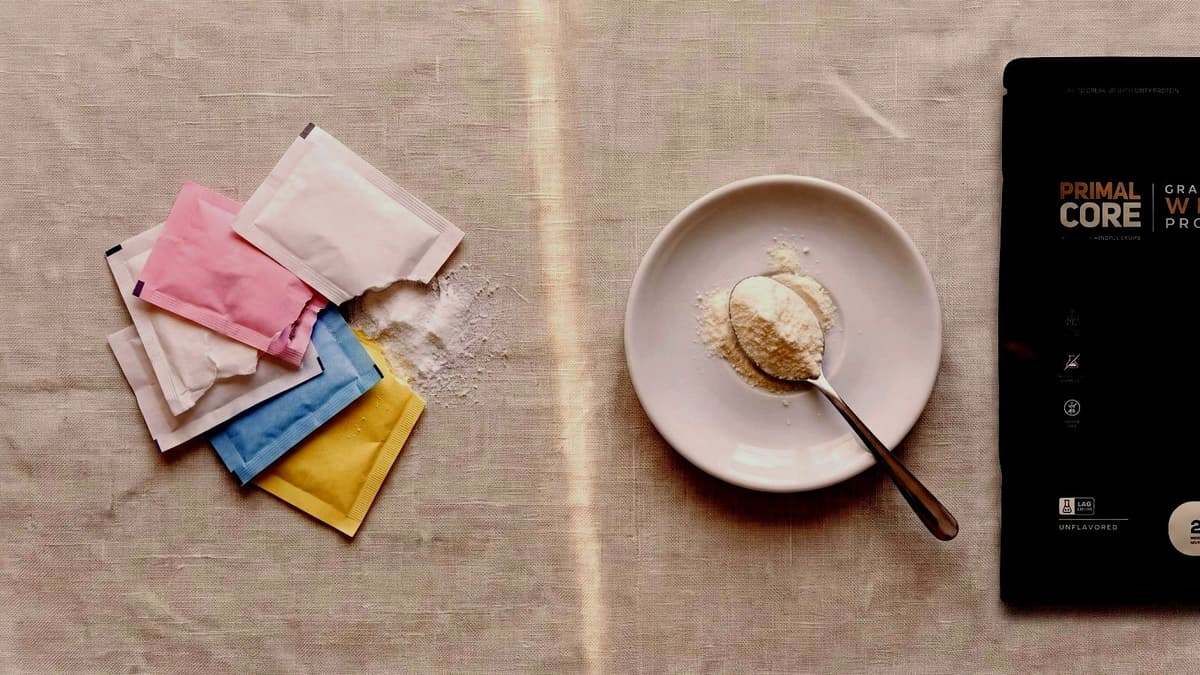
- Pour one 30g sachet of unflavored whey concentrate into the warm milk
- Froth it with a milk frother for 20-30 seconds until it's dissolved and foamy
- Add your espresso shot or pour the frothed milk over brewed coffee
The milk's fat content (I use whole milk) acts as the emulsifier. No sunflower oil. No hexane. Just 24g of protein that actually tastes like something you'd order at a cafe.
People who try this ask why they ever drank chalky shakes. The answer: because flavored powder trained them to think protein has to taste like fake chocolate or fake vanilla.
Why I started making single-ingredient whey
I used to flip every protein powder in the supplement aisle and read the back. Lecithin. Guar gum. Xanthan gum. Sucralose. Acesulfame-K. "Natural flavors" that aren't natural.
I have an ISSA certification and a background in nutrition. I knew what those ingredients did over time. Gut lining breakdown. Blood sugar spikes from sugar alcohols. Omega-6 overload from seed-oil emulsifiers.
So I started using unflavored whey concentrate in my own sourdough brioche - slow fermented, enhanced with protein. People loved it. But a friend, Rosa, was the one who changed the plan.
She tried the whey on its own. She said: *"This is different. I don't feel bloated. I actually digest this. Why aren't you selling it?"*
She'd tried dozens of protein powders. Most of them sat in her stomach like cement. The difference was the absence of everything else - no gums to slow digestion, no lecithin to irritate her gut, no sweeteners to ferment in her intestines.
That's why Mindful Crumb sells one thing: Primal Core - single-ingredient grass-fed whey protein concentrate. One ingredient. From pasture-raised European cows. Cold-processed so the immunoglobulins and lactoferrin stay intact (isolates strip those out). Lactase enzyme added so lactose-intolerant people can drink it without the gas.
No sunflower lecithin. No sunflower oil. No soy. No gums. No sweeteners. No hexane.
450g pouch, 15 individually sealed 30g sachets. Each sachet: 24g protein, about 5.5g BCAA, under 1g sugar, 120 kcal. €39 one-time or €35/month on subscription. Third-party tested by Eurofins (heavy metals, full amino profile). 4.4 stars on Trustpilot from 15 verified reviews.
Ships across the EU from Porto. Portugal €7, Spain €8, rest of EU €12-20, free over €100 to Portugal and Spain.
You can see the full lab report here.
What to expect when you switch
If you've been drinking flavored, emulsified protein for months or years, switching to single-ingredient whey feels different.
Week 1: You might miss the sweetness. Unflavored whey in warm milk tastes like... milk and coffee. Not cake batter. Your brain has to recalibrate.
Week 2: Bloating drops. Most people notice it here - no more gut distension after their shake, no gas, no cement-stomach feeling.
Week 3-4: Digestion normalizes. If you had IBS-like symptoms (cramping, irregular bowel movements), they often smooth out when you remove the emulsifiers and gums.
Month 2+: This becomes your baseline. You stop thinking about protein powder. It just works. You move on with your life.
That's the goal. Not to make protein powder the center of your health strategy. Just to make it something that doesn't wreck your gut while you're trying to build muscle or stay full on a GLP-1.
The truth about "chemical-free" protein marketing
You'll see brands claim "no artificial ingredients" or "clean label" while still using sunflower lecithin.
Technically, lecithin is "natural" because it comes from a plant. But so does high-fructose corn syrup. The word "natural" has no legal definition in supplement labeling in the EU beyond "derived from a natural source."
Hexane extraction? Still natural. Bleaching? Still natural. Refined until the oil has zero resemblance to a sunflower seed? Still natural.
The only way to know what you're drinking is to read the ingredient list. If it says "sunflower lecithin" or "lecithin" with no other qualifier, it's the refined, solvent-extracted version.
If a brand wanted to use cold-pressed, non-hexane lecithin, they'd say so. It costs more and they'd market it. Silence means standard industrial extraction.
The bag with no lecithin in it at all is Primal Core grass-fed whey: one ingredient, 24g of protein a sachet, shipped across the EU.
FAQ
Does all whey protein contain sunflower oil?
No. Single-ingredient whey protein concentrate or isolate contains zero oil or lecithin unless the label lists it. Flavored and instantized whey almost always contains sunflower lecithin as an emulsifier.
Is sunflower lecithin worse than soy lecithin?
Both are extracted the same way (hexane solvent). Sunflower lecithin has more omega-6 fats, soy lecithin has phytoestrogens. Neither belongs in a daily supplement if you're trying to avoid processed oils.
Can I use protein powder without lecithin in a shaker bottle?
Not easily. Unflavored single-ingredient whey clumps in cold water without an emulsifier. Use it in warm milk (under 65°C) with a frother, or blend it, or bake with it. Different use case than a grab-and-shake product.
Why does my protein powder say "instantized" on the label?
Instantized means the manufacturer spray-dried the whey with lecithin (usually sunflower or soy) so it dissolves instantly in liquid. It's a processing method, not an ingredient benefit.
Is grass-fed whey protein always free of sunflower oil?
No. Grass-fed refers to the cows' diet, not the ingredient list. A grass-fed whey isolate can still contain lecithin, gums, and sweeteners. Always check the back label.
Frequently Asked Questions
Does all whey protein contain sunflower oil?
No. Single-ingredient whey protein concentrate or isolate contains zero oil or lecithin unless the label lists it. Flavored and instantized whey almost always contains sunflower lecithin as an emulsifier.
Is sunflower lecithin worse than soy lecithin?
Both are extracted the same way (hexane solvent). Sunflower lecithin has more omega-6 fats, soy lecithin has phytoestrogens. Neither belongs in a daily supplement if you're trying to avoid processed oils.
Can I use protein powder without lecithin in a shaker bottle?
Not easily. Unflavored single-ingredient whey clumps in cold water without an emulsifier. Use it in warm milk (under 65°C) with a frother, or blend it, or bake with it. Different use case than a grab-and-shake product.
Why does my protein powder say "instantized" on the label?
Instantized means the manufacturer spray-dried the whey with lecithin (usually sunflower or soy) so it dissolves instantly in liquid. It's a processing method, not an ingredient benefit.
Is grass-fed whey protein always free of sunflower oil?
No. Grass-fed refers to the cows' diet, not the ingredient list. A grass-fed whey isolate can still contain lecithin, gums, and sweeteners. Always check the back label.