Protein powder without stevia or sucralose is usually unflavored whey concentrate with one ingredient: whey protein. No sweeteners, no gums, no flavoring. You taste the dairy, you add your own sweetness if you want it, and your gut doesn't have to process synthetic compounds.
Most people looking for this have tried flavored protein before and felt bloated, gassy or had digestive issues. The sweeteners are often the problem - stevia can cause gut irritation in some people, and sucralose disrupts gut bacteria according to research published in *Frontiers in Nutrition* (2022).
Key facts:
- Single-ingredient whey concentrate keeps the natural lactose (about 4-5g per 30g serving) and the immunoglobulins an isolate strips out
- Grass-fed matters for omega-3 ratio and absence of synthetic hormones (rBGH/rBST banned in EU, still legal in some regions)
- Cold-processed whey denatures fewer proteins than heat-treated versions
- Lactase enzyme can be added so lactose-intolerant people digest it without bloating
- Unflavored whey tastes mildly sweet and dairy-forward - not neutral, but not offensive
- The two common uses: protein cappuccinos (whey frothed into warm milk, then espresso added) and baking
Why stevia and sucralose are in most protein powders
Cost and shelf appeal.
Whey protein on its own is mildly sweet from lactose, but not *candy* sweet. Brands add stevia or sucralose because consumers expect a shake to taste like dessert.
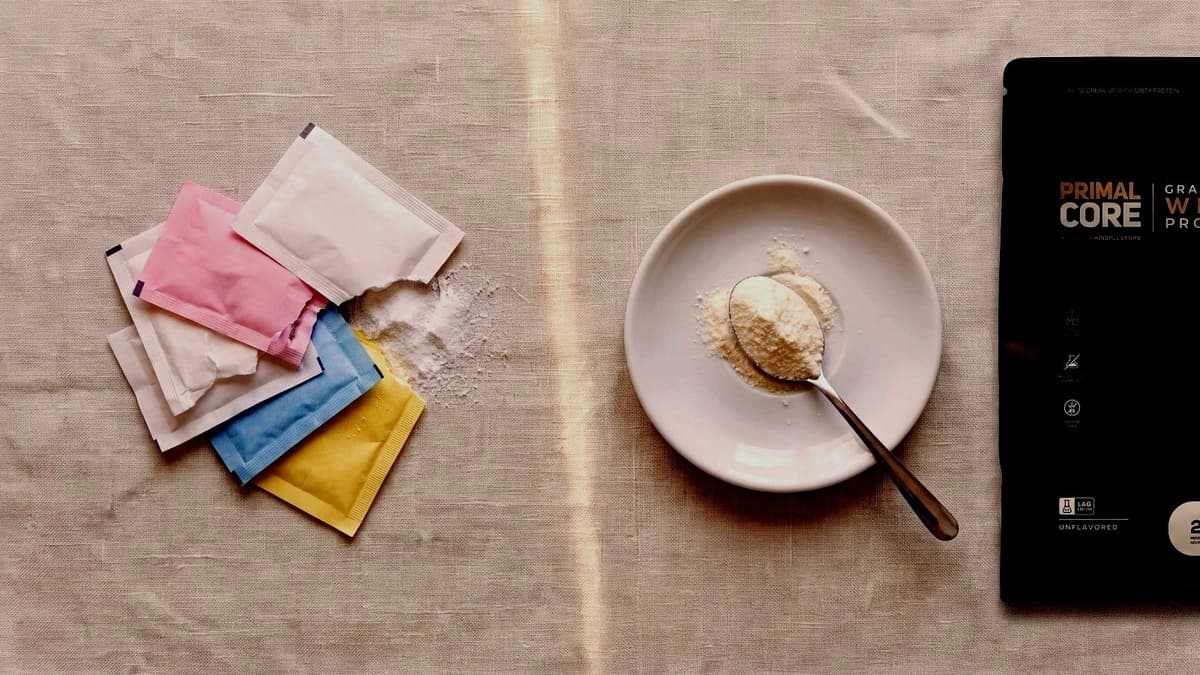
Stevia is marketed as "natural" (it's derived from a plant), but the extraction process involves solvents and the final product - rebaudioside A - is a highly refined compound. Sucralose is chlorinated sugar. Both are 200-600 times sweeter than sugar.
The problem: your gut doesn't recognize either one as food.
A 2022 study in *Frontiers in Nutrition* found that sucralose reduces beneficial gut bacteria and increases gut pH, which can lead to bloating and inflammation. Stevia can cause diarrhea and cramping in people sensitive to sugar alcohols (it's often blended with erythritol or xylitol to cut the aftertaste).
If you've had digestive issues with flavored protein, the sweetener is the first thing to eliminate.
What to look for in a clean protein powder

Ingredient list: One ingredient. Just "whey protein concentrate" or "whey protein concentrate, lactase enzyme" if it's lactose-reduced.
No gums (guar, xanthan, acacia). No soy lecithin. No "natural flavors" (that term is unregulated and can hide dozens of compounds). No seed oils (sunflower lecithin is common in flavored blends).
Protein source: Grass-fed whey from pasture-raised cows in regions with strict dairy regulations (New Zealand, Ireland, parts of the EU). Grass-fed whey has a better omega-3 to omega-6 ratio and no rBGH or rBST residues.
Processing method: Cold-processed or low-heat. High-heat dries whey faster but denatures some of the fragile immunoglobulins and lactoferrin. Cold-processing is slower and more expensive, but it keeps the whey closer to its natural state.
Third-party testing: Look for a lab report from Eurofins, Labdoor or similar. Heavy metals (lead, cadmium, arsenic) accumulate in dairy, and not all brands test for them. Amino acid profile should also be verified - some cheap whey is spiked with glycine or taurine to inflate the protein number.
Lactose handling: Whey concentrate is 70-80% protein by weight. The rest is mostly lactose and fat. If you're lactose intolerant, look for added lactase enzyme (it breaks lactose into glucose and galactose, which are easier to digest). Whey isolate has less lactose (under 1g per serving) but also strips out the immunoglobulins.
Comparison: single-ingredient whey vs flavored blends
| Feature | Single-ingredient whey concentrate | Flavored protein blend |
|---|---|---|
| Ingredient count | 1-2 (whey + optional lactase) | 8-15 (whey, sweeteners, gums, flavoring, lecithin, etc.) |
| Sweeteners | None (natural lactose only) | Stevia, sucralose, monk fruit, acesulfame K |
| Gut tolerance | High (if lactase added) | Variable (sweeteners and gums cause bloating in many people) |
| Mixability | Needs frother or blender (no gums to suspend it) | Shakes smooth with a spoon (gums act as thickeners) |
| Taste | Mildly sweet, dairy-forward | Dessert-like (vanilla, chocolate, etc.) |
| Heat stability | Clumps above 65-70°C in liquid (disperses fine in baking) | Often marketed as "heat stable" due to gums |
| Protein per serving | 24-26g per 30g powder | 20-25g (fillers displace protein by weight) |
| Common uses | Frothed cappuccinos, baking, plain with fruit | Shakes, smoothies |
How to use unflavored whey (so it doesn't taste like sadness)
The biggest complaint about unflavored whey: "It tastes like nothing" or "It tastes like gym socks."
That's true if you stir it into water. Whey is dairy. It wants fat and warmth.
The cappuccino method (what most Mindful Crumb customers do):
- Warm 200ml milk in a saucepan - warm, not hot. Well under 65°C. If it's too hot to hold your finger in for 3 seconds, it's too hot.
- Pour one 30g sachet of whey into the warm milk.
- Froth it with a milk frother (handheld or the wand on an espresso machine) until it's dissolved and foamy. This takes 15-20 seconds.
- Pour the frothed milk over a shot of espresso, or add the espresso to the frother jug.
You get 24g protein in a cappuccino that tastes like a latte. No chalky texture. No sweetener crash.
Never pour whey into hot coffee or hot milk. Whey clumps above about 65-70°C when it's sitting in liquid (it's fine in baking because it's dispersed in flour and fat). The clean ingredient list is why there's no gum to stop the clumping - but the trade-off is you have to respect the temperature.
For baking: Whey holds up in the oven because it's mixed into batter, not sitting in liquid. Replace 25-30% of the flour in muffins, pancakes or cookies with whey. It adds protein without changing the texture much (whey is hygroscopic, so reduce liquid slightly or the batter will be too wet).
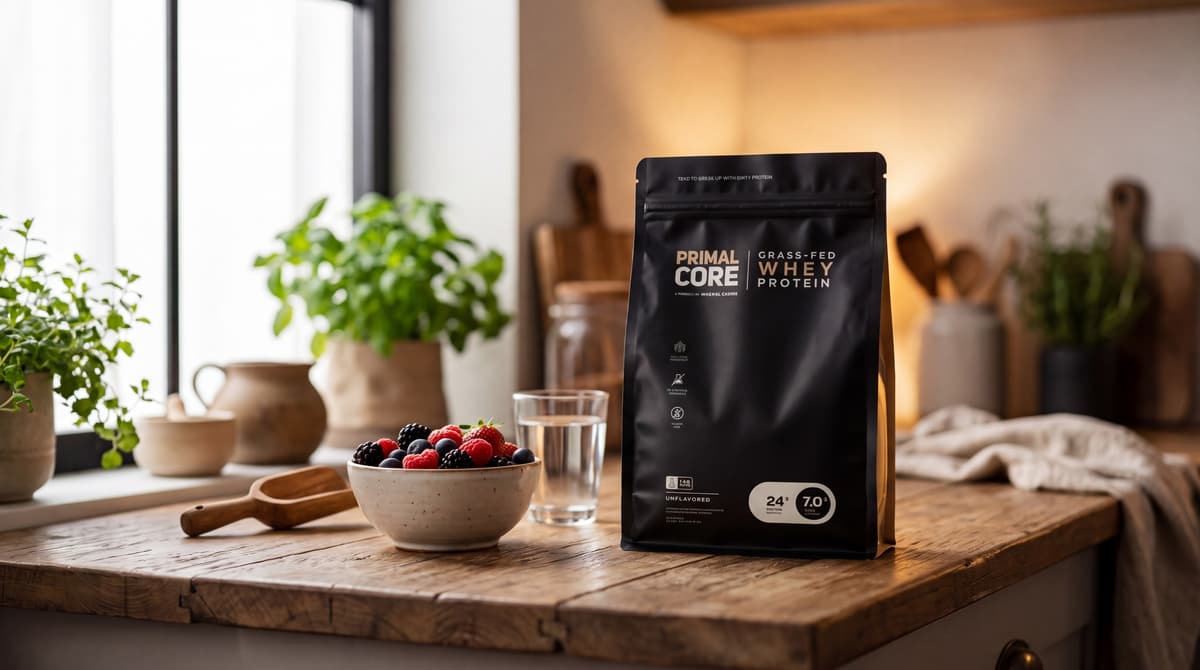
For smoothies: Blend it with frozen fruit, milk or oat milk, and a fat source (nut butter, avocado, or a spoon of coconut cream). The fat carries the flavor.
Why Mindful Crumb exists (and what we actually sell)
I started this brand because I couldn't find a whey I could drink without bloating.
I have a background in nutrition and fitness (ISSA certified personal trainer), and I used to flip every protein powder in the health food store looking for something clean. Everything had stevia or sucralose. Or twelve ingredients. Or it was grass-fed but from a factory in Texas that also made weight-gainer sludge.
So I made one.
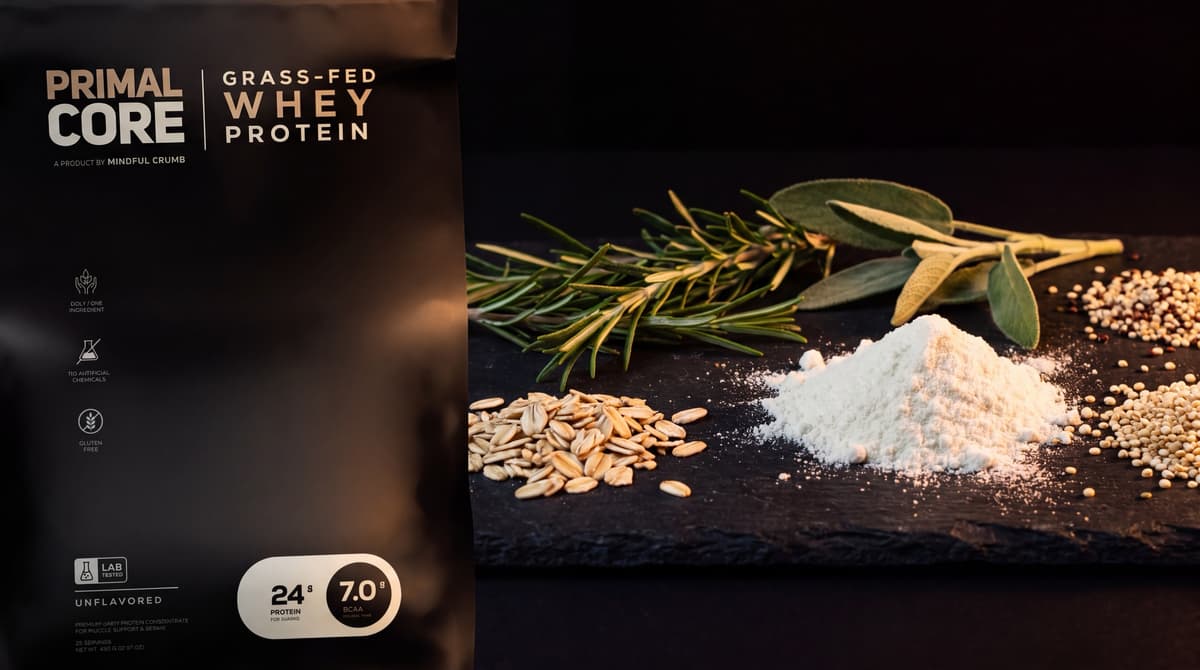
Primal Core is single-ingredient grass-fed whey protein concentrate from pasture-raised European dairy cows. One ingredient: whey protein concentrate. Cold-processed. Lactase enzyme added so lactose-intolerant people can digest it.
Sold as a 450g pouch of 15 individually sealed 30g sachets. Each sachet is 24g protein, about 5.5g BCAA, under 1g sugar, 120 calories. EUR 40 one-time purchase, or EUR 35 per month on subscription.
Third-party tested by Eurofins (heavy metals, full amino acid profile). The lab report is public: mindfulcrumb.com/lab-report.pdf.
Ships from Porto, Portugal. Shipping is EUR 7 in Portugal, EUR 8 to Spain, EUR 12-20 rest of EU. Free over EUR 100.
Trustpilot 4.4 from 15 verified reviews. Most complaints are about the price (grass-fed whey costs more than commodity whey) or the taste (it tastes like dairy, not like birthday cake).
The two things customers do with it: the protein cappuccino and baking. Almost no one drinks it as a shake.
If you want a whey that doesn't bloat you and has one ingredient, this is it: mindfulcrumb.com/products/primal-core-grass-fed-low-lactose-whey-protein-concentrate-450g.
What about other protein sources without sweeteners?
Whey is the most common, but not the only option.
Egg white protein powder: Single ingredient (dried egg whites), high bioavailability, no lactose. Downside: tastes sulfurous (like hard-boiled eggs) and doesn't froth well. Works in baking.
Beef protein isolate: Made from hydrolyzed beef collagen. Unflavored versions exist, but most are heavily flavored to cover the taste. Lower in essential amino acids than whey.
Pea protein isolate: Vegan, allergen-friendly. Unflavored pea protein tastes aggressively "green" (like raw peas). Some people love it in savory dishes. Most people don't.
Collagen peptides: Single ingredient, unflavored, dissolves in hot or cold liquid. But collagen is not a complete protein (low in tryptophan, no significant leucine). It's good for skin and joints, not for muscle protein synthesis.
Whey concentrate is the best middle ground: complete amino acid profile, high leucine (the BCAA that triggers muscle protein synthesis), affordable, and it tastes like food instead of a lab experiment.
Common mistakes when switching to unflavored whey
Mistake 1: Stirring it into cold water and expecting it to taste good.
It won't. Whey is dairy. It needs fat (milk, nut butter, avocado) or heat (the cappuccino method) to taste like anything other than disappointment.
Mistake 2: Pouring it into boiling coffee.
Whey clumps above 65-70°C in liquid. Warm the milk first, froth the whey into the warm milk, then add the coffee. That's the order.
Mistake 3: Assuming all unflavored whey is the same.
Commodity whey from factory farms in the US is cheap (EUR 15-20 per kilo) but often has heavy metal contamination and comes from cows treated with rBGH. Grass-fed whey from Europe or New Zealand costs more (EUR 35-50 per kilo) but has a cleaner nutrient profile and no hormone residues.
Check the lab report. If a brand doesn't publish one, assume they don't test.
Mistake 4: Buying a 2kg tub as your first order.
If you've only had flavored protein before, unflavored whey will taste weird for the first week. Your palate is used to sucralose. Start with a small pouch (450g or less) and give yourself time to adjust.
Final thoughts
Protein powder without stevia or sucralose is just protein.
No sweetness. No fake vanilla. No guar gum slime. Just whey that tastes like dairy, or egg whites that taste like eggs, or pea protein that tastes like peas.
Most people who switch to unflavored whey do it because flavored blends were wrecking their gut. The adjustment period is about a week - after that, the dessert-flavored stuff tastes like chemicals.
If you want the simplest version: single-ingredient grass-fed whey concentrate, third-party tested, shipped from Porto. That's what Primal Core is.
No pressure. Just wanted you to know it exists.
Frequently Asked Questions
Does unflavored whey protein have any sweeteners?
No. Unflavored whey contains only natural lactose (about 4-5g per 30g serving in concentrate). No stevia, sucralose, monk fruit or artificial sweeteners.
Why does my unflavored whey clump in hot coffee?
Whey denatures above 65-70°C in liquid. Froth it into warm milk first (well under 65°C), then add the coffee. It won't clump if you respect the temperature.
Is grass-fed whey worth the extra cost?
Yes if you care about hormone residues and omega-3 ratio. Grass-fed whey has no rBGH/rBST and better fatty acid profile. Commodity whey from factory farms is cheaper but often has heavy metal contamination.
Can I use unflavored whey if I'm lactose intolerant?
Yes if it has added lactase enzyme (like Mindful Crumb's Primal Core). The enzyme breaks lactose into glucose and galactose, which are easier to digest. Whey isolate also works (under 1g lactose per serving) but strips out immunoglobulins.
What's the difference between whey concentrate and isolate?
Concentrate is 70-80% protein by weight, keeps the immunoglobulins and lactoferrin, and has 4-5g lactose per serving. Isolate is 90%+ protein, has under 1g lactose, but loses the immune-supporting compounds during filtration.