Single ingredient whey protein means exactly one thing on the label: whey protein. No sweeteners, no gums, no flavoring, no soy lecithin. Just the protein from milk.
It's the simplest form of whey you can buy. And if you've ever flipped over a tub of protein powder and seen 15 ingredients you can't pronounce, you know why that matters.
Key facts:
- Single ingredient whey is either concentrate (80% protein) or isolate (90%+). Both come from the same source - the liquid leftover after cheese-making.
- No sweeteners means no acesulfame-K, no sucralose, no stevia. No flavoring means no "natural flavors" (which aren't natural).
- Cold-processed versions keep the immunoglobulins and lactoferrin intact. Heat-treated whey denatures them.
- Grass-fed whey comes from pasture-raised cows. It has a slightly higher omega-3 profile than grain-fed.
- The taste is milky, slightly sweet (from lactose). Some people love it. Some hate it. There's no vanilla coating to hide behind.
What counts as "single ingredient"?
The ingredient list says one thing. That's it.
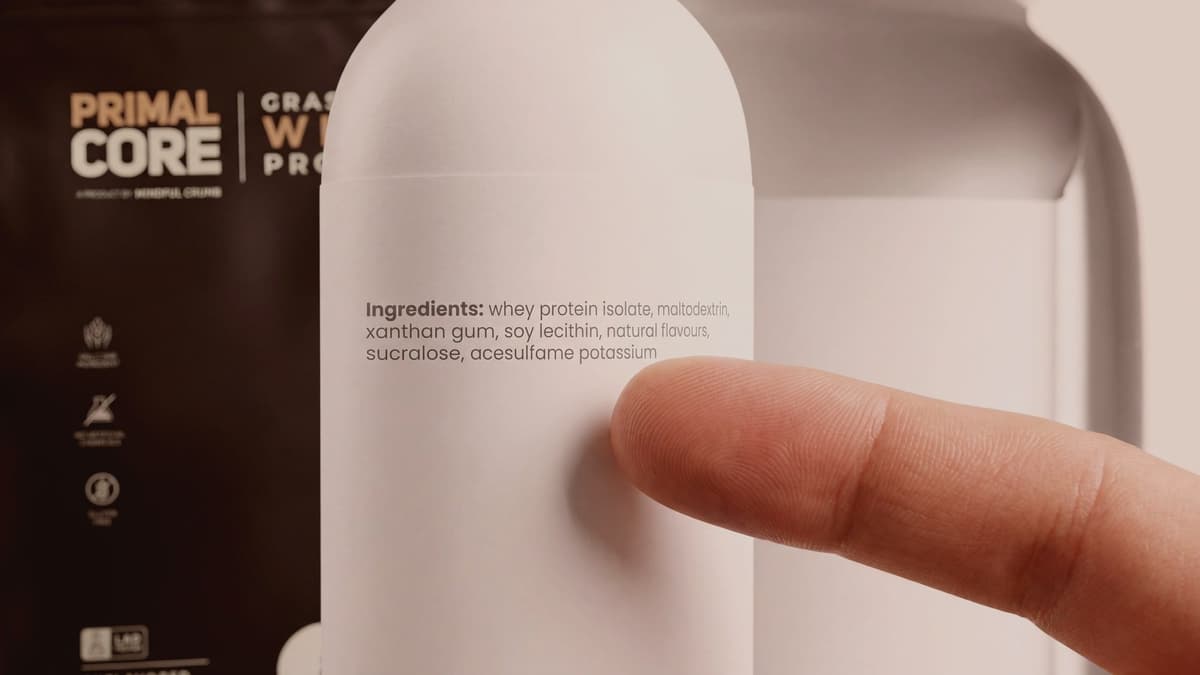
Most whey powders on the market have 8-15 ingredients. The protein itself, plus:
- Sweeteners (sucralose, acesulfame-K, stevia)
- Thickeners (xanthan gum, guar gum, carrageenan)
- Emulsifiers (soy lecithin, sunflower lecithin)
- Flavoring ("natural flavors" - a catch-all for dozens of compounds)
- Anti-caking agents (silicon dioxide)
- Colorants (caramel color, beta-carotene)
Single ingredient whey has none of that. The label says "whey protein concentrate" or "whey protein isolate." Nothing else.
Some brands add lactase enzyme to help with digestion. That's still functionally single-ingredient - the enzyme breaks down lactose so your gut doesn't have to. The protein itself is unchanged.
Concentrate vs isolate - what's the difference?

Both are single-ingredient if that's all that's in the bag. The difference is protein density.
| Whey Concentrate | Whey Isolate | |
|---|---|---|
| Protein per 100g | 80g | 90g+ |
| Lactose | 4-8g per 100g | <1g per 100g |
| Fat | 4-7g per 100g | <1g per 100g |
| Immunoglobulins | Yes (if cold-processed) | Mostly stripped out |
| Price | Lower | Higher |
| Best for | Most people, daily use | Lactose intolerance (without lactase), cutting |
Concentrate is whey in its least-processed form. It's filtered once, maybe twice. You keep the immunoglobulins, the lactoferrin, the fat-soluble vitamins. You also keep most of the lactose.
Isolate is filtered multiple times (microfiltration or ion exchange). You strip out almost all the lactose and fat. The protein percentage goes up. But you lose the bioactive compounds that make whey more than just amino acids.
For most people, concentrate is the better pick. It's cheaper. It tastes better (the fat carries flavor). And unless you're lactose intolerant or dieting for a bodybuilding show, the extra 10g of protein per 100g doesn't move the needle.
If you are lactose intolerant, look for concentrate with added lactase enzyme. You get the benefits of concentrate without the gut issues. (That's what we use in Primal Core - single ingredient concentrate, lactase added so it digests clean.)
Why single ingredient matters
I'll keep this short.
Most protein powders are over-engineered. Brands add sweeteners because unsweetened whey tastes like milk powder. They add gums because people want a thick shake. They add soy lecithin because it helps the powder dissolve in cold water.
None of that is necessary. It's just easier to sell.
The problem is your gut doesn't care what's easier to sell. Sucralose and acesulfame-K mess with your microbiome. Gums cause bloating in a lot of people. Soy lecithin is fine for some, problematic for others.
Single ingredient whey gives you one variable. If it bothers you, you know what the problem is. If it doesn't, you know you can keep using it.
Plus, you can flavor it yourself. Cocoa powder. Espresso. Cinnamon. Vanilla extract. You control the dose. You know what's in it.
What to look for when buying
Not all single-ingredient whey is the same. Here's what actually matters:
1. Grass-fed or grain-fed?
Grass-fed whey comes from pasture-raised cows. It has a slightly better fatty acid profile - more omega-3, more CLA. The protein itself is identical. If you can afford it, go grass-fed. If not, grain-fed is fine.
2. Cold-processed or heat-treated?
Cold-processed whey is filtered at low temperatures. The immunoglobulins (IgG) and lactoferrin stay intact. Heat-treated whey denatures them. You still get the protein, but you lose the immune-supporting compounds.
Most brands don't say which process they use. If it doesn't say "cold-processed" on the label, assume heat-treated.
3. Third-party tested?
Protein powders are supplements, not food. They're not regulated the same way. Third-party testing (Eurofins, Informed Sport, NSF) means someone checked the amino profile, the heavy metals, and the microbials.
If a brand doesn't publish test results, I don't trust the label.
4. Lactase enzyme or not?
If you're lactose intolerant, look for whey with added lactase. It breaks down the lactose before it hits your gut. You digest it clean. No bloating, no cramps.
If you're not lactose intolerant, you don't need it. But it doesn't hurt either.
How to use it
Single ingredient whey is unflavored. That means you have options.
The protein cappuccino - Pull a shot of espresso. Warm 200ml of milk (or oat milk) to well under 65°C. Add one 30g sachet of whey to the warm milk and froth it with a milk frother until dissolved and foamy. Pour the espresso shot into the frothed milk. 25g of protein, tastes like a latte, no blender.
This is what most of our customers do. It's fast. It doesn't feel like a "protein shake." You can drink it at a cafe without looking like you brought a shaker bottle to brunch.
The smoothie - Banana, frozen berries, 30g whey, 250ml milk or water. Blend. Done.
Baking - Single ingredient whey holds up under heat because there are no sweeteners or gums to break down. Protein pancakes, muffins, bread. Use it 1:1 as a flour substitute (up to 25% of the total flour).
Overnight oats - 50g oats, 30g whey, 200ml milk, fridge overnight. 35g protein, no cooking.
You can also just mix it with water if you want. It won't taste like chocolate cake. It'll taste like milk powder. Some people are fine with that. Some aren't.
The grass-fed question
People ask if grass-fed whey is worth the extra cost.
Honest answer: depends on your budget.
Grass-fed whey has a better omega-3 to omega-6 ratio. It has slightly more CLA (conjugated linoleic acid). Some studies suggest better antioxidant content. But the protein itself - the amino acid profile - is identical to grain-fed.
If you're buying whey for the protein, grain-fed is fine. If you're buying it for the bioactive compounds and you can afford grass-fed, go grass-fed.
For Primal Core, we use grass-fed because we wanted the cleanest version we could make. European pasture-raised dairy, cold-processed, third-party tested. That's the standard we set.
But I'm not going to tell you grain-fed whey is garbage. It's not. It's just a different sourcing decision.
What we use (and why)
Primal Core is single ingredient grass-fed whey concentrate with added lactase enzyme. That's it.
We chose concentrate over isolate because we wanted to keep the immunoglobulins and lactoferrin. We added lactase so people with lactose intolerance could use it without bloating.
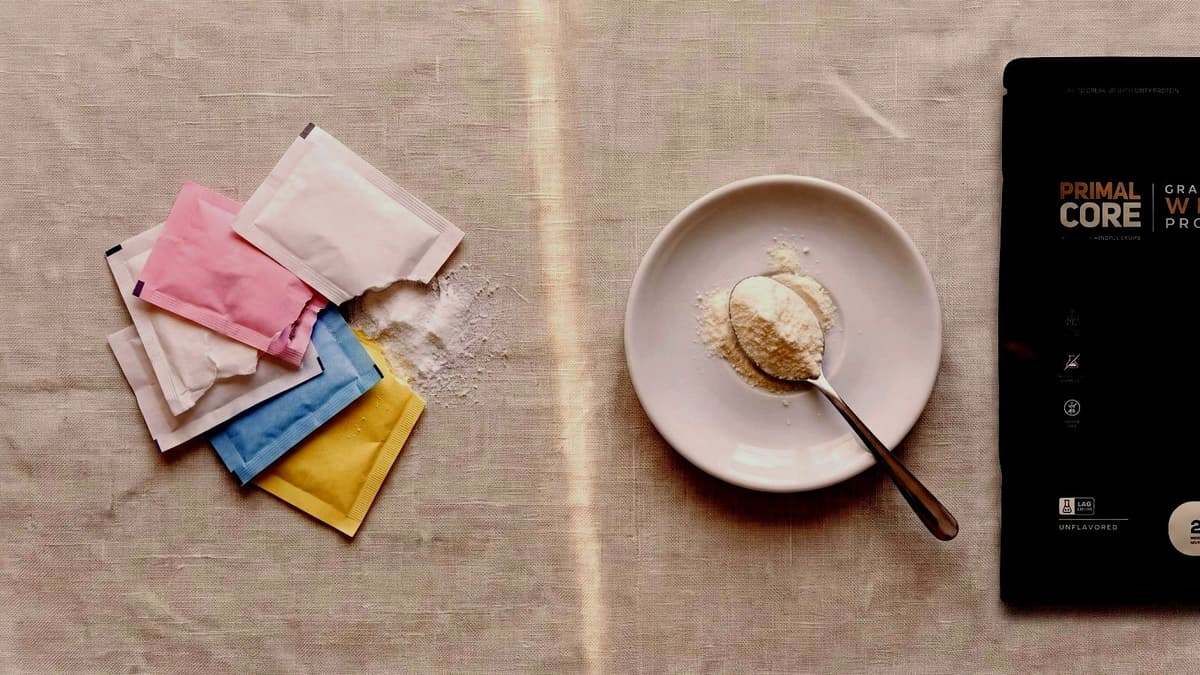
It's cold-processed. It's third-party tested by Eurofins (heavy metals, full amino profile, microbials). It comes in 15 individually sealed 30g sachets so you're not scooping powder out of a tub.
24g protein per sachet. About 5.5g BCAA. Under 1g sugar. 120 calories.
EUR 39 one-time, EUR 35 on subscription. Ships across the EU.
You can see the full Eurofins report at https://www.mindfulcrumb.com/lab-report.pdf.
I'm not saying it's the only single-ingredient whey on the market. It's not. But it's the one I made because I couldn't find what I was looking for - something I could drink without bloating, something I could bake with, something I didn't have to research.
If that's you too, here's the link: https://www.mindfulcrumb.com/products/primal-core-grass-fed-low-lactose-whey-protein-concentrate-450g
The bottom line
Single ingredient whey protein is the simplest version of whey you can buy. No sweeteners, no fillers, no gums. Just the protein.
It's not for everyone. If you want a ready-to-drink chocolate shake, buy something flavored. If you want to control what's in your protein and you're okay with the taste of unsweetened whey, single ingredient is the move.
Look for grass-fed if you can afford it. Cold-processed if the brand publishes that info. Third-party tested if you care about what's actually in the bag.
And if you're lactose intolerant, look for concentrate with added lactase. You get the benefits of concentrate without the gut issues.
Mine is Primal Core grass-fed whey: whey and nothing else, 24g of protein a sachet, shipped across the EU. If you want the shortlist rather than the definition, it is in the cleanest whey protein in Europe.
Frequently Asked Questions
Is single ingredient whey protein better than flavored whey?
It's not better, it's simpler. Single ingredient whey has no sweeteners, fillers, or gums - just the protein. You control the flavor yourself. If you want a ready-to-drink shake, flavored is fine. If you want to know exactly what you're putting in your body, single ingredient is the move.
Can I use single ingredient whey if I'm lactose intolerant?
Yes, if it has added lactase enzyme or if you buy whey isolate. Concentrate has 4-8g of lactose per 100g. Lactase breaks it down before it hits your gut. Isolate strips out most of the lactose through extra filtering. Both work.
Does single ingredient whey taste bad?
It tastes like milk powder - slightly sweet from lactose, no vanilla coating. Some people love it. Some hate it. Mix it with espresso, cocoa powder, or berries and it's fine. If you need everything to taste like dessert, buy flavored whey.
What's the difference between grass-fed and regular whey?
Grass-fed whey comes from pasture-raised cows. It has a slightly better omega-3 profile and more CLA. The protein itself is identical. If you can afford it, go grass-fed. If not, grain-fed whey is fine - the amino acid profile is the same.
Should I buy whey concentrate or isolate?
Concentrate for most people. It's cheaper, it tastes better, and it keeps the immunoglobulins and lactoferrin that isolate strips out. Isolate is for lactose intolerance (without lactase enzyme) or if you're dieting and need the extra 10g protein per 100g. Otherwise, concentrate is the better pick.