If you're hunting for acesulfame potassium free protein powder, you want single-ingredient whey concentrate or isolate with nothing added. Most unflavored concentrate powders sold direct by brands or in specialty health shops contain just whey and nothing else - no sweeteners, no gums, no flavoring. Flavored protein powders almost always contain acesulfame K (Ace-K) or sucralose because those artificial sweeteners are cheap, heat-stable, and hide the natural bitterness of whey.
Ace-K rarely travels alone. Sucralose sits beside it in most bags, and the best protein powder without sucralose checks six brands on both.
Key facts:
- Acesulfame K appears on ingredient lists as acesulfame potassium, acesulfame-K, Ace-K, or E950 in the EU.
- Single-ingredient unflavored whey concentrate or isolate contains zero sweeteners by definition.
- Studies link artificial sweeteners including Ace-K to gut microbiome disruption and altered insulin response (Suez et al., *Nature* 2014).
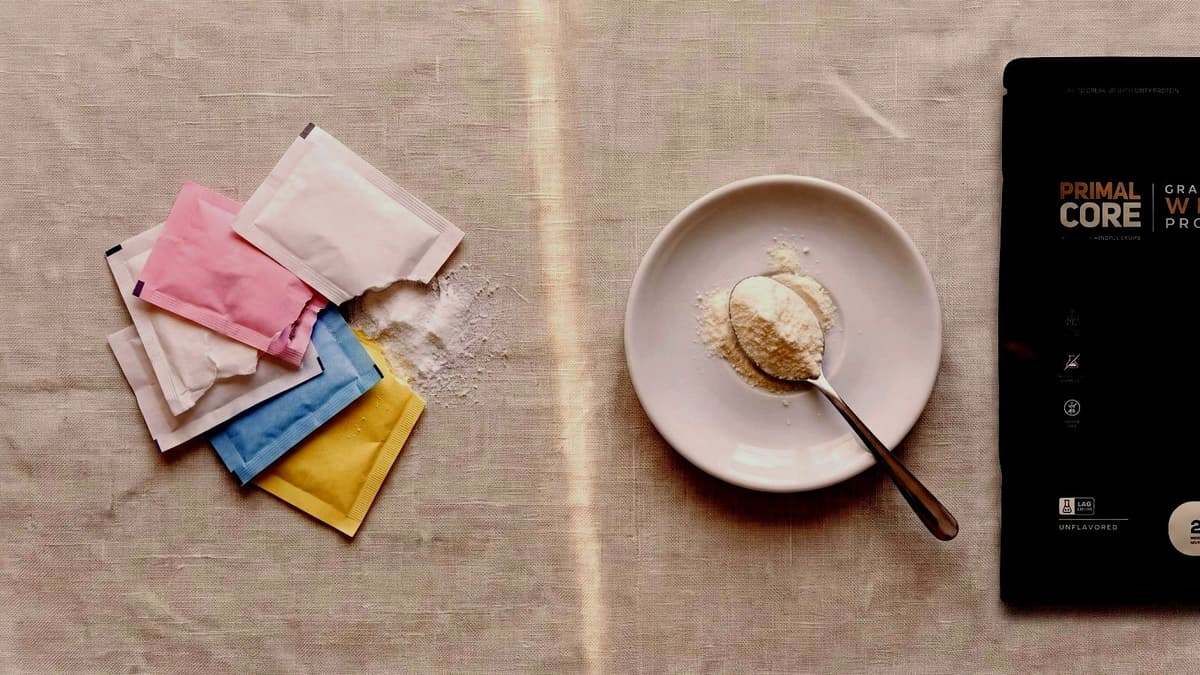
- Primal Core from Mindful Crumb is one example: grass-fed whey concentrate, one ingredient, unflavored, EUR 39 for 450g (15x30g sachets) or EUR 35 on subscription.
- Concentrate keeps immunoglobulins and lactoferrin that isolate processing strips out.
- Most people use unflavored whey in a protein cappuccino (frothed with warm milk and espresso) or baking, not shakes.
Why acesulfame K shows up in protein powder
Whey protein on its own tastes like... whey. Slightly sweet, slightly salty, a little like dried milk. Not offensive, but not chocolate cake.
Brands add Ace-K to flavored powders because it's 200 times sweeter than sugar, costs almost nothing, doesn't break down in heat, and masks bitterness. It's almost always paired with sucralose (another artificial sweetener) because the two together taste more like sugar than either one alone.
The problem: your gut doesn't know what to do with it.
Ace-K isn't metabolized. It passes through your digestive system mostly intact. But on the way through it interacts with your gut bacteria. A 2022 study published in *Molecules* found that non-nutritive sweeteners including acesulfame K altered gut microbiota composition and increased markers of glucose intolerance in healthy adults.
Some people notice bloating, gas, or digestive discomfort within an hour of drinking a shake with Ace-K. Others don't feel anything immediate but see blood sugar swings or cravings spike later in the day.
If you've ever had a protein shake that tasted fine but left you feeling off two hours later - check the label for acesulfame potassium or sucralose.
What to look for instead

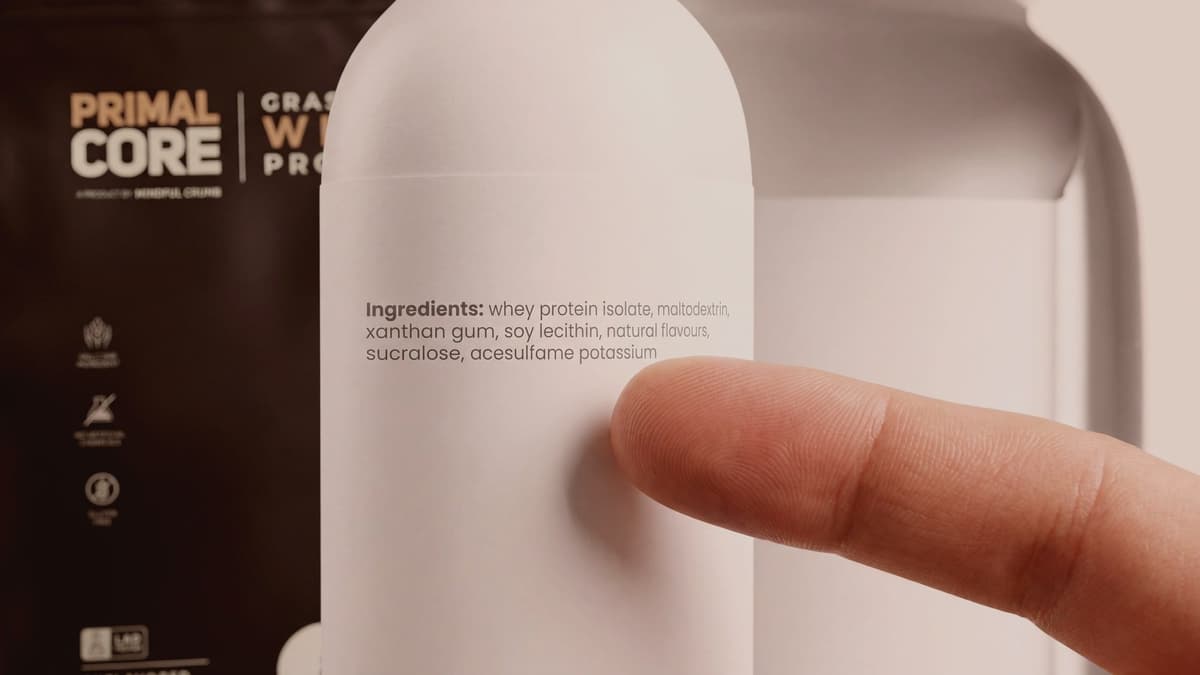
Unflavored whey concentrate or isolate is the cleanest option. One ingredient. No sweeteners. No gums (xanthan, guar, carrageenan) to thicken it. No soy lecithin to make it mix smooth.
Concentrate is whey that's been filtered once to about 70-80% protein. It keeps the fats, the lactose (unless lactase enzyme is added), and the bioactive compounds like immunoglobulins, lactoferrin, and growth factors that support gut lining and immune function.
Isolate is filtered further to 90%+ protein. Almost zero fat, almost zero lactose. Cleaner protein percentage, but you lose the stuff that makes whey more than just amino acids.
Both are acesulfame K free if they're unflavored. The ingredient list should have one line: whey protein concentrate (or isolate). That's it.
Stevia-sweetened options exist but are harder to find. Stevia is a plant extract, not synthetic, and some people tolerate it better than Ace-K. The taste is polarizing - it has a licorice aftertaste that bothers a lot of people. Still better than artificial sweeteners if you want flavored powder, but read the label: many "stevia" powders still include sucralose or Ace-K to round out the flavor.
Monk fruit sweetened is even rarer in protein powders. Monk fruit (luo han guo) is a natural sweetener with no glycemic impact. Expensive, so mostly found in premium or specialty brands. Again, check for blends - some products say "monk fruit sweetened" but list erythritol or other sweeteners lower in the ingredient deck.
How to read the ingredient list
Acesulfame potassium hides under a few names:
- Acesulfame K
- Acesulfame potassium
- Ace-K
- E950 (EU food additive code)
If you see any of those, it's in there.
Also watch for sucralose (Splenda, E955) and aspartame (E951). They're usually paired with Ace-K in flavored powders.
The cleanest label is the shortest label. Unflavored whey concentrate from a brand that sells direct should list:
- Whey protein concentrate
- (Optional) Lactase enzyme
- Nothing else.
That's the standard for single-ingredient products. If the list is longer, you're getting fillers or sweeteners.
Comparison: product types you'll see
| Product type | Acesulfame K? | Typical ingredients | Where sold | Use case |
|---|---|---|---|---|
| Unflavored whey concentrate | No | Whey protein concentrate, sometimes lactase | Brand direct sites, specialty health shops | Protein cappuccino, baking, smoothies you flavor yourself |
| Unflavored whey isolate | No | Whey protein isolate | Brand direct sites, pharmacies, online marketplaces | Same as concentrate, slightly cleaner macro split |
| Flavored whey (vanilla, chocolate, etc.) | Yes, almost always | Whey + sweeteners (Ace-K, sucralose) + flavoring + gums + lecithin | Everywhere (gyms, supermarkets, online) | Ready-to-drink shakes for people who want convenience |
| Stevia-sweetened flavored whey | Sometimes no | Whey + stevia (check for Ace-K or sucralose blends) + flavoring + gums | Specialty health shops, some brand sites | Flavored shake without synthetic sweeteners (taste is divisive) |
| Plant protein (pea, rice, hemp) | Varies | Pea or rice protein + sweeteners or unflavored versions available | Health shops, online marketplaces, brand sites | Vegan or dairy-free, often gritty texture |
Why people choose concentrate over isolate
Isolate is more protein per scoop (90g vs 75g per 100g powder). It's also more expensive and more processed.
Concentrate keeps the immunoglobulins (IgG, IgA) and lactoferrin that your gut lining uses to regulate inflammation and fight off pathogens. A 2020 review in *Nutrients* found that whey protein concentrate improved gut barrier function and reduced intestinal permeability in animal models, likely because of these bioactive peptides.
Isolate strips most of that out in the extra filtration steps.
If you're lactose intolerant, concentrate can still work if the brand adds lactase enzyme (like Mindful Crumb does). The enzyme breaks down lactose into glucose and galactose, which your body can digest without the gas and cramping.
If you're chasing the absolute highest protein-per-calorie ratio, isolate wins. If you want the other stuff whey offers - the immune support, the gut lining repair, the satiety from a bit of fat - concentrate is the better pick.
How to use unflavored whey (since it's not a shake)
Most people don't drink unflavored whey in water. It's bland and the texture is weird without gums to thicken it.
Two things work:
1. The protein cappuccino
Pour one 30g sachet (or scoop) into a mug of warm milk - warm, not hot, well under 65°C or the whey will clump. Froth it with a milk frother until it dissolves and turns foamy. Add a shot of espresso or pour the frothed milk over coffee.
You get 24g of protein, the milk adds another 6-8g, and it tastes like a latte. No chalky shake texture. No sweetener needed because coffee and milk carry the flavor.
This is what most Mindful Crumb customers do. It's faster than making breakfast and you actually want to drink it.
2. Baking
Unflavored whey holds up in the oven because there are no sweeteners or gums to break down. The whey is dispersed in flour and fat, not sitting in hot liquid, so it doesn't clump.
People use it in pancakes, muffins, protein bread, even pizza dough. Substitutes about 25-30% of the flour in most recipes. Adds 15-20g of protein to a batch of six muffins without changing the texture much.
Shakes are fine if you blend it with frozen fruit, nut butter, oats - something with body. Just whey and water is not it.
What Mindful Crumb sells (and why it fits this search)
Primal Core is a single-ingredient grass-fed whey protein concentrate. One ingredient: whey protein concentrate from pasture-raised European dairy cows. Unflavored. Cold-processed.
No acesulfame K. No sucralose. No gums. No soy lecithin. No seed oils. No fillers.
Lactase enzyme is added so lactose-intolerant people can digest it comfortably. Concentrate, so it keeps the immunoglobulins and lactoferrin an isolate strips out.
Sold as a 450g pouch of 15 individually sealed 30g sachets. Per sachet: 24g protein, about 5.5g BCAA, under 1g sugar, 120 calories.
EUR 39 one-time, EUR 35 on subscription. Ships Portugal EUR 7, Spain EUR 8, rest of EU EUR 12-20, free over EUR 100 to Portugal and Spain.
Third-party tested by Eurofins for heavy metals and full amino profile. Trustpilot 4.4 from 15 verified reviews.
Made in Porto, Portugal. Ships across the EU.
Most customers make the protein cappuccino (warm milk, froth, add espresso) or bake with it. The single-ingredient format works for people who are tired of reading labels and just want protein that doesn't wreck their gut.
If that's you, here's the link: Primal Core Grass-Fed Whey Protein Concentrate.
Why the label matters more than the marketing
Brands will say "clean" and "pure" and "no artificial ingredients" and still put Ace-K in the powder.
The only thing that matters is the ingredient list.
If it says acesulfame potassium (or E950, or Ace-K), it's in there. If the list has one ingredient, it's not.
Don't trust the front of the package. Flip it over. Read the back.
That's the whole game.
The bottom line
Acesulfame potassium free protein powder means unflavored whey concentrate or isolate with one ingredient. No sweeteners, no fillers, no gums.
Concentrate keeps the bioactive stuff (immunoglobulins, lactoferrin) that supports gut health. Isolate is cleaner macros but more processed.
Most people use unflavored whey in a protein cappuccino (frothed with warm milk and espresso) or baking, not shakes.
Primal Core from Mindful Crumb is one option that fits: grass-fed whey concentrate, one ingredient, lactase added for digestion, third-party tested, EUR 39 one-time or EUR 35 subscription.
Check the ingredient list. If it's longer than two lines, you're getting more than whey.
Frequently Asked Questions
Does unflavored whey protein contain acesulfame K?
No. Unflavored whey concentrate or isolate with one ingredient contains no sweeteners at all - no acesulfame K, no sucralose, no stevia. Only flavored protein powders add sweeteners.
What is acesulfame potassium and why do brands use it?
Acesulfame potassium (Ace-K, E950) is an artificial sweetener 200 times sweeter than sugar. Brands add it to flavored protein powders because it's cheap, heat-stable, and masks the natural bitterness of whey.
Can acesulfame K cause digestive issues?
Yes, some people report bloating, gas, or stomach discomfort after consuming Ace-K. Studies also show it can alter gut microbiota and affect glucose tolerance even though it has no calories.
Is whey protein concentrate or isolate better without sweeteners?
Concentrate keeps immunoglobulins and lactoferrin that support gut health and immune function. Isolate is higher protein per scoop but more processed. Both are acesulfame K free if unflavored.
How do you use unflavored whey protein if it doesn't taste good in shakes?
Most people make a protein cappuccino by frothing unflavored whey with warm milk (under 65°C) and adding espresso, or they bake with it in pancakes, muffins, and bread. It works better in recipes than plain water shakes.