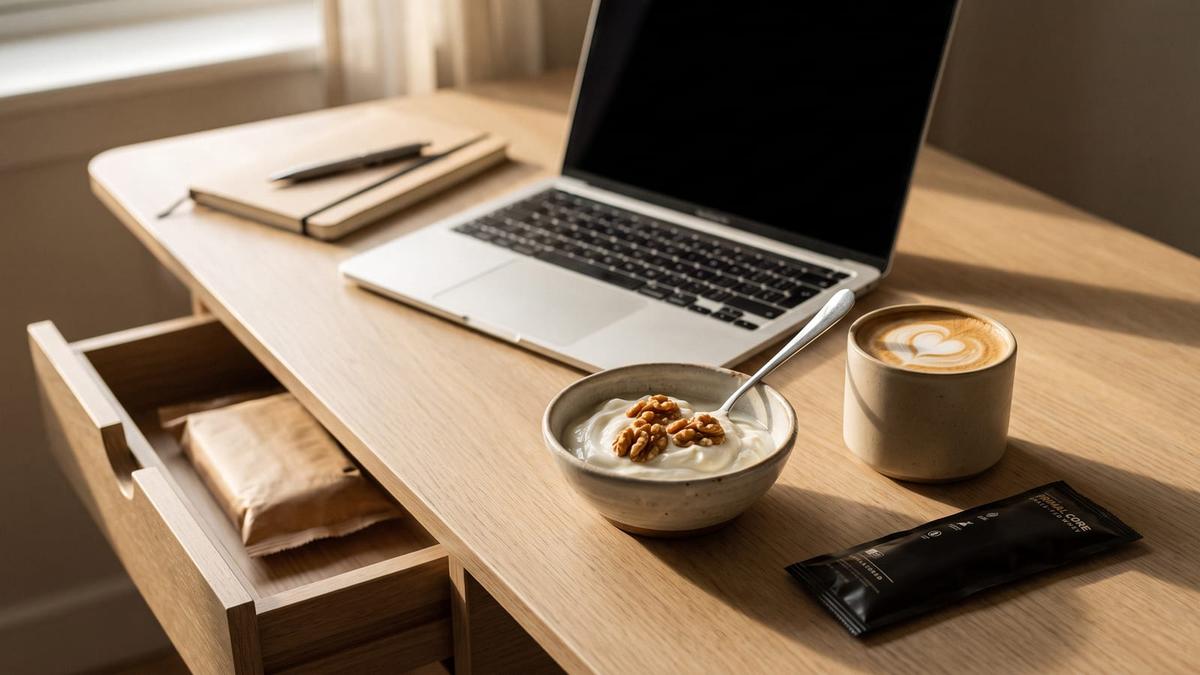
It is four in the afternoon, you ate lunch at one, and you are standing at the snack drawer for the second time. If you keep asking yourself "why am I always hungry?", most of the answer was decided hours earlier, by how you slept, how the morning went and what was on your plate.
For people building a company, those three things tend to go wrong together. In a survey of more than 400 founders, 44% reported high stress, and both stress and short sleep are linked to eating more between meals. The third is the easiest to change: how much protein you eat.
Why lunch does not hold you
Hunger can come back long before the next meal is due, and blood sugar is part of the reason. Two to three hours after eating, it can dip to below its starting level. In a study of 1,070 adults wearing glucose monitors, the people with the deepest dips felt hungrier, ate their next meal sooner and took in 312 calories more over the day than those with the smallest dips.
Stress seems to add to it: in a survey of students, 73% said that stress made them snack more, while they ate less of meal foods such as meat, fish, fruit and vegetables.
Short nights have been tested more directly. Adults in a sleep laboratory ate the same meals whether they were given five and a half or eight and a half hours in bed. What changed on the short nights was the snacking, which rose by 221 calories a day.
Why the snack is so often the wrong one
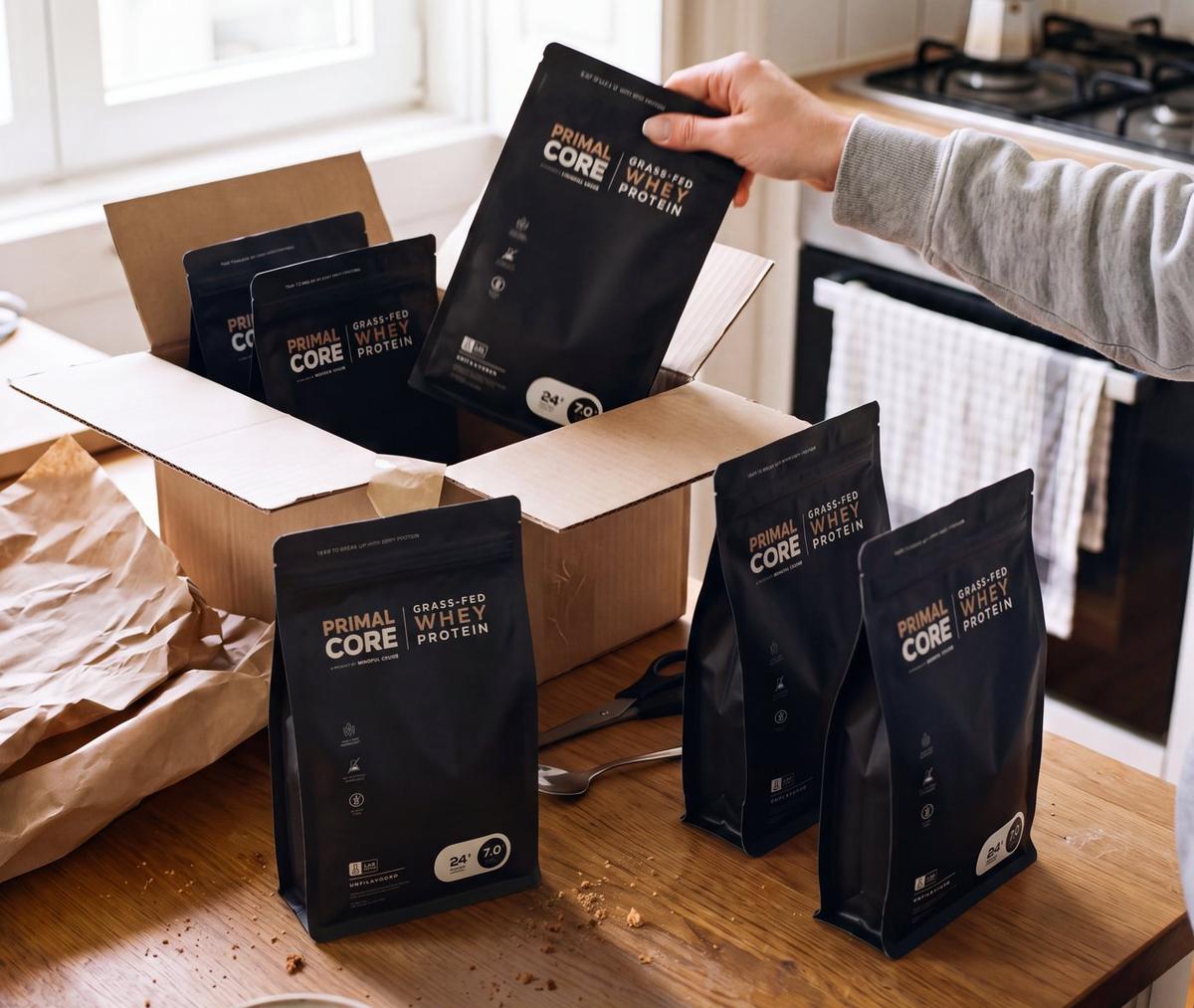
Better than Black Friday
57% OFF
6 bags · 90 servings · €99
Get 6 bags for €99Appetite researchers call what happens next protein leverage. The idea is that the body keeps eating until it has had enough protein, so when meals are low in it, people eat more to make up the difference.
In the experiment that tested it, volunteers whose food had its protein cut from 15% to 10% ate 12% more, and most of the extra came from savoury snacks between meals. It runs the other way too: when protein was raised from 15% to 30% in a 12-week trial, people ate 441 fewer calories a day without being asked to cut anything.
A working day of coffee for breakfast and a sandwich eaten at the desk is low in protein. No wonder the biscuits come out at four.
Does protein help you focus?
Here the evidence is thinner, and part of what people feel has little to do with food. The dip in alertness that many people feel after lunch is partly the body clock. A review of the research found that it appears even in people who have had no lunch, although a lunch high in carbohydrate makes it worse.
There is also one small study in which 15 male students ate morning meals of the same size with different mixes of carbohydrate and protein. The carbohydrate-heavy meal gave a brief lift in attention during the first hour, and after that the balanced and protein-rich meals did better.
That does not prove protein makes you sharper, but it is a reason not to build lunch on bread, rice or pasta alone.
What to change this week
1. Put protein in the first meal. A 2015 review of the feeding trials points to at least 25 to 30 grams of protein at a meal. Eggs, Greek yogurt or whey stirred into a coffee are the easy ways to get close.
In one trial, teenage girls who usually skipped breakfast snacked less on high-fat food in the evening after a week of high-protein breakfasts.
2. Choose the protein at lunch first. Decide on the chicken, fish, eggs or beans, and have the bread or rice on the side. A tuna salad with a slice of bread does more for the afternoon than a baguette with a little tuna in it.
3. Make the afternoon snack a protein one. Women who were given a yogurt with 14 grams of protein in the afternoon, in place of chocolate with the same calories, felt less hungry and asked for dinner about 30 minutes later.
Where does whey fit?
Whey is a quick way to get protein into a busy day, and it has been studied on its own. In one trial, 20 grams or more of whey taken half an hour before a pizza meal reduced how much healthy young adults went on to eat.
Better than Black Friday
57% OFF
6 bags · 90 servings · €99
Get 6 bags for €99That trial tested whey in general, not our product. EU law lets a protein product say three things: that protein contributes to a growth in muscle mass, to the maintenance of muscle mass and to the maintenance of normal bones. None of them concerns hunger or concentration, so we make no such claim for our whey.
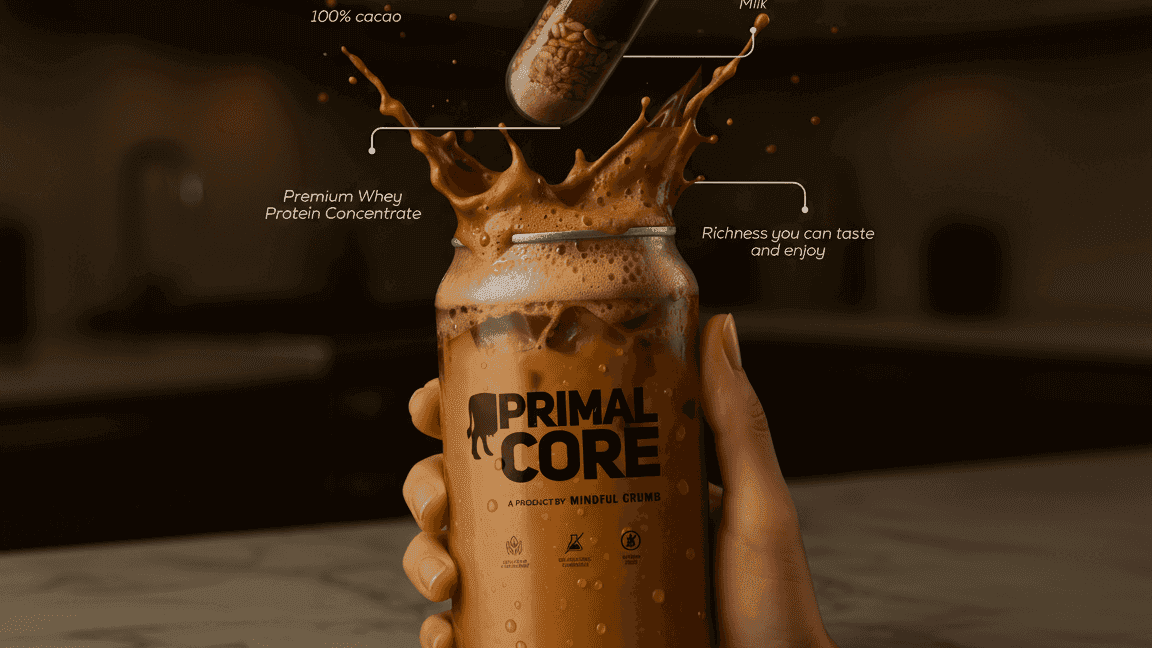
Ours is Primal Core, which is one ingredient, grass-fed whey protein concentrate, with 24 g of protein and 120 kcal in each 30 g sachet.
A pouch of 15 sachets costs €39, and the simplest way to take it at a desk is the protein cappuccino.
How much difference will it make?
The effects are small and so are most of the trials, which are short and involve two dozen people or fewer. The 2015 review describes the effect of protein on fullness as modest.
More is not always better either, because in the protein leverage experiment raising protein from 15% to 25% did not reduce eating any further.
Food is not the only cause, and hunger that is constant, or new, can have a medical reason that is worth raising with a doctor.
Frequently Asked Questions
Why am I always hungry?
Common reasons are a dip in blood sugar two to three hours after eating, stress, short sleep and meals that are low in protein. In a study of 1,070 adults, the people with the deepest dips ate 312 calories more over the day than those with the smallest. Hunger that is constant or new can also have a medical cause, so see a doctor.
Why do I feel tired after eating?
Part of it is the body clock, which has a sleepy window in the middle of the afternoon that appears even in people who skipped lunch. A lunch high in carbohydrate makes it worse.
How do I stop snacking at work?
Eat enough protein at breakfast and lunch so you are not snacking in place of a meal. When 22 adults had the protein in their food cut from 15% to 10%, they ate 12% more, mostly as savoury snacks between meals.
How much protein should I eat at breakfast?
A 2015 review points to at least 25 to 30 grams of protein at a meal. The breakfast trial that reduced evening snacking used 35 grams.
Sources & References
- 1.Monk TH. The post-lunch dip in performance. Clinics in Sports Medicine, 2005
- 2.Wyatt P et al. Postprandial glycaemic dips predict appetite and energy intake in healthy individuals. Nature Metabolism, 2021
- 3.Gosby AK et al. Testing protein leverage in lean humans. PLoS One, 2011
- 4.Weigle DS et al. A high-protein diet induces sustained reductions in appetite, ad libitum caloric intake, and body weight. American Journal of Clinical Nutrition, 2005
- 5.Ortinau LC et al. Effects of high-protein vs. high-fat snacks on appetite control, satiety, and eating initiation in healthy women. Nutrition Journal, 2014
- 6.Leidy HJ et al. Beneficial effects of a higher-protein breakfast in breakfast-skipping late-adolescent girls. American Journal of Clinical Nutrition, 2013
- 7.Leidy HJ et al. The role of protein in weight loss and maintenance. American Journal of Clinical Nutrition, 2015
- 8.Fischer K et al. Carbohydrate to protein ratio in food and cognitive performance in the morning. Physiology & Behavior, 2002
- 9.Nedeltcheva AV et al. Sleep curtailment is accompanied by increased intake of calories from snacks. American Journal of Clinical Nutrition, 2009
- 10.Oliver G, Wardle J. Perceived effects of stress on food choice. Physiology & Behavior, 1999
- 11.Akhavan T et al. Effect of premeal consumption of whey protein on food intake and postmeal glycemia. American Journal of Clinical Nutrition, 2010
- 12.Startup Snapshot. The Untold Toll: the impact of stress on the well-being of startup founders and CEOs
- 13.Commission Regulation (EU) No 432/2012, list of permitted health claims made on foods