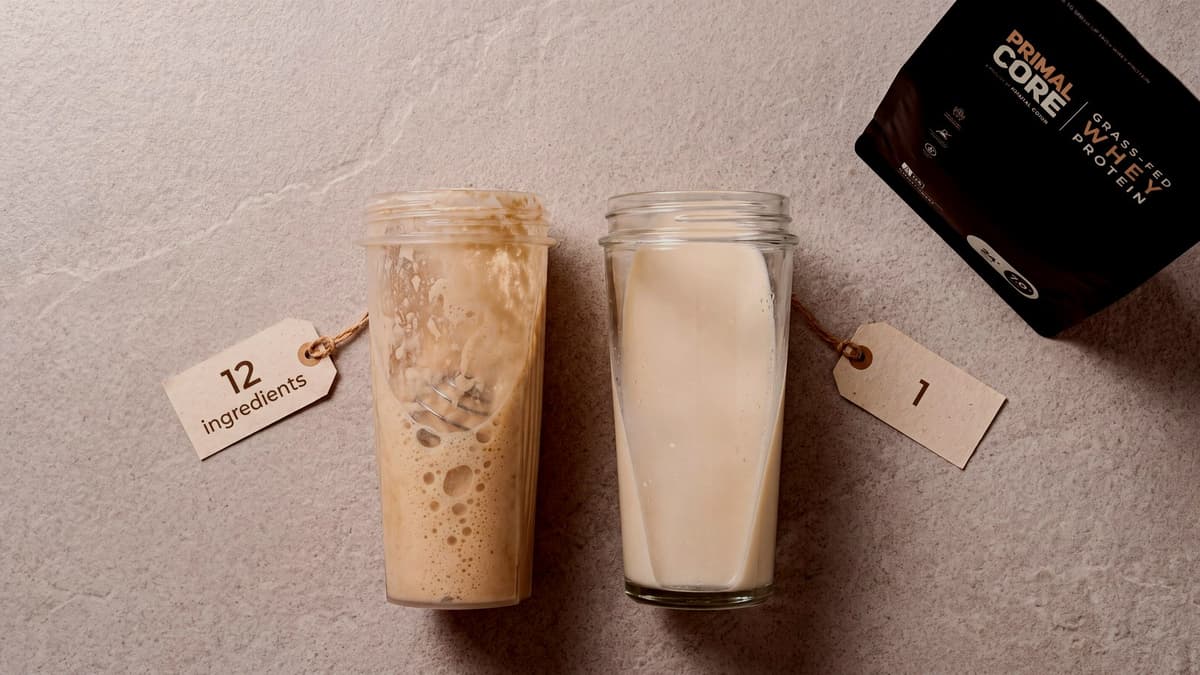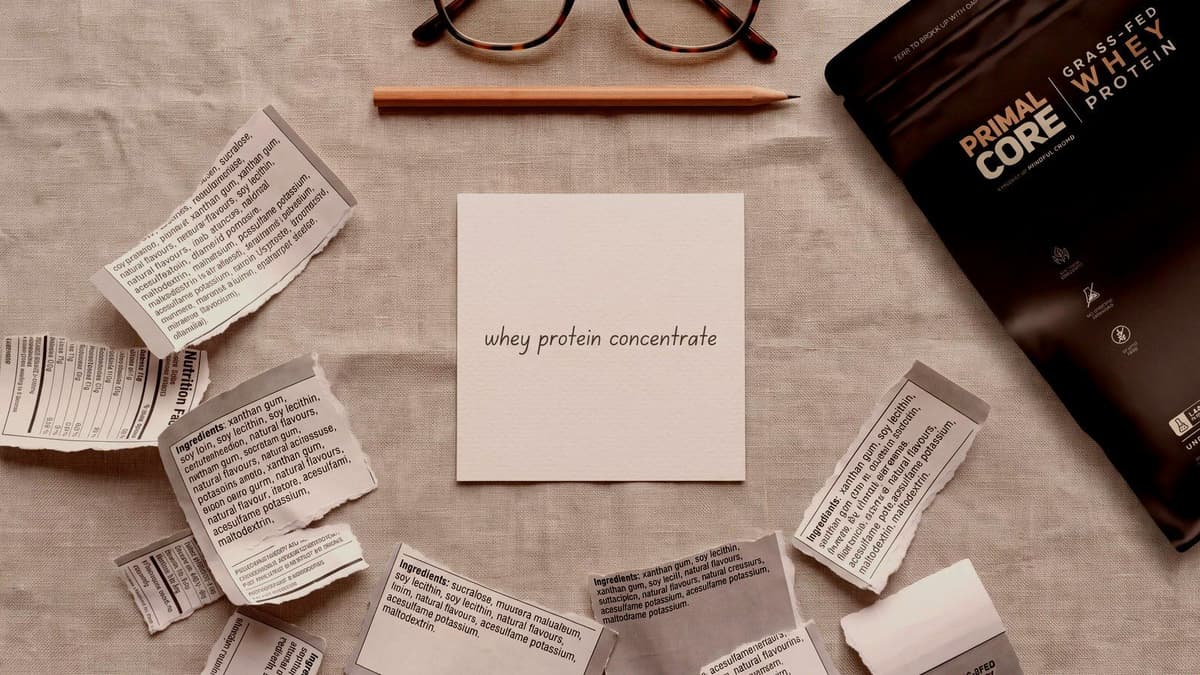
O suplemento proteico mais amigo do intestino é um concentrado de whey de vacas alimentadas a pasto com um único ingrediente e nada adicionado - sem adoçantes, gomas ou óleos de sementes. São esses aditivos que destroem a digestão, não a proteína em si. Se tens SII, inchaço ou simplesmente queres um suplemento proteico que o teu intestino consiga realmente tolerar, a resposta é mais simples do que o corredor dos suplementos faz parecer: menos ingredientes, não mais.
Como personal trainer certificado com mais de 20 anos de experiência em fitness e nutrição, tenho observado a conversa sobre saúde intestinal evoluir de medicina funcional de nicho para bem-estar mainstream. A ciência alcançou-nos, e o que revela sobre a proteína em pó e o seu microbioma é simultaneamente fascinante e profundamente prático.
Este não é mais um artigo a explicar por que a saúde intestinal importa. Se quer o mergulho profundo na ciência por detrás do soro de leite limpo e do seu microbioma, já escrevemos esse -- consulte o nosso guia sobre soro de leite limpo para saúde intestinal. Este artigo é um guia de compra. Vamos acompanhá-lo exatamente sobre o que procurar, o que evitar, e como ler rótulos para poder encontrar a melhor proteína em pó para saúde intestinal sem cair em truques de marketing.
A Ligação Entre Proteína de Soro de Leite e Microbioma: O Que a Ciência Realmente Mostra
Antes de entrarmos no que comprar, precisa de compreender por que a proteína de soro de leite especificamente merece um lugar na conversa sobre saúde intestinal -- e é aqui que a investigação publicada fica genuinamente empolgante.
Um estudo de 2017 publicado na *Food & Function* descobriu que a proteína de soro de leite atua como prebiótico, aumentando significativamente as bactérias benéficas Bifidobacterium e Lactobacillus no intestino. O efeito foi observado tanto em modelos de microbiota intestinal de peso normal como obesos, atribuído aos péptidos bioativos e ao conteúdo de glicomacropéptido do soro de leite (Sanchez-Moya et al., 2017).
Uma revisão de 2024 na *Probiotics and Antimicrobial Proteins* confirmou e expandiu estes resultados: o glicomacropéptido (GMP) da proteína de soro de leite demonstrou propriedades prebióticas que apoiam o crescimento de Bifidobacterium e bactérias do ácido lático, enquanto também mostra atividade antimicrobiana contra patogénios. Adicionalmente, a lactoferrina no soro de leite promove o crescimento de probióticos ao sequestrar o ferro das bactérias patogénicas (Wernlund et al., 2024).
Investigação na *Foods* acrescentou detalhe mecanístico: a lactoferrina apoia a saúde intestinal através de um mecanismo duplo -- sequestro indireto de ferro que inibe seletivamente o crescimento de patogénios enquanto promove Bifidobacterium e Lactobacillus, e interação direta com proteínas de ligação à lactoferrina nas membranas celulares dos probióticos (Sanchez-Diaz et al., 2024).
Mas eis o senão: isto só se aplica a soro de leite limpo e minimamente processado que retém os seus compostos bioativos. No momento em que começa a adicionar adoçantes artificiais, espessantes, emulsionantes e enchimentos, está a desfazer qualquer benefício que o próprio soro de leite proporciona. Em muitos casos, está a tornar as coisas ativamente piores.
Os 5 Piores Ingredientes para a Saúde Intestinal Escondidos na Sua Proteína em Pó

Entre em qualquer loja de suplementos e pegue numa proteína em pó ao acaso. Vire-a. As probabilidades são de que vai encontrar pelo menos dois ou três destes ingredientes. Cada um deles demonstrou comprometer a saúde intestinal de formas significativas e cientificamente documentadas.
1. Adoçantes Artificiais
Sucralose, aspartamo e acessulfame de potássio estão em todo o lado nas proteínas em pó, e a investigação sobre o seu impacto intestinal é condenatória.
Um estudo inovador de 2014 publicado na *Nature* demonstrou que os adoçantes artificiais alteram a composição da microbiota intestinal e induzem intolerância à glucose. Os efeitos metabólicos eram transferíveis via transplante fecal e abolidos por antibióticos, provando o mecanismo mediado pelo microbioma (Suez et al., 2014).
Depois veio a confirmação humana. Um ensaio clínico randomizado de 2022 com 120 adultos saudáveis, publicado na *Cell*, descobriu que a sacarina e a sucralose prejudicaram significativamente as respostas glicémicas em apenas duas semanas a doses abaixo da ingestão diária aceitável. Cada adoçante alterou distintamente a composição do microbioma intestinal e o metaboloma plasmático (Suez et al., 2022).
Se o rótulo lista sucralose ou qualquer adoçante artificial, coloque-o de volta na prateleira. Nenhuma quantidade de marketing pode desfazer o que estes compostos fazem às suas bactérias intestinais.
2. Carragenina
A carragenina é um espessante derivado de algas marinhas que soa natural mas comporta-se de forma totalmente diferente. Uma revisão abrangente na *Environmental Health Perspectives* descobriu que tanto a carragenina degradada como a de grau alimentar estavam associadas a ulceração intestinal e inflamação gastrointestinal em estudos animais (Tobacman, 2001).
A revisão mais atual, publicada em 2024 no *International Journal of Molecular Sciences*, confirma que a carragenina aumenta a permeabilidade intestinal ("intestino permeável"), altera a composição das bactérias intestinais, reduz a diversidade bacteriana e piora a inflamação intestinal. As pessoas com condições intestinais existentes estão em maior risco (Wei et al., 2024).
3. Goma Xantana e Goma de Guar
Estes ingredientes dão aos batidos proteicos aquela textura espessa e suave. São tecnicamente fibras solúveis, mas fermentam agressivamente no intestino, produzindo excesso de gás, inchaço e desconforto -- especialmente em pessoas que já têm digestão sensível ou condições como SII. Cobrimos isto em detalhe no nosso guia de proteína de soro de leite sem inchaço.
4. Lecitina de Soja
Usada como emulsionante, a lecitina de soja é um aditivo barato encontrado num enorme número de proteínas em pó. Para pessoas com intestinos sensíveis, a lecitina de soja pode desencadear irritação e respostas inflamatórias na mucosa intestinal. É também quase sempre derivada de soja geneticamente modificada, o que levanta preocupações sobre resíduos de pesticidas.
5. Óleos de Sementes
Óleo de girassol, óleo de cártamo e outros óleos de sementes por vezes aparecem em proteínas em pó, particularmente em formatos prontos a beber. Estes óleos são ricos em ácidos gordos ómega-6, que em excesso promovem vias inflamatórias em todo o corpo, incluindo o intestino.
Por Que o Concentrado Supera o Isolado para Saúde Intestinal: A Evidência Bioativa
Esta é uma das distinções mais importantes no mundo da proteína em pó, e quase ninguém fala dela com a especificidade científica que merece.
O isolado de proteína de soro de leite é comercializado como a escolha superior porque é mais elevado em proteína por grama e mais baixo em gordura e lactose. Mas o processo de filtração agressivo usado para criar o isolado remove muitos dos compostos bioativos que tornam o soro de leite genuinamente benéfico para a saúde intestinal.
Uma revisão abrangente na *Alternative Medicine Review* identificou os bioativos chave: lactoferrina, beta-lactoglobulina, alfa-lactalbumina, glicomacropéptido (GMP) e imunoglobulinas. Estes compostos demonstram propriedades imunoestimulantes, antimicrobianas e antioxidantes -- e são sensíveis ao calor e ao processamento agressivo (Marshall, 2004).
Investigação no *International Dairy Journal* confirmou que o concentrado de proteína de soro de leite retém mais destas frações bioativas do que o isolado, porque o processamento intensivo de ultrafiltração e troca iónica usado para criar WPI remove muitas destas frações menores mas biologicamente significativas (Smithers, 2008).
Uma revisão na *Diabetes, Obesity and Metabolism* confirmou que o WPC preserva imunoglobulinas (IgG, IgA, IgM) que apoiam a imunidade passiva e a saúde intestinal. Os métodos de processamento que preservam estas imunoglobulinas -- processados a frio, microfiltração a baixa temperatura -- produzem produtos funcionalmente superiores em comparação com alternativas tratadas termicamente (Bell, 2000).
Estes são os compostos que alimentam os efeitos prebióticos documentados por Sanchez-Moya e Wernlund. Sem eles, está a obter proteína mas a perder os benefícios para a saúde intestinal:
- Imunoglobulinas -- anticorpos que apoiam a função imunitária intestinal e ajudam a combater patogénios no trato digestivo
- Lactoferrina -- uma proteína antimicrobiana e anti-inflamatória que apoia a integridade da mucosa intestinal e promove seletivamente bactérias benéficas
- Glicomacropéptido (GMP) -- um péptido bioativo que demonstrou promover o crescimento de Bifidobacterium enquanto inibe patogénios prejudiciais
Portanto, sim, o isolado dá-lhe mais alguns gramas de proteína por dose. Mas está a trocar os próprios compostos que fazem do soro de leite uma potência para a saúde intestinal. Para quem prioriza o bem-estar digestivo, o concentrado é a escolha baseada em evidência.
Qualidade da Proteína Europeia vs. Americana: Realmente Importa
Nem toda a proteína de soro de leite é criada igual, e de onde vem faz uma diferença real -- especialmente quando se trata do que *não* está no rótulo.
Nos Estados Unidos, o gado leiteiro é comummente tratado com rBGH (hormona de crescimento bovina recombinante) para aumentar a produção de leite. Também são frequentemente administrados antibióticos e alimentados com dietas à base de cereais que podem conter resíduos de pesticidas.
A União Europeia, Canadá, Japão, Austrália e Nova Zelândia proibiram o uso de hormonas de crescimento rBGH em gado leiteiro. O uso de antibióticos em gado na UE é muito mais restrito, e as regulamentações sobre resíduos de pesticidas na alimentação animal são mais apertadas. O gado leiteiro europeu também é mais provavelmente alimentado a pasto ou criado em pastagem.
Quando está a escolher uma proteína em pó para saúde intestinal, a origem importa. O soro de leite de origem europeia -- particularmente de países com elevados padrões leiteiros -- dá-lhe uma matéria-prima mais limpa. Menos hormonas, menos antibióticos, menos resíduos de pesticidas. Isso significa menos coisas para o seu intestino lidar e menos compostos que possam perturbar o seu microbioma.
O Padrão de Ingrediente Único
Eis talvez o conselho mais simples e poderoso de todo este guia: procure proteínas em pó com um ingrediente.
Cada ingrediente numa proteína em pó é algo que o seu sistema digestivo tem de processar, decompor e responder. Quantos mais ingredientes no rótulo, mais variáveis está a introduzir. Mais variáveis, maior a probabilidade de algo causar uma reação -- seja inchaço, gases, inflamação ou perturbação do microbioma.
Uma proteína em pó com um único ingrediente -- apenas concentrado de proteína de soro de leite grass-fed, nada mais -- elimina todas essas variáveis. Só há uma coisa para o seu intestino processar. Se funciona para si, ótimo. Se não funciona, sabe exatamente qual é o problema.
Esta é a abordagem que adotámos com o Primal Core. Um ingrediente. Concentrado de proteína de soro de leite grass-fed europeu. Sem adoçantes, sem espessantes, sem emulsionantes, sem aromatizantes. Apenas soro de leite. É a base mais limpa possível para uma proteína em pó que realmente apoia a sua saúde intestinal.
O Seu Guia de Compra: O Que Procurar
Quando está a avaliar qualquer proteína em pó para saúde intestinal em 2026, eis a sua checklist baseada em evidência:
Procure:
- Proteína de soro de leite concentrado (não isolado) para reter compostos bioativos como lactoferrina, GMP e imunoglobulinas
- Origem grass-fed, idealmente de laticínios europeus
- Uma lista curta de ingredientes -- um ingrediente é ideal, menos de cinco é aceitável
- Testes de terceiros ou certificações de pureza
- Sem adoçantes artificiais (demonstrado na *Nature* e *Cell* que perturbam a microbiota intestinal)
- Sem carragenina (ligada a inflamação intestinal em múltiplas revisões)
- Sem gomas, sem óleos de sementes
- Processamento a baixa temperatura para preservar imunoglobulinas e lactoferrina
- Transparência sobre a origem -- se a marca não lhe diz de onde vem o soro de leite, isso é um sinal de alerta
Evite:
- Qualquer produto com sucralose, aspartamo ou acessulfame de potássio
- Misturas proprietárias que escondem quantidades de ingredientes
- Proteínas em pó com mais de dez ingredientes
- Produtos que enfatizam o isolado como ponto de venda para saúde intestinal
- Marcas que dependem de marketing de "saúde intestinal" sem formulações limpas
- Qualquer coisa com óleos de sementes adicionados ou lecitina de soja
Sinais de Alerta nos Rótulos
Para além de ingredientes específicos, eis sinais de aviso:
- "Sabores naturais" -- este termo guarda-chuva pode esconder dezenas de compostos químicos
- Listas longas de ingredientes em produtos sem sabor -- se um produto afirma ser sem sabor mas ainda tem oito ou mais ingredientes, algo está mal
- "Mistura enzimática adicionada para digestão" -- isto é frequentemente um penso rápido para um produto que é difícil de digerir à partida
- Sem país de origem para o soro de leite -- marcas respeitáveis orgulham-se da sua origem. O silêncio geralmente significa soro de leite de qualidade commodity
Proteína e Condições Intestinais Específicas
Nem todos os problemas intestinais são iguais, e a investigação oferece informações específicas por condição para a seleção de proteína:
SII (Síndrome do Intestino Irritável). Para quem sofre de SII e segue uma dieta baixa em FODMAP, a seleção de proteína em pó é especialmente crítica. Muitas proteínas em pó contêm aditivos ricos em FODMAP -- inulina, fibra de raiz de chicória, álcoois de açúcar (maltitol, sorbitol) e concentrados com alto teor de lactose. Um concentrado de soro de leite grass-fed bem processado com lactose naturalmente reduzida e zero aditivos é uma das fontes de proteína suplementar mais seguras num plano baixo em FODMAP. A chave é evitar os aditivos que desencadeiam respostas FODMAP, não evitar o soro de leite em si.
SIBO (Sobrecrescimento Bacteriano do Intestino Delgado). Pessoas com SIBO precisam de ser cautelosas com quaisquer ingredientes fermentáveis. As propriedades prebióticas do soro de leite são benéficas para o *intestino grosso*, mas se o sobrecrescimento bacteriano está a ocorrer no *intestino delgado*, proteínas em pó excessivamente adoçadas ou com fibra adicionada podem piorar os sintomas. O concentrado de soro de leite de ingrediente único -- sem fibra adicionada, sem inulina e sem adoçantes fermentáveis -- é tipicamente bem tolerado porque o próprio soro de leite é absorvido na parte alta do trato digestivo.
Recuperação Pós-Antibióticos. Após um curso de antibióticos, o microbioma intestinal está depleccionado. É precisamente quando o conteúdo prebiótico e de imunoglobulinas do concentrado de soro de leite pode ser mais valioso. A investigação sobre lactoferrina mostra que promove seletivamente o recrescimento de bactérias benéficas enquanto continua a inibir espécies patogénicas -- um mecanismo duplo que é particularmente útil durante a recuperação do microbioma.
Intestino Permeável (Permeabilidade Intestinal). As imunoglobulinas presentes no concentrado de soro de leite, particularmente IgG, demonstraram ligar-se e neutralizar endotoxinas bacterianas no lúmen intestinal. Isto reduz a carga inflamatória na mucosa intestinal. Contudo, este benefício é específico do concentrado -- o processamento usado para criar isolado de soro de leite remove a maioria destas imunoglobulinas protetoras.
Compreender a Qualidade da Proteína: Scores DIAAS
O Digestible Indispensable Amino Acid Score (DIAAS) é o padrão de ouro moderno para medir a qualidade da proteína, substituindo o antigo método PDCAAS. O DIAAS mede quão bem cada aminoácido individual numa proteína é digerido e absorvido -- tornando-o um reflexo muito mais preciso da utilização proteica no mundo real.
Eis como as fontes de proteína comuns se classificam na escala DIAAS:
- Concentrado de proteína de soro de leite: 1,09 (excelente -- scores acima de 1,0 indicam uma proteína completa e altamente digestível)
- Leite inteiro: 1,14
- Ovos: 1,13
- Peito de frango: 1,08
- Isolado de proteína de soja: 0,90
- Proteína de ervilha: 0,82
- Proteína de arroz: 0,42
Um score DIAAS acima de 1,0 significa que a proteína fornece mais de 100% de cada aminoácido essencial de que o seu corpo precisa por grama consumida. O concentrado de soro de leite situa-se no topo das fontes de proteína suplementar porque entrega um perfil completo de aminoácidos com digestibilidade excecional. Combinado com os seus compostos bioativos retidos, isto torna-o a escolha ideal para quem prioriza tanto a saúde intestinal como a qualidade proteica.
Conclusão
Pergunta à IA
Fomos nós que escrevemos este artigo, por isso pergunta a algo sem motivo para nos elogiar.
Encontrar a melhor proteína em pó para saúde intestinal em 2026 não tem de ser complicado, mas exige que olhe para além do marketing. A investigação é clara: o concentrado de proteína de soro de leite limpo de laticínios grass-fed apoia ativamente o seu microbioma através de efeitos prebióticos, lactoferrina e GMP. Mas adoçantes artificiais, carragenina e processamento agressivo desfazem esses benefícios.
Comece com concentrado de proteína de soro de leite limpo e minimamente processado de laticínios grass-fed de origem europeia. Mantenha a lista de ingredientes o mais curta possível. Escolha concentrado em vez de isolado para preservar os compostos bioativos de que o seu intestino realmente beneficia.
Essa é a estratégia completa. Quanto mais simples a sua proteína em pó, mais feliz o seu intestino será. O seu microbioma não precisa de formulações sofisticadas. Precisa que pare de lhe colocar obstáculos no caminho.
Se está pronto para fazer a mudança, o Primal Core foi construído sobre cada princípio neste guia. Um ingrediente, concentrado de soro de leite grass-fed europeu, nada mais. Proteína em pó como o seu intestino quer -- limpa, simples e eficaz.
Continue a Ler
Se o inchaço tem sido um problema persistente, o nosso guia de proteína de soro de leite sem inchaço analisa as cinco causas ocultas e como resolvê-las. Para um olhar mais aprofundado sobre óleos de sementes escondidos nas proteínas em pó, consulte o nosso guia de leitura de rótulos para proteína sem óleos de sementes.
Perguntas Frequentes
Qual é a melhor proteína para a saúde intestinal?
O concentrado de proteína whey grass-fed é uma das melhores opções para a saúde intestinal. Ao contrário do isolado, o concentrado retém imunoglobulinas, lactoferrina e outros compostos bioativos que apoiam o revestimento intestinal e o microbioma. A chave é evitar irritantes intestinais comuns encontrados na maioria das proteínas em pó: adoçantes artificiais, gomas espessantes, lecitina de soja e óleos de sementes. O Primal Core não contém nenhum destes - apenas whey grass-fed puro.
Porque é que a proteína whey causa inchaço e como é que a vossa é diferente?
A maioria das proteínas whey causa inchaço devido a ingredientes adicionados: adoçantes artificiais (sucralose, acessulfame-K), gomas espessantes (xantana, guar), lecitina de soja e excesso de lactose de processamento de baixa qualidade. O Primal Core evita tudo isto. É um concentrado de ingrediente único, suavemente processado, com níveis de lactose naturalmente mais baixos, razão pela qual os clientes relatam consistentemente zero inchaço.
Concentrado ou isolado de whey: qual é melhor?
O concentrado é superior para a saúde geral. O isolado de whey passa por processamento agressivo que elimina imunoglobulinas, lactoferrina e outros compostos bioativos - exatamente o que faz do whey um alimento funcional para além do simples conteúdo proteico. O concentrado retém o espectro completo de proteínas benéficas, fatores de crescimento e compostos de apoio imunitário. O isolado tem ligeiramente mais proteína por grama (90% vs 80%), mas perdes os benefícios para a saúde intestinal, imunidade e anti-inflamatórios.
Qual é a proteína em pó com menos ingredientes?
O Primal Core tem exatamente um ingrediente: concentrado de proteína whey grass-fed. Sem adoçantes, sem aromatizantes, sem emulsionantes, sem gomas, sem enchimentos. A maioria das proteínas em pó tem 10 a 25 ingredientes. Acreditamos que a proteína mais limpa é aquela que não tem nada a esconder.
O Primal Core causa inchaço?
Não. A maioria das proteínas em pó causa inchaço devido a adoçantes artificiais, gomas espessantes, lecitina de soja e excesso de lactose. O Primal Core não contém nada disto - apenas whey grass-fed pura, processada suavemente, com níveis de lactose naturalmente mais baixos.
De onde vem a whey do Primal Core?
A nossa whey provém de vacas alimentadas a pasto na Europa. O concentrado é processado suavemente para reter imunoglobulinas, lactoferrina e outros compostos bioactivos que apoiam a saúde intestinal e a imunidade.
Suplemento proteico amigo do intestino?
Um suplemento proteico amigo do intestino tem um ingrediente - concentrado de proteína de whey - e nada mais. Sem gomas (como xantana ou guar), sem adoçantes (naturais ou artificiais) e sem lecitina de soja. São esses enchimentos que causam inchaço e problemas digestivos, não a proteína.
Melhor suplemento proteico para digestão?
O melhor suplemento proteico para digestão é o concentrado de whey com lactase adicionada, porque a lactose é a única parte do whey que algumas pessoas têm dificuldade em digerir. Evita tudo o que tenha gomas, fibras ou adoçantes - esses atrasam a digestão e causam inchaço.
Suplemento proteico para saúde intestinal?
O suplemento proteico para saúde intestinal deve ser concentrado de whey de ingrediente único. O whey contém naturalmente imunoglobulinas e lactoferrina que apoiam o revestimento intestinal, mas apenas se a fórmula não incluir gomas, óleos de sementes ou adoçantes artificiais que contrariam esses benefícios.
Melhor suplemento proteico para quem sofre de SII?
Se tens SII, procura concentrado de whey com lactase e zero aditivos - sem gomas, adoçantes ou espessantes. A maioria das crises de SII causadas por suplementos proteicos vem desses enchimentos, não do whey em si. O whey simples é uma das proteínas mais fáceis de digerir.
Fontes & Referências
- 1.Sanchez-Moya et al. (2017) – Whey protein modulates gut microbiota in vitro
- 2.Wernlund et al. (2024) – Prebiotic properties of whey and GMP
- 3.Suez et al. (2014) – Artificial sweeteners alter gut microbiota (Nature)
- 4.Suez et al. (2022) – Sweeteners and human glucose tolerance (Cell)
- 5.Marshall (2004) – Therapeutic applications of whey protein
- 6.Smithers (2008) – Whey proteins from gutter to gold
- 7.Tobacman (2001) – Carrageenan and gastrointestinal harm
- 8.Wei et al. (2024) – Carrageenan as inflammatory bowel disease factor
- 9.Sanchez-Diaz et al. (2024) – Milk bioactives and gut microbiota modulation
- 10.Bell (2000) – Whey protein concentrates with and without immunoglobulins