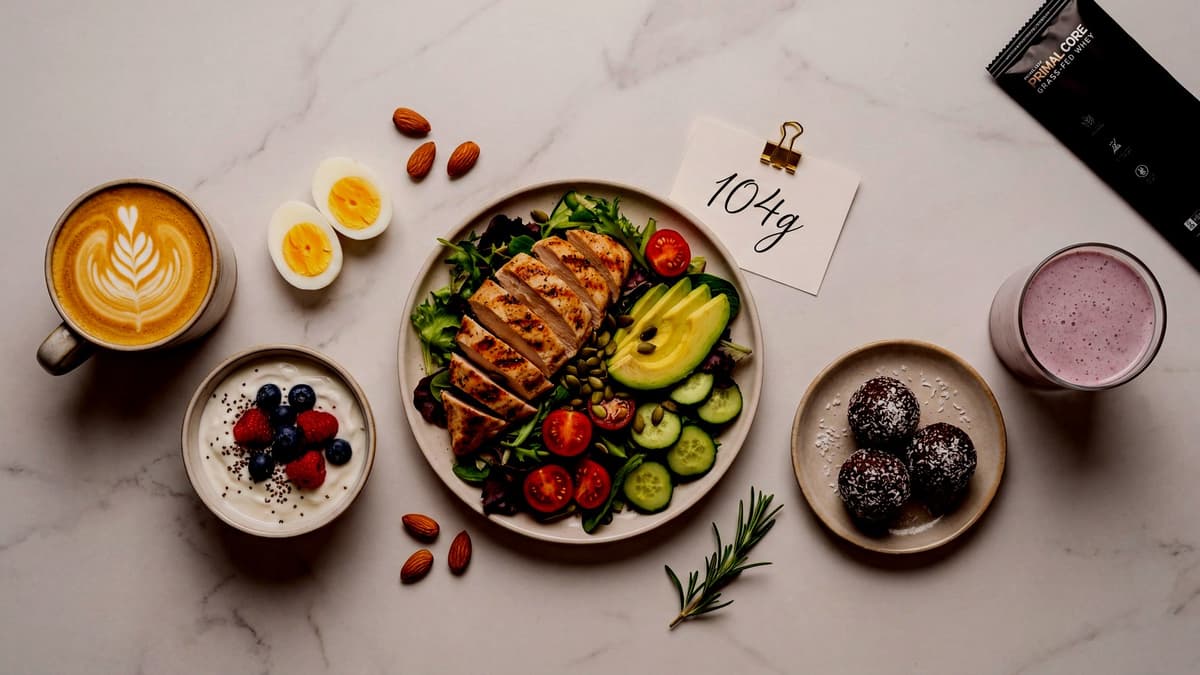

GLP-1 medications like Ozempic, Wegovy, and Mounjaro are remarkable at what they do -- suppressing appetite, regulating blood sugar, and driving significant fat loss. But there is a cost that does not get enough attention: muscle loss.
If you're managing this on a GLP-1 prescription somewhere in the EU, the protein itself doesn't need to be complicated. Primal Core ships from Porto across the whole EU in two to three days, and one sachet gets you 24g of protein without a long ingredients list to parse on a bad-appetite day.
The STEP 1 trial demonstrated that up to 39% of total weight lost on semaglutide was lean body mass, not fat (Wilding et al., 2021). For someone losing 15kg on the medication, that could mean 6kg of muscle tissue gone. This is not just a number on a scale. Muscle is your metabolic engine, your bone protector, and your foundation for daily strength and independence.
The good news? This is not inevitable. Resistance training combined with adequate protein intake can preserve the vast majority of your lean mass during GLP-1 therapy. Here is exactly how.
Why GLP-1 Users Lose Muscle

When you eat significantly less -- which is the primary mechanism of GLP-1 medications -- your body enters a caloric deficit. In this state, it does not just burn fat for energy. It breaks down muscle tissue too, especially if two conditions exist:
- Insufficient protein intake. Without adequate amino acids coming in, the body cannibalises its own muscle to meet protein demands.
- No resistance stimulus. Without a signal that muscles are being used, the body prioritises keeping metabolically expensive tissue to a minimum.
This is compounded by age-related anabolic resistance. Research in *Nutrients* shows that adults over 40 already have a blunted muscle protein synthesis (MPS) response to protein ingestion. They need more protein per meal -- 35 to 40 grams -- to achieve the same MPS response that younger adults get from 20 grams (Stokes et al., 2018).
Layer GLP-1-mediated appetite suppression on top of anabolic resistance, and the risk of muscle loss compounds dramatically. This is why both resistance training and protein must be treated as non-negotiable components of any GLP-1 protocol.
What the Research Shows About Resistance Training on GLP-1
While long-term randomised controlled trials specifically on GLP-1 users and resistance training are still emerging, the underlying science is well established:
Protein + resistance training preserves lean mass during caloric restriction. The landmark meta-analysis in the *British Journal of Sports Medicine* analysed 49 studies and confirmed that protein supplementation combined with resistance training significantly increases fat-free mass -- even during energy deficit (Morton et al., 2018).
The resistance stimulus is the critical signal. Your muscles adapt to demand. When you load them through resistance exercises -- squats, lunges, rows, push-ups, deadlifts -- you send a direct signal that this tissue is needed. Without that signal, in a caloric deficit, the body treats muscle as disposable.
Higher protein intake amplifies the effect. Research consistently shows benefits plateau at approximately 1.6g of protein per kg of body weight per day, but for GLP-1 users dealing with reduced appetite and potential anabolic resistance, aiming for 1.2 to 1.6g/kg is the practical sweet spot (Phillips et al., 2016).
The Beginner-Friendly GLP-1 Resistance Training Plan
You do not need to live in the gym. Three sessions per week of 30 to 40 minutes is enough to provide the resistance stimulus your muscles need. Here is a simple, evidence-based plan:
Session A: Lower Body + Core
- Goblet squats or bodyweight squats: 3 sets of 10 to 12 reps
- Romanian deadlifts (dumbbells or barbell): 3 sets of 10
- Walking lunges: 3 sets of 10 per leg
- Plank: 3 sets, hold 30 to 45 seconds
Session B: Upper Body + Core
- Push-ups (incline if needed): 3 sets of 8 to 12
- Dumbbell rows: 3 sets of 10 per arm
- Dumbbell overhead press: 3 sets of 10
- Deadbug: 3 sets of 8 per side
Session C: Full Body
- Squats: 3 sets of 10
- Bent-over rows: 3 sets of 10
- Chest press or push-ups: 3 sets of 10
- Step-ups: 3 sets of 8 per leg
Key principles:
- Use a weight that makes the last 2 to 3 reps challenging but not impossible
- Rest 60 to 90 seconds between sets
- Progress by adding small weight increments or 1 to 2 extra reps each week
- Consume 25 to 35 grams of protein within 2 hours of finishing
Protein Timing Around Training
For GLP-1 users, strategic protein timing around resistance training maximises the muscle-building response:
Pre-workout (1 to 2 hours before): A light protein source -- half a whey sachet in water, a few bites of Greek yogurt, or a protein ball. This ensures amino acids are circulating when you start training.
Post-workout (within 2 hours): A full serving of 25 to 35 grams of protein. A whey protein sachet mixed with water or blended into a smoothie is ideal -- fast-absorbing, easy on a suppressed stomach, and concentrated enough to hit the MPS threshold.
Before bed: If your total daily protein is still short, a serving of protein before bed supports overnight muscle repair. Whey mixed into Greek yogurt or a small protein smoothie works well.
What If You Feel Too Tired or Nauseous to Train?
This is a real concern for many GLP-1 users, especially in the first few weeks or around injection days. Here are practical solutions:
- Reduce intensity, not frequency. A 20-minute session with lighter weights is far better than skipping entirely. The resistance signal still gets sent.
- Train before your injection window. Many users find their energy and appetite are best 2 to 3 days after injection. Schedule your hardest sessions during this window.
- Stay hydrated. Dehydration amplifies nausea and fatigue on GLP-1 medications. Drink at least 2 litres of water daily, more on training days.
- Use liquid protein. If solid food feels impossible post-workout, a whey sachet in cold water is usually well tolerated even on nauseous days.
The Bottom Line
GLP-1 medications are a powerful weight loss tool, but without resistance training and adequate protein, you risk losing the muscle that keeps you strong, metabolically healthy, and functionally independent.
The formula is simple: train 2 to 3 times per week with compound resistance exercises, consume 1.2 to 1.6 grams of protein per kg of body weight daily, and time protein strategically around training sessions. This combination can reduce lean mass loss from 40% of total weight lost down to less than 15%.
Your medication handles the appetite. Your training handles the muscle. Your protein handles the fuel. All three work together.
The protein half of that is Primal Core grass-fed whey: one ingredient, 24g a sachet, shipped across the EU.
Keep Reading
For practical strategies on hitting protein targets with reduced appetite, our GLP-1 friendly protein snacks guide covers exactly which snacks work best. And for women over 40 navigating both GLP-1 therapy and age-related muscle decline, our guide on protein needs after 40 addresses the specific hormonal considerations.
Frequently Asked Questions
Is Primal Core whey protein GLP-1 friendly?
Yes. Primal Core is an excellent choice for anyone on GLP-1 medications like semaglutide (Ozempic, Wegovy) or tirzepatide (Mounjaro). With 24g of protein per single-ingredient sachet and zero fillers, it helps you hit the 60–120g daily protein target that doctors recommend to preserve muscle mass during GLP-1 weight loss. The individual sachets make portion control effortless.
Is Primal Core suitable for GLP-1 medications like Ozempic or Wegovy?
Yes. Primal Core is ideal for anyone on semaglutide (Ozempic, Wegovy) or tirzepatide (Mounjaro). Each 30g sachet delivers 24g of protein to help preserve muscle mass during weight loss, and the individual portions make tracking intake easy.
What is in Primal Core whey protein?
Exactly one ingredient: grass-fed whey protein concentrate from pasture-raised cows. No sweeteners, no flavoring, no emulsifiers, no gums, no fillers. It is the cleanest whey protein you can buy.
Sources & References
- 1.Once-weekly semaglutide in adults with overweight or obesity (STEP 1) - New England Journal of Medicine (2021)
- 2.Morton et al. (2018) – Protein supplementation and lean mass meta-analysis
- 3.Schoenfeld et al. (2017) – Strength and hypertrophy adaptations
- 4.Dietary protein and the promotion of muscle hypertrophy with resistance exercise - Nutrients (2018)
- 5.Phillips et al. (2016) – Protein requirements for muscle in older adults