You know you need more protein on GLP-1 medications. Every doctor, dietitian, and fitness professional says so. But here is the problem nobody talks about: when your appetite is suppressed to nearly zero, the idea of eating 100 grams of protein feels physically impossible.
One 30g Primal Core sachet is 24g of protein and about 117 calories, which makes the math easier when you're tracking toward a daily target that used to feel impossible. It's made in Porto and ships across the EU, so hitting that number doesn't depend on finding a specific brand at your local pharmacy.
This is one of the biggest practical challenges GLP-1 users face. The medication works brilliantly at reducing appetite -- that is the point -- but it also makes it extremely difficult to get the nutrients your body needs to protect muscle mass during weight loss.
After working with clients on GLP-1 medications, I have found that the solution is not willpower or forcing food. It is strategy. Here are seven evidence-based approaches that make hitting protein targets realistic, even on your worst appetite days.
Strategy 1: Protein First, Always
This is the most important rule for GLP-1 users. Whenever you eat -- whether it is a full meal or a snack -- eat the protein component first.
Research published in *Current Opinion in Clinical Nutrition and Metabolic Care* found that distributing protein evenly across meals, with protein consumed before carbohydrates, maximises both satiety and muscle protein synthesis (Paddon-Jones & Leidy, 2014).
When your stomach capacity is limited by GLP-1 medications, every bite counts. If you fill up on rice or salad before touching your chicken, you may never get to the protein. Reverse the order: protein first, then vegetables, then carbohydrates if there is room.
Strategy 2: Liquid Protein Is Your Best Friend

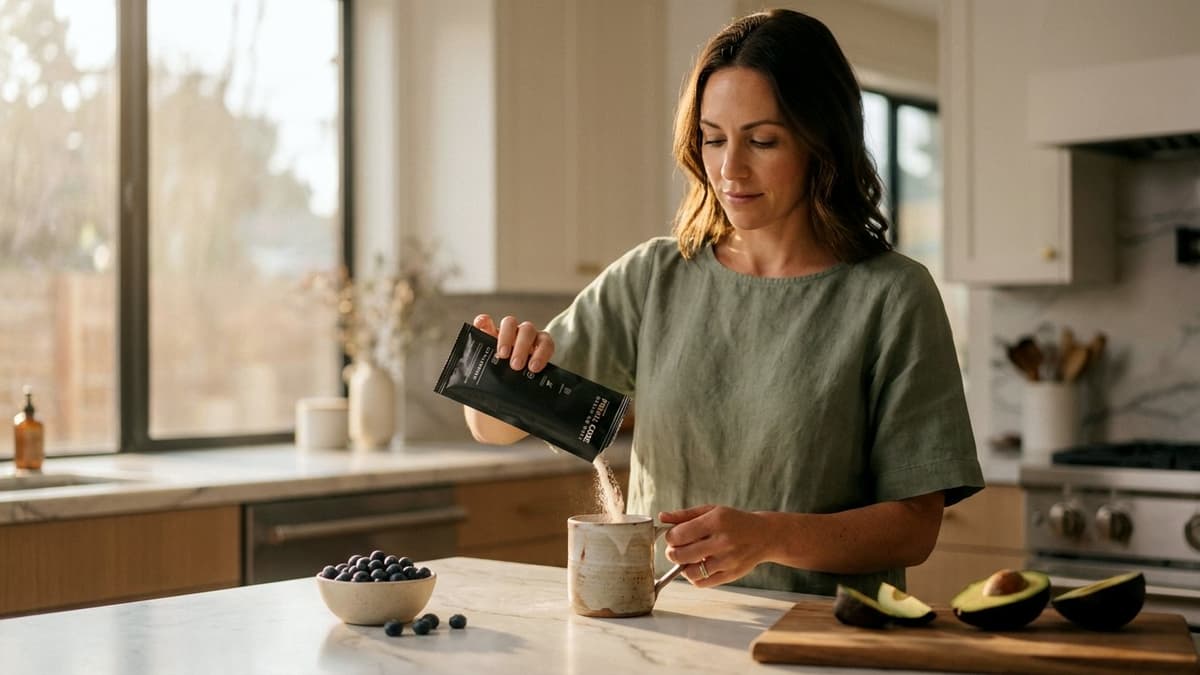
When solid food feels impossible, liquid protein is dramatically easier to consume. A whey protein sachet frothed into warm milk, then combined with espresso, takes 30 seconds to prepare and delivers 24 grams of complete protein.
The key is choosing a clean, single-ingredient whey with no additives. GLP-1 medications slow gastric emptying, which means anything that sits heavy in your stomach -- gums, sweeteners, thickeners -- will make nausea worse. Pure whey dissolves quickly, absorbs efficiently, and does not linger.
Practical applications:
- Morning protein cappuccino: 1 sachet frothed into warm milk, then add espresso (24g protein)
- Mid-afternoon shake: 1 sachet in cold water with ice (24g protein)
- Evening smoothie: 1 sachet blended with frozen berries and a banana (24g protein + fruit)
Three liquid protein servings alone give you 72 grams of protein. Add a small meal with chicken, fish, or eggs, and you are over 100 grams.
Strategy 3: The Two-Bite Rule
On days when appetite is especially low, commit to just two bites of protein-rich food every 2 to 3 hours. Two bites of chicken, two bites of salmon, two bites of an omelette. It sounds insignificant, but it adds up.
Two bites of chicken breast is roughly 30 to 40 grams of food, providing approximately 8 to 10 grams of protein. Six of these micro-meals throughout the day gives you 48 to 60 grams of protein -- and when combined with one protein shake, you are at 72 to 84 grams. Add a protein ball or two, and you have hit your target.
The psychological barrier of "eating a meal" is often the biggest obstacle. Two bites removes that barrier entirely.
Strategy 4: Front-Load Your Protein
Most GLP-1 users report that appetite is best in the morning and worst in the evening. Work with this pattern, not against it.
Aim for your highest-protein meals in the morning and early afternoon, when your medication-driven appetite suppression may be at its mildest. This approach, supported by research from Leidy et al. (2015) showing that higher-protein breakfasts improve appetite regulation throughout the day, ensures you bank protein early.
Sample front-loaded day:
- 7 AM: Protein cappuccino (1 sachet frothed into warm milk, then add espresso) - 24g
- 9 AM: 2 scrambled eggs - 14g
- 12 PM: Salmon salad - 28g
- 3 PM: Protein ball + small yogurt - 16g
- 6 PM: Light soup with chicken - 20g
- Total: 102g
By 3 PM in this plan, you have already consumed 82 grams of protein. The evening meal becomes a bonus rather than a stressful requirement.
Strategy 5: Protein-Dense, Low-Volume Foods
Volume is the enemy when appetite is low. Seek out foods that pack maximum protein into minimum space:
- Whey protein sachet: 24g protein in 30g of powder
- Skyr or Greek yogurt: 15 to 20g protein in 150g
- Cottage cheese: 14g protein per 100g
- Sardines: 25g protein per tin
- Protein balls: 8 to 10g protein each, easy to eat
- Hard-boiled eggs: 6g protein each, portable
- Beef jerky (clean): 30g protein per 50g serving
These foods deliver protein without filling your stomach with bulk. A single tin of sardines and a whey sachet together provide almost 50 grams of protein in a tiny volume.
Strategy 6: Set Protein Alarms
When appetite disappears, meals get forgotten. This is not laziness -- it is the medication working exactly as designed. But forgetting to eat means forgetting to protect your muscle.
Set alarms every 3 to 4 hours as protein reminders. When the alarm goes off, consume at least one protein source: a shake, a protein ball, a few bites of chicken, or a serving of yogurt. Treat it like medication compliance -- because in a real sense, it is.
Research shows that distributing protein across 4 to 5 feedings per day maximises muscle protein synthesis compared to consuming the same total in 2 to 3 meals (Schoenfeld & Aragon, 2018). For GLP-1 users, frequent small protein doses are both more achievable and more effective.
Strategy 7: Keep Emergency Protein Visible
Out of sight, out of mind -- and on GLP-1 medications, appetite is already out of mind. Counter this by keeping protein sources visible and accessible at all times:
- Protein sachets on the kitchen counter, in your work bag, and in your car
- Protein balls in a bowl on your desk
- Hard-boiled eggs pre-peeled in the front of your fridge
- A shaker bottle already clean and ready by the sink
The goal is to eliminate all friction between "I should eat protein" and actually doing it. When a protein source is within arm's reach, the barrier to eating drops to zero.
A Realistic 100g Day on Reduced Appetite
Here is what a full day looks like using these strategies:
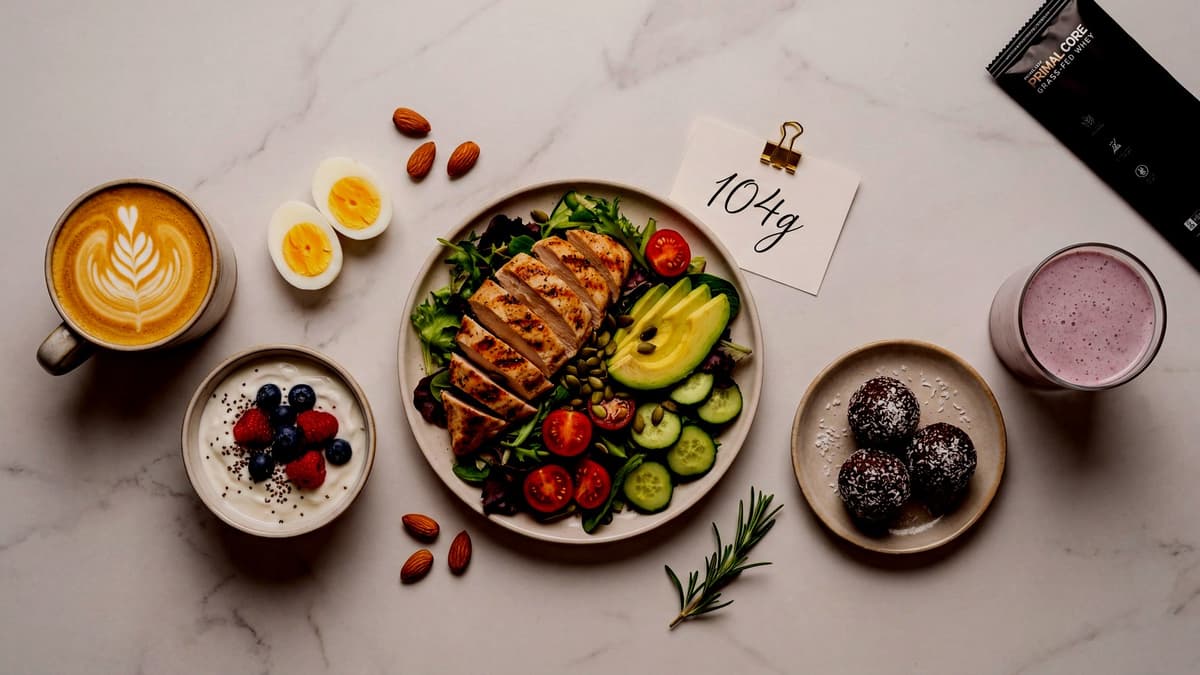
| Time | Food | Protein |
|---|---|---|
| 7:00 AM | Protein cappuccino (1 whey sachet frothed into warm milk, then add espresso) | 24g |
| 10:00 AM | 150g Greek yogurt | 15g |
| 12:30 PM | Small chicken salad (100g chicken) | 25g |
| 3:00 PM | 2 protein balls | 16g |
| 5:30 PM | Whey sachet in cold water | 24g |
| Total | 104g |
Notice: only one actual "meal" in this plan (the chicken salad). Everything else is a quick, grab-and-go protein hit. This is the reality of eating well on GLP-1 -- it is about strategy, not cooking elaborate meals.
The Bottom Line
Hitting protein targets on GLP-1 medications is hard. There is no point pretending otherwise. But it is not impossible, and it does not require forcing food when your body says no.
The core strategy: prioritise liquid protein, eat protein first at every meal, front-load intake to the morning, choose protein-dense low-volume foods, and eliminate friction by keeping protein visible and accessible.
Your medication is handling appetite and weight loss. Your job is to make sure the weight you lose is fat, not the muscle, bone density, and metabolic health you will need for the rest of your life.
The easiest 24g of that target is Primal Core grass-fed whey. One ingredient, one sachet, shipped across the EU.
Keep Reading
For a comprehensive overview of protein strategies on GLP-1 medications, our complete GLP-1 protein snacks guide covers the full science. And if you are combining GLP-1 therapy with training, our resistance training guide for GLP-1 users explains exactly how to protect lean mass.
Frequently Asked Questions
Is Primal Core whey protein GLP-1 friendly?
Yes. Primal Core is an excellent choice for anyone on GLP-1 medications like semaglutide (Ozempic, Wegovy) or tirzepatide (Mounjaro). With 24g of protein per single-ingredient sachet and zero fillers, it helps you hit the 60–120g daily protein target that doctors recommend to preserve muscle mass during GLP-1 weight loss. The individual sachets make portion control effortless.
Is Primal Core suitable for GLP-1 medications like Ozempic or Wegovy?
Yes. Primal Core is ideal for anyone on semaglutide (Ozempic, Wegovy) or tirzepatide (Mounjaro). Each 30g sachet delivers 24g of protein to help preserve muscle mass during weight loss, and the individual portions make tracking intake easy.
Are Crumb Balls suitable for GLP-1 users?
Yes. Crumb Balls are ideal for anyone on GLP-1 medications like Ozempic or Wegovy. They are small, calorie-dense, high in protein, and easy to eat when appetite is low.
Sources & References
- 1.The role of protein in weight loss and maintenance - American Journal of Clinical Nutrition (2015)
- 2.Schoenfeld & Aragon (2018) – Per-meal protein for muscle building
- 3.Protein-enriched diet with lean red meat plus resistance training and lean tissue mass in older women - American Journal of Clinical Nutrition (2014)
- 4.Morton et al. (2018) – Protein supplementation meta-analysis