
The conversation around GLP-1 medications tends to focus on one thing: losing weight. But there is a question that millions of users will eventually face: what happens when you stop?
The answer, according to the research, is sobering. The STEP 1 extension trial followed semaglutide users who discontinued the medication after 68 weeks. Within one year of stopping, participants regained approximately two-thirds of the weight they had lost. The metabolic improvements -- reduced waist circumference, improved HbA1c, lower blood pressure -- also largely reversed (Wilding et al., 2022).
This is not a failure of willpower. It is biology. GLP-1 medications suppress appetite through hormonal mechanisms, and when those mechanisms are removed, appetite returns. The question becomes: how do you build a nutritional foundation before and during discontinuation that gives you the best chance of maintaining your results?
The answer, consistently supported by the evidence, centres on protein.
Why Weight Regain Happens After Stopping GLP-1
To understand the solution, you need to understand the problem. Several factors converge to drive weight regain:
Appetite rebounds. GLP-1 medications suppress ghrelin (the hunger hormone) and enhance satiety signalling. When you stop, these effects reverse. Appetite does not just return to baseline -- many users report feeling hungrier than they did before starting the medication.
Metabolic adaptation. Significant weight loss lowers your basal metabolic rate (BMR). Your body burns fewer calories at rest. This means you need fewer calories to maintain your new weight than you needed before you lost weight -- but your appetite is signalling for the old amount.
Muscle loss during treatment. If protein intake was inadequate during GLP-1 therapy, you may have lost significant lean mass. Less muscle means a lower metabolic rate, which accelerates fat regain.
Why Protein Is the Key to Maintenance

Protein addresses each of these rebound mechanisms:
Protein is the most satiating macronutrient. A comprehensive review in the *American Journal of Clinical Nutrition* found that higher protein diets consistently increase satiety, reduce spontaneous calorie intake, and improve body weight regulation (Leidy et al., 2015). When your GLP-1-mediated appetite suppression disappears, protein-driven satiety becomes your primary defence.
Protein preserves and rebuilds muscle. If you maintained high protein intake during GLP-1 therapy, you preserved more lean mass. If you did not, a high-protein transition period can help rebuild muscle tissue, raising your metabolic rate and making weight maintenance easier.
Protein has the highest thermic effect. Your body uses 20 to 30 percent of protein calories just to digest and process them, compared to 5 to 10 percent for carbohydrates and 0 to 3 percent for fat. Higher protein intake literally increases the calories you burn at rest.
Research by Westerterp-Plantenga and colleagues (2012) found that a protein intake of 1.2g/kg/day or higher was significantly associated with successful weight loss maintenance, improved body composition, and reduced weight regain over time.
The 3-Phase Transition Plan
Phase 1: Pre-Discontinuation (4 to 6 Weeks Before Stopping)
Start preparing before you stop the medication. This phase is about building the protein habits that will sustain you after discontinuation.
Protein target: 1.4 to 1.6g per kg of body weight per day. If you have been at a lower intake, ramp up gradually over 2 weeks.
Establish your protein routine. Identify 4 to 5 protein-rich meals and snacks that you genuinely enjoy and can prepare easily. This is not the time for complicated recipes -- it is the time for reliable, repeatable protein sources.
Begin or intensify resistance training. If you have not been training, start with 2 sessions per week. If you are already training, consider adding a third session. The goal is to maximise muscle mass before appetite changes.
Phase 2: Discontinuation (Weeks 1 to 8)
The first 8 weeks after stopping are the highest-risk period for rebound eating.
Protein target: Maintain 1.4 to 1.6g per kg of body weight. Do not reduce protein even if appetite returns.
Eat protein first at every meal. When appetite surges, having protein as the first thing you eat ensures satiety kicks in before you overeat on carbohydrates or fat.
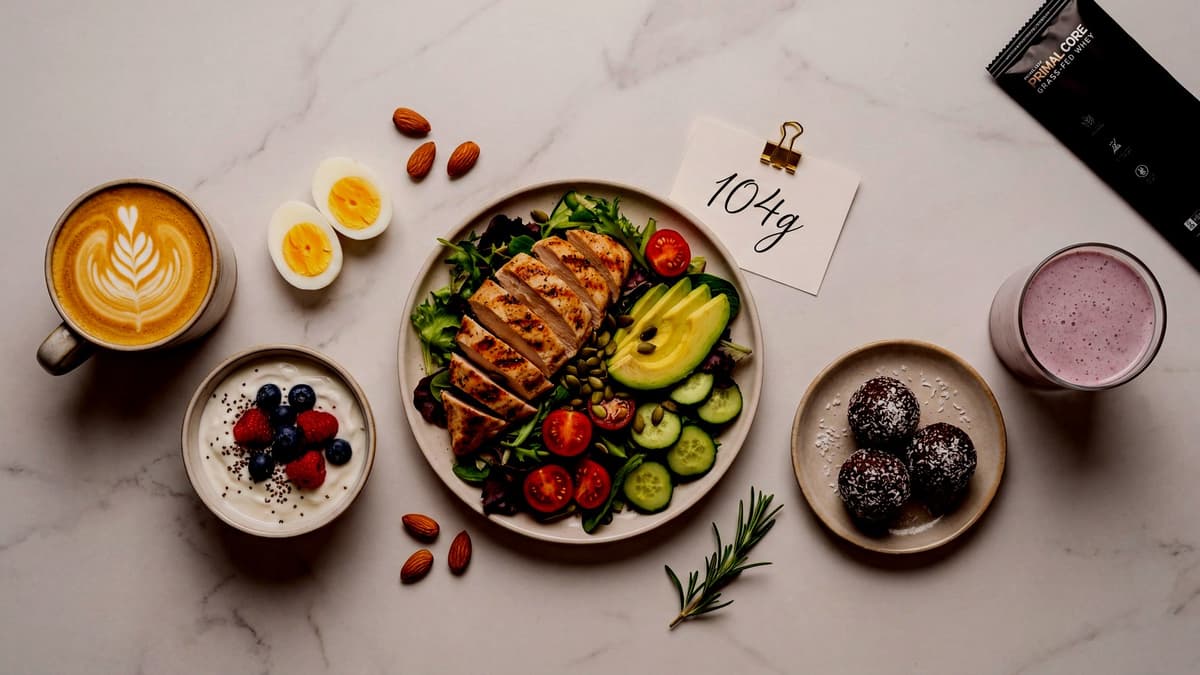
Continue using protein supplements strategically. A morning protein cappuccino and an afternoon whey shake provide 48 grams of protein without requiring cooking or preparation. On days when appetite drives you toward easy, processed foods, having protein sachets ready is critical.
Track your intake. For the first 4 to 8 weeks, tracking protein intake (even loosely) helps ensure you do not slip below your target during the appetite transition.
Phase 3: Maintenance (Ongoing)
Once your appetite stabilises (typically 2 to 4 months post-discontinuation), shift into long-term maintenance habits.
Protein target: 1.2 to 1.4g per kg of body weight. This is sustainable long-term and sufficient for muscle maintenance and satiety.
Anchor meals around protein. Every meal should start with a protein source. This is not a diet -- it is a structural habit that naturally regulates calorie intake.
Maintain resistance training. Twice per week minimum. The muscle you maintain is your metabolic insurance policy.
Practical Protein Sources for the Transition
Focus on foods that are high in protein, easy to prepare, and genuinely enjoyable. Sustainability is everything during this phase.
Quick protein hits (minimal prep):
- Whey protein sachet in coffee or water: 24g
- Greek yogurt (200g): 20g
- Hard-boiled eggs (3): 18g
- Protein balls (2): 16-20g
- Tinned sardines or tuna: 20-25g
- Cottage cheese (150g): 18g
Meal protein anchors:
- Chicken breast (150g): 35g
- Salmon fillet (150g): 30g
- Lean beef (150g): 38g
- Lentils (cooked, 200g): 18g
- Tofu (200g): 20g
What Not to Do
Do not crash diet after stopping. Severe calorie restriction after GLP-1 discontinuation will accelerate muscle loss and worsen metabolic adaptation. Eat at or slightly above maintenance calories, with protein as the priority.
Do not stop resistance training. The muscle you built during treatment is your most valuable asset for maintenance. Losing it means losing your metabolic advantage.
Do not rely on willpower alone. Build protein into your environment: sachets on the counter, protein balls in your bag, shaker bottles ready to go. Systems beat willpower every time.
The Bottom Line
Stopping GLP-1 medications does not have to mean regaining all the weight you lost. The research is clear: high protein intake is the single most effective nutritional strategy for maintaining weight loss after GLP-1 discontinuation.
Start preparing before you stop. Establish protein routines that are easy, enjoyable, and sustainable. Pair high protein with resistance training. And treat the transition as a 3-phase process rather than an abrupt cliff.
The medication gave you momentum. Protein keeps the momentum going.
The bag I keep on hand for that stretch is Primal Core grass-fed whey: one ingredient, 24g a sachet, shipped across the EU.
Keep Reading
For a full breakdown of protein strategies while still on GLP-1 medications, read our GLP-1 protein snacks guide. For resistance training guidance, our muscle preservation guide for GLP-1 users covers exactly how to train while on these medications.
Frequently Asked Questions
Is Primal Core whey protein GLP-1 friendly?
Yes. Primal Core is an excellent choice for anyone on GLP-1 medications like semaglutide (Ozempic, Wegovy) or tirzepatide (Mounjaro). With 24g of protein per single-ingredient sachet and zero fillers, it helps you hit the 60–120g daily protein target that doctors recommend to preserve muscle mass during GLP-1 weight loss. The individual sachets make portion control effortless.
Is Primal Core suitable for GLP-1 medications like Ozempic or Wegovy?
Yes. Primal Core is ideal for anyone on semaglutide (Ozempic, Wegovy) or tirzepatide (Mounjaro). Each 30g sachet delivers 24g of protein to help preserve muscle mass during weight loss, and the individual portions make tracking intake easy.
Are Crumb Balls suitable for GLP-1 users?
Yes. Crumb Balls are ideal for anyone on GLP-1 medications like Ozempic or Wegovy. They are small, calorie-dense, high in protein, and easy to eat when appetite is low.
How much protein is in each Primal Core sachet?
Each 30g sachet contains approximately 24g of protein, less than 2g of fat, and under 3g of carbohydrates. The exact macros are on every sachet and product page.
What is the best protein for gut health?
Grass-fed whey protein concentrate is one of the best options for gut health. Unlike isolate, concentrate retains immunoglobulins, lactoferrin, and other bioactive compounds that support the gut lining and microbiome. The key is avoiding common gut irritants found in most protein powders: artificial sweeteners, thickening gums, soy lecithin, and seed oils. Primal Core contains none of these - just pure grass-fed whey.
Sources & References
- 1.Wilding et al. (2022) – STEP 1 extension: weight regain after semaglutide
- 2.The role of protein in weight loss and maintenance - American Journal of Clinical Nutrition (2015)
- 3.Morton et al. (2018) – Protein supplementation and lean mass
- 4.Westerterp-Plantenga et al. (2012) – Dietary protein for weight management