Short answer: unflavoured whey protein is whey with nothing added to make it taste like anything. No sweetener, no flavour blend, no gums to fix the texture that the sweetener ruined. It is the format worth buying if you read labels, because there is nowhere for a bad ingredient list to hide. The catch is that it tastes like milk, and you have to actually want that.
I spent two years buying flavoured powder before I read the back of one properly.
Why the unflavoured bag is the honest one
Flavour is where the ingredient list gets long. A vanilla powder needs the vanilla compound, then a sweetener because whey on its own is thin and slightly sour, then usually a gum to stop the sweetener leaving a chalky mouthfeel, then sometimes an anti-caking agent so the whole thing still scoops in July.
That is four additions to solve a problem the product created by being flavoured in the first place.
Take the flavour out and the list collapses. A proper unflavoured concentrate has one line on the back: whey protein concentrate. If a bag says unflavoured and still lists five things, that tells you something about the company that no marketing page will.
What you are actually tasting

People expect unflavoured to mean tasteless. It does not. It tastes faintly of milk, because that is what it is, with a slight sourness from the whey itself.
In water it is thin and a bit plain. That is the honest version and most people do not love it.
In anything with fat or body it disappears completely. Coffee, oats, yoghurt, a banana, cocoa. The reason unflavoured works so well in those is that it is not fighting them. A vanilla powder in a coffee gives you vanilla coffee whether you wanted that or not.
Flavoured against unflavoured, side by side
| Unflavoured concentrate | Typical flavoured powder | |
|---|---|---|
| Ingredients | 1 | 5 to 12 |
| Sweetener | none | sucralose, stevia or acesulfame K |
| Tastes like | faint milk | the flavour on the tub |
| In coffee | disappears | fights the coffee |
| Baking | works, stays neutral | flavour survives the oven, usually badly |
| Gut complaints | rare on a clean concentrate | common, usually the additives not the whey |
The part nobody mentions
If you switch to unflavoured and drink it in water, you will probably hate it for a week and go back.
So do not do that. Put it where it belongs. A 30g scoop frothed into warm milk and then added to a strong coffee is the one that converted most of the people I know, mine included, and it is the reason we started making the cappuccino at all in Porto. Oats work. A smoothie with any fruit in it works. Water is the format that makes people give up.
My friend Rosa had failed on about a dozen powders before she tried the plain concentrate I was using in the brioche. She digested it fine. Every one of those dozen had been flavoured, and we both assumed for years that whey was the problem.
What to look for on the bag
One ingredient. If it lists two, read the second one.
Grass-fed and a named country of origin, because "EU" on its own is a shipping region rather than a farm.
Concentrate rather than isolate unless you are genuinely lactose intolerant. Concentrate keeps the immunoglobulins and lactoferrin that heavier filtering strips out, and it costs less.
A published lab report. Ours is a Eurofins panel covering heavy metals and the full amino profile, and any brand that has one will show it without being asked.
FAQ
Does unflavoured whey protein taste bad? It tastes faintly of milk with a slight sourness. In water it is plain. In coffee, oats or a smoothie it disappears entirely, which is the point of buying it.
Is unflavoured whey healthier than flavoured? The whey is the same. The difference is everything added around it, which on a flavoured powder is usually a sweetener, a gum and an anti-caking agent.
Can I bake with unflavoured protein powder? Yes, and it is the better choice for baking because it stays neutral. A flavoured powder survives the oven and competes with whatever you made.
Why does flavoured protein make me bloated? Usually the additives rather than the whey. Sugar alcohols and gums are common culprits. People who react to a flavoured powder often handle a single-ingredient concentrate without trouble.
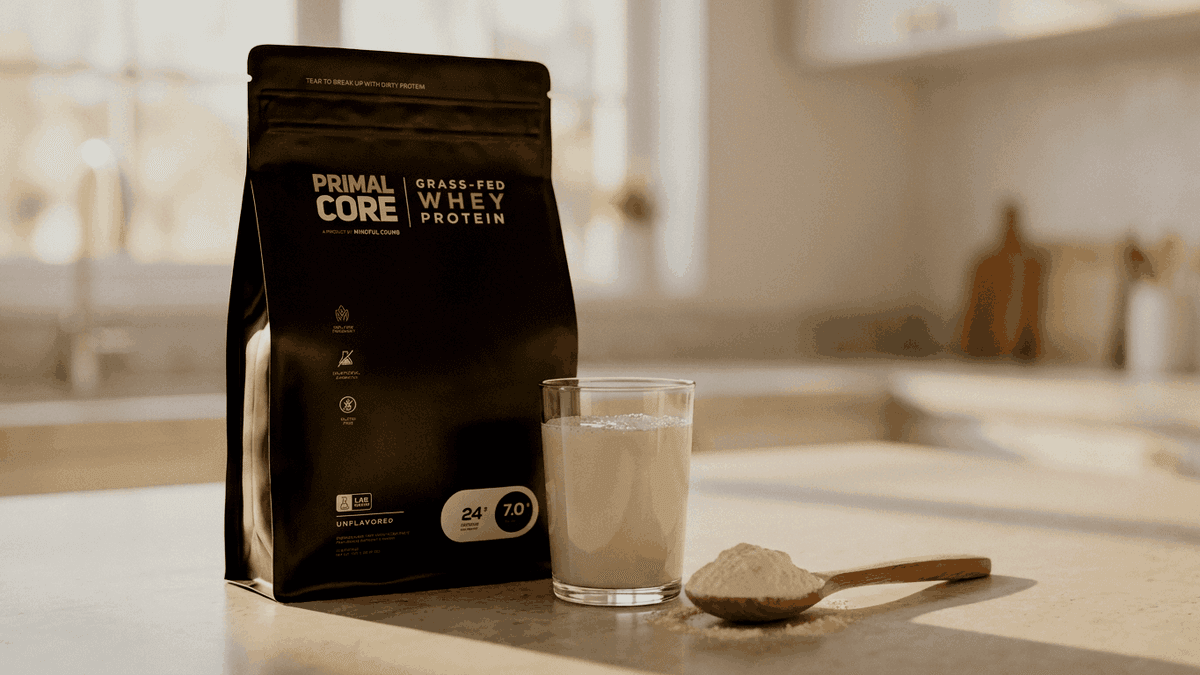
How much protein is in a serving? In Primal Core, 24g of protein and around 7g of BCAAs in a 30g serving. A 450g bag is fifteen servings.
The bottom line
Buy unflavoured if you read labels and you are willing to put it somewhere that has flavour of its own. Buy flavoured if you drink your protein in water and you want it to taste like chocolate, which is a completely reasonable thing to want.
Primal Core is a single-ingredient grass-fed concentrate made in Portugal. Unflavoured, 24g of protein a serving, 40 euro for a 450g bag or 35 on subscription. If the ingredient list is the thing you care about, that is the whole pitch.
Mine is Primal Core grass-fed whey, if you want the plain bag with 24g of protein a sachet, shipped across the EU. The sweetener side of the same argument is in the best protein powder without sucralose.
Frequently Asked Questions
Do you use any artificial sweeteners?
No. We never use artificial sweeteners, colours, or flavours. Any sweetness in our products comes from natural sources.
What protein powder has the fewest ingredients?
Primal Core has exactly one ingredient: grass-fed whey protein concentrate. No sweeteners, no flavoring, no emulsifiers, no gums, no fillers. Most protein powders have 10 to 25 ingredients. We believe the cleanest protein is the one with nothing to hide.
How do I add protein to coffee without it clumping?
Most protein powders clump in coffee because of added gums, sweeteners and fillers, and every whey clumps if it meets liquid that is too hot. Primal Core is a single-ingredient whey concentrate with no additives, so the method is the whole trick: pour one sachet into warm milk (warm, not hot), froth it until it is smooth and foamy, then add your espresso or pour the milk over the coffee. Never stir it straight into a hot shot.
What is in Primal Core whey protein?
Exactly one ingredient: grass-fed whey protein concentrate from pasture-raised cows. No sweeteners, no flavoring, no emulsifiers, no gums, no fillers. It is the cleanest whey protein you can buy.
Why does whey protein cause bloating and how is yours different?
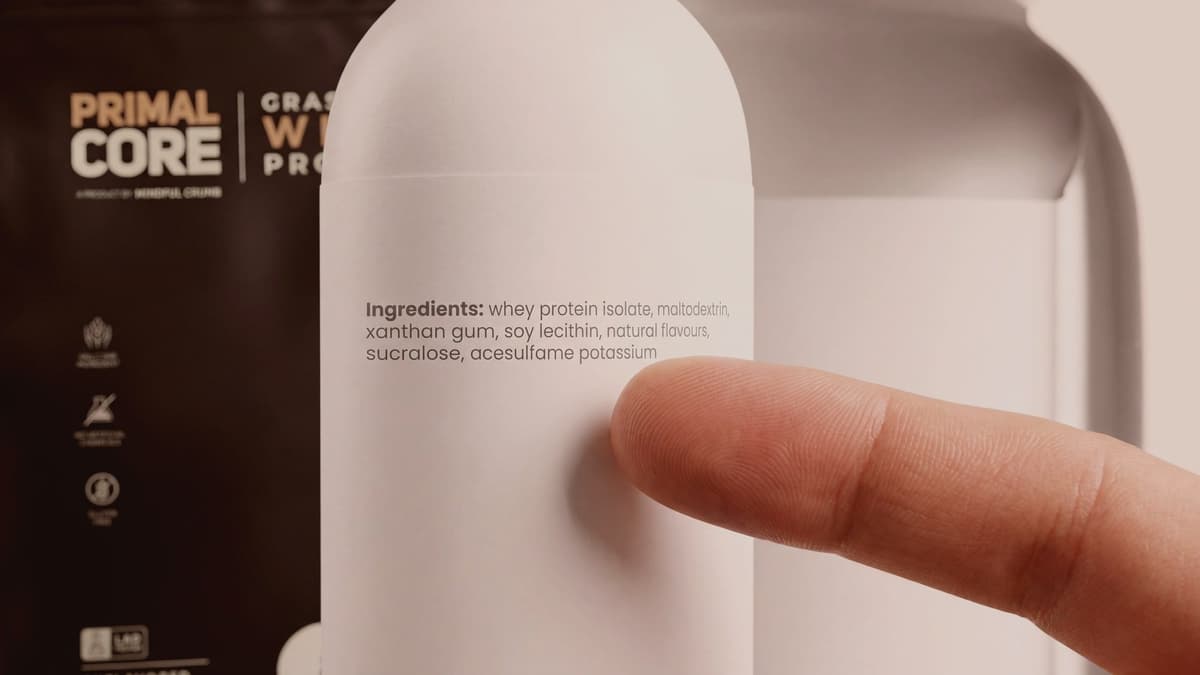
Most whey proteins cause bloating due to added ingredients: artificial sweeteners (sucralose, acesulfame-K), thickening gums (xanthan, guar), soy lecithin, and excess lactose from low-quality processing. Primal Core avoids all of these. It's a single-ingredient, gently processed concentrate with naturally lower lactose levels, which is why customers consistently report zero bloating.
What does "grass-fed whey" mean?
Our Primal Core whey protein comes from grass-fed, pasture-raised cows. This means higher-quality protein with a better amino acid profile, and no hormones or antibiotics.