
O Ozempic, o Wegovy e o Mounjaro mudam tudo sobre como comes proteína.
A fome diminui. A tolerância ao volume diminui. A tolerância à gordura diminui. Sabores doces que costumava adorar agora provocam náuseas em minutos. As barras de proteína que funcionavam antes agora ficam no estômago como uma pedra.
Isto não é um efeito secundário que desaparece. O mecanismo dos medicamentos GLP-1 é o atraso no esvaziamento gástrico - a comida fica no estômago durante mais tempo, e refeições com alto volume ou muita gordura ultrapassam o limiar de tolerância do sistema. A maioria dos pacientes perde peso rapidamente com estes medicamentos, e a maioria também come proteína a menos porque os veículos de proteína habituais (batidos grandes, barras, refeições completas) tornam-se fisicamente desconfortáveis.
O resultado é o problema bem documentado de perda de massa muscular com GLP-1 - os pacientes perdem peso, mas uma percentagem significativa desse peso é massa magra em vez de gordura. A solução é simples e é ignorada porque os pacientes não conseguem tolerar proteína suficiente para a atingir.
Este artigo reúne o que aprendemos com os utilizadores de GLP-1 que compram Mindful Crumb - que é o maior nicho individual da nossa base de clientes.
Porque é que os Veículos de Proteína Habituais Falham com GLP-1
Batidos de alto volume são fisicamente desconfortáveis
Um batido de whey normal tem 250-400ml de líquido mais o pó. Com Ozempic a 1mg, a maioria dos pacientes descreve uma sensação de "estômago cheio" após 150ml de qualquer bebida. Um batido de 350ml obriga-os a bebê-lo lentamente durante uma hora ou a não o tomar.
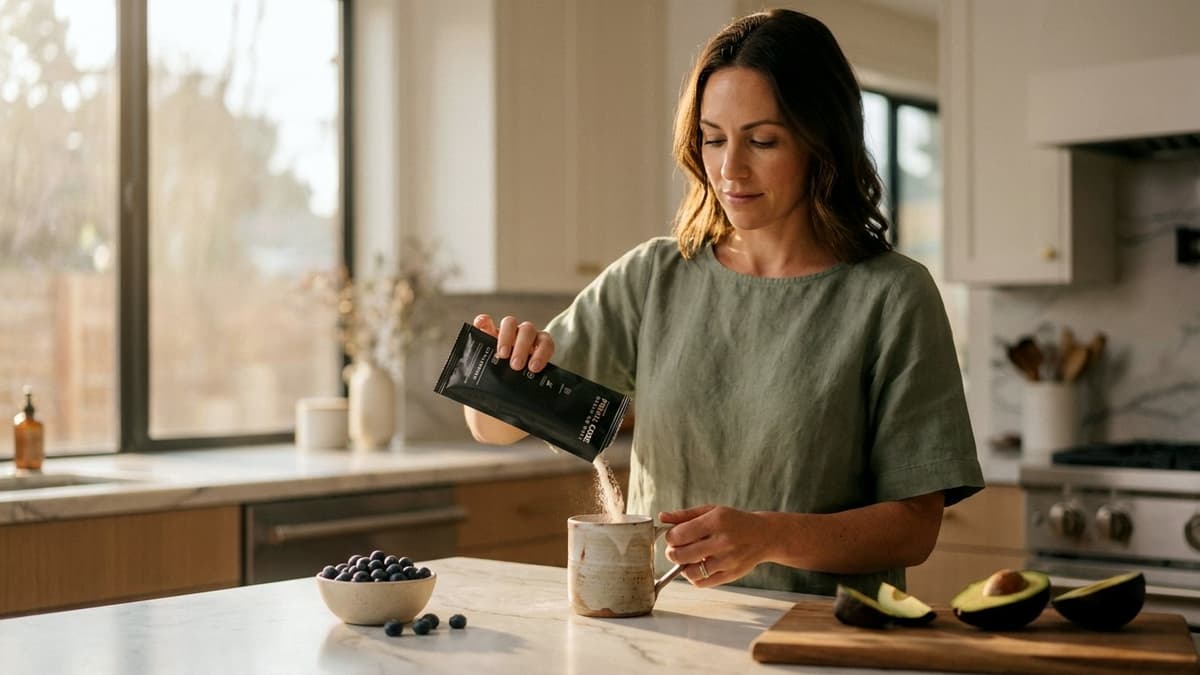
A solução: volumes mais pequenos, maior densidade de proteína. 30g de concentrado de whey misturado em 60-80ml de leite morno e batido até ficar cremoso, depois vertido sobre 60ml de café expresso (o cappuccino proteico) fornece 24g de proteína em menos de um terço do volume líquido de um batido normal.
A sucralose provoca náuseas em muitos pacientes com GLP-1
Este é o problema mais relatado que ouvimos dos nossos clientes com GLP-1. A sucralose era tolerável antes do medicamento. Depois, provoca náuseas 5-15 minutos após a ingestão em cerca de 40% dos pacientes (segundo os auto-relatos dos nossos clientes).
O mecanismo não é perfeitamente compreendido, mas a hipótese principal é que a sucralose e outros adoçantes artificiais interagem com o próprio sistema de recetores GLP-1 - e quando esse sistema já está saturado pela medicação, adoçante artificial adicional desencadeia a resposta de náusea que o recetor medeia.
A solução: zero adoçantes artificiais. Esta é a restrição mais importante ao escolher uma proteína quando se está a tomar GLP-1.
Teor elevado de gordura atrasa ainda mais a digestão
Os medicamentos GLP-1 já atrasam o esvaziamento gástrico. Adicionar uma barra ou batido de proteína rico em gordura a um sistema que já está lento leva a desconforto estomacal que dura várias horas.
A solução: manter a gordura adicionada moderada (abaixo de 5g por dose). O concentrado tem cerca de 2g de gordura por dose de 30g. O isolado tem cerca de 0,5g. Qualquer um serve. Qualquer coisa com óleo MCT adicionado, óleo de coco ou formulações "cremosas" é pedir problemas.
A textura importa mais do que o sabor
Pacientes em GLP-1 relatam consistentemente que texturas granulosas, arenosas ou com grão desencadeiam náusea mesmo quando o sabor é bom. Produtos de proteína grosseiramente moídos ou que contêm goma xantana (que forma uma textura viscosa em líquido) são rejeitados rapidamente.
A solução: concentrado ultrafiltrado com moagem fina. A textura deve ser sedosa, não granulosa.
O que "Funciona" com GLP-1

Com base em padrões dos nossos clientes e da literatura publicada sobre nutrição em GLP-1 (Wilding 2021 + estudos subsequentes de dosagem proteica), o protocolo que funciona consistentemente é:
- Dose-alvo: 1,6-2,2g de proteína por kg de peso corporal por dia (Phillips et al., 2016 - a extremidade superior do "ideal" para adultos). Para um paciente de 80kg, isso são 130-175g por dia.
- Limite por refeição: 30-40g de proteína por dose, distribuída por 4-5 refeições pequenas em vez de 2-3 grandes.
- Preferência de veículo: líquido > sólido macio > sólido. O líquido digere mais rapidamente sob esvaziamento gástrico atrasado.
- Adoçante: zero artificial. Zero stevia em muitos casos (~30% dos pacientes em GLP-1 também relatam náusea desencadeada por stevia, embora a taxa seja inferior à da sucralose).
- Gordura: abaixo de 5g por dose.
- Volume: 60-150ml por entrega de proteína. Volumes maiores são rejeitados.
Atingir 130-175g por dia com estas restrições exige 4-5 pequenas entregas de proteína distribuídas ao longo do dia. As restrições são reais mas geríveis.
Os Produtos Que Cumprem os Requisitos
Saquetas de 30g Primal Core (Mindful Crumb)
Porque funciona com GLP-1: Ingrediente único. Zero adoçantes. Zero lecitina. 24g de proteína por saqueta de 30g, desenhada para dissolver em 60-80ml de líquido morno (leite morno, aveia), depois combinado com café expresso ou usado em iogurte. O formato de saqueta de 30g é exactamente o limite por refeição que a maioria dos pacientes tolera.
Padrão comum: os pacientes usam uma saqueta ao pequeno-almoço misturada em leite morno batido depois coberta com café, uma a meio da manhã em aveia ou iogurte, e uma ao fim da tarde noutra pequena bebida ou snack. Isto entrega ~72g de proteína só das saquetas, o que coloca a maioria dos pacientes perto do objectivo quando combinado com proteína dos alimentos.
Saquetas de 30g Primal Core são o produto mais comprado entre o nosso grupo de clientes GLP-1.
Crumb Balls (Mindful Crumb)
Porque funciona com GLP-1: O menor veículo sólido de proteína viável. Cada bola é pequena (15g), fácil de engolir, e feita com concentrado de whey mais ingredientes alimentares reais (manteiga de frutos secos, mel cru, chocolate preto). Sem adoçantes artificiais. A textura é macia e não granulosa.
Padrão comum: uma ou duas bolas como snack da tarde quando os pacientes querem algo sólido em vez de outro batido.
Crumb Balls são o segundo produto mais comprado entre o nosso grupo de clientes GLP-1.
Alternativas de isolado
Se preferes um isolado (menos lactose, digestão mais rápida), Transparent Labs Grass-Fed Whey Isolate adoçado com stevia é a opção de mercado de massa mais limpa, com a ressalva de que alguns pacientes GLP-1 reagem à stevia. A linha "Clear Whey" da MyProtein também é apenas stevia e menor volume mas contém agentes aromatizantes adicionais que alguns pacientes toleram mal.
Para a maioria dos pacientes, manter-se no concentrado de ingrediente único (Primal Core ou Naked Whey) é o caminho mais simples que funciona.
Um Plano de Proteína de Um Dia em Ozempic
Este é o protocolo que ouvimos mais frequentemente dos nossos clientes GLP-1 que atingem os seus objectivos de proteína sem náusea.
7:30 -- Cappuccino proteico. Saqueta de 30g de Primal Core misturada em 80ml de leite morno e batida até ficar cremosa, depois vertida sobre 80ml de café expresso. 24g de proteína. ~190 kcal. (Ver a receita completa.)
10:30 -- Iogurte grego + Crumb Ball. 100g de iogurte grego gordo (10g de proteína) mais 1 Crumb Ball (4g de proteína). 14g no total. ~250 kcal.
13:00 -- Almoço. Ovos + salmão fumado + abacate + um pedaço pequeno de pão. ~25g de proteína. Porção pequena -- o volume é o limite.
16:00 -- Segunda saqueta. 30g de Primal Core misturado em 100ml de leite gordo morno com uma colher de chá de cacau em pó e batido até ficar cremoso. 24g de proteína da saqueta, +6g do leite. 30g no total.
19:30 -- Jantar. Peixe grelhado + pequena dose de vegetais + pequena porção de azeite. ~30g de proteína. Porção modesta.
Total: ~123g de proteína em cinco doses pequenas. Para um paciente de 80kg, este é o limite inferior do ideal (1,5g/kg). O volume é controlável -- nenhuma toma excede 200ml de líquido ou um prato pequeno normal de comida.
Ressalvas Honestas
Este protocolo é o que funciona para a maioria dos pacientes sob GLP-1 na nossa base de clientes. Não é aconselhamento médico, e as respostas individuais variam.
Se estás numa dose alta de qualquer medicamento GLP-1 (semaglutida >2mg, tirzepatida >10mg) e as náuseas são graves, a decisão certa é muitas vezes reduzir a dose com o teu prescritor em vez de mudar de produto proteico. A adesão ao protocolo de proteína importa mais do que o produto específico que usas.
Se tens uma alergia verdadeira a lacticínios, nada disto se aplica -- procura concentrado de proteína de ervilha de uma fonte limpa.
Se estás a perder peso demasiado depressa (>1% do peso corporal por semana sustentado durante um mês), o problema pode ser a ingestão calórica mais do que o veículo de proteína. A suplementação proteica sozinha não consegue compensar um défice sustentado de 1000+ kcal/dia.
A Conclusão
Pergunta à IA
Fomos nós que escrevemos este artigo, por isso pergunta a algo sem motivo para nos elogiar.
O problema de perda muscular com GLP-1 é real e resolve-se maioritariamente atingindo o objetivo proteico. Atingir o objetivo proteico resolve-se maioritariamente mudando para entregas de proteína de baixo volume e ingrediente único que não desencadeiam náuseas.
Os saquetas de 30g de Primal Core e as Crumb Balls foram ambos concebidos antes da onda dos GLP-1 — a saqueta era para viagens, a Crumb Ball era para um lanche limpo à tarde. O facto de serem o formato certo para doentes de GLP-1 é um acidente de design, mas é a razão pela qual esta coorte de clientes cresceu tão rapidamente ao longo de 2025-2026.
Se estás a tomar Ozempic, Wegovy ou Mounjaro e o teu produto de proteína atual não está a funcionar, este é o protocolo a testar. A maioria dos doentes vê a diferença numa semana.
Perguntas Frequentes
A proteína whey Primal Core é compatível com GLP-1?
Sim. O Primal Core é uma excelente escolha para quem toma medicamentos GLP-1 como semaglutida (Ozempic, Wegovy) ou tirzepatida (Mounjaro). Com 24g de proteína por saqueta de ingrediente único e zero enchimentos, ajuda-te a atingir o objetivo diário de 60–120g de proteína que os médicos recomendam para preservar a massa muscular durante a perda de peso com GLP-1. As saquetas individuais tornam o controlo de porções muito simples.
O Primal Core é indicado para medicamentos GLP-1 como Ozempic ou Wegovy?
Sim. O Primal Core é ideal para quem toma semaglutida (Ozempic, Wegovy) ou tirzepatida (Mounjaro). Cada saqueta de 30g fornece 24g de proteína para ajudar a preservar a massa muscular durante a perda de peso, e as porções individuais facilitam o controlo da ingestão.
As Crumb Balls são adequadas para utilizadores de GLP-1?
Sim. As Crumb Balls são ideais para quem toma medicamentos GLP-1 como Ozempic ou Wegovy. São pequenas, densas em calorias, ricas em proteína e fáceis de comer quando o apetite é baixo.
Utilizam adoçantes artificiais?
Não. Nunca utilizamos adoçantes, corantes ou aromatizantes artificiais. Qualquer doçura nos nossos produtos vem de fontes naturais.
O que é uma saqueta de proteína Primal Core?
Uma saqueta individual de 30g com um único ingrediente: concentrado de proteína whey grass-fed. Cada saqueta fornece 24g de proteína e é selada a azoto para máxima frescura. Perfeita para viagens, sacos de ginásio ou uso diário sem precisar de um recipiente volumoso.
Porque é que a proteína whey causa inchaço e como é que a vossa é diferente?
A maioria das proteínas whey causa inchaço devido a ingredientes adicionados: adoçantes artificiais (sucralose, acessulfame-K), gomas espessantes (xantana, guar), lecitina de soja e excesso de lactose de processamento de baixa qualidade. O Primal Core evita tudo isto. É um concentrado de ingrediente único, suavemente processado, com níveis de lactose naturalmente mais baixos, razão pela qual os clientes relatam consistentemente zero inchaço.
Fontes & Referências
- 1.Wilding et al. (2021) -- Once-Weekly Semaglutide in Adults with Overweight or Obesity. NEJM.
- 2.Phillips et al. (2016) -- Protein "requirements" beyond the RDA: implications for optimizing health. Applied Physiology, Nutrition, and Metabolism.
- 3.Suez et al. (2014) -- Artificial sweeteners and gut microbiota. Nature.