
A melhor whey protein para baristas é concentrado de vacas alimentadas a pasto com um único ingrediente e lactase - sem lecitina, gomas ou óleos de sementes que ficam granulosos com o calor. Não forma grumos se a adicionares primeiro ao leite morno, fizeres espuma e depois deitares o espresso. A maioria dos pós "fáceis de misturar" dependem de enchimentos que destroem a textura e ficam no teu estômago como cimento.
Não por causa da proteína. Por causa do que está misturado na proteína.
Três aditivos estão a fazer isto -- lecitina de girassol, goma xantana e adoçantes artificiais. Estão em praticamente todos os produtos de whey aromatizados nas prateleiras. Fazem com que o pó se misture facilmente em água fria numa coqueteleira, e estragam tudo no momento em que tentas espumá-lo em leite morno. A lecitina forma uma película à superfície. A goma gelifica em grumos. Os adoçantes floculam a alta temperatura.
O concentrado de whey de um único ingrediente não faz nada disto. É apenas uma proteína, moída fina. Mistura-se em leite morno espumado da mesma forma que o leite em pó. Sem grumos, sem espuma, sem sabor estranho.
É por isto que o cappuccino proteico funciona. E é por isto que a maioria das pessoas que tentou adicionar proteína ao café desistiu após a primeira tentativa -- não estavam a lutar contra a proteína, estavam a lutar contra os aditivos.
Os Três Aditivos Que Arruínam a Mistura no Café
1. Lecitina de girassol (ou soja)
A lecitina é um emulsionante. É adicionada à maioria dos produtos de whey protein para ajudar o pó a reidratar rapidamente em líquido frio. O mercado das coqueteleiras exige isto. Sem lecitina, o pó demora mais de 30 segundos de agitação vigorosa a dissolver-se. Com lecitina, dissolve-se em 5.
O compromisso aparece quando adicionas ao leite morno. A lecitina é um fosfolípido -- tem uma cabeça polar e uma cauda não-polar. Em líquido quente, as caudas não-polares aglomeram-se longe do calor e formam uma película oleosa fina à superfície. Consegues sentir a diferença instantaneamente. É o mesmo sabor estranho que arruína um cappuccino mal feito.
A lecitina é também um derivado de óleo de sementes em 95% dos casos. A lecitina de girassol e a lecitina de soja são extraídas de óleo de girassol e óleo de soja respetivamente. Se estás a evitar óleos de sementes por razões de inflamação, não podes beber uma proteína com lecitina sem comprometer isso.
2. Goma xantana (ou goma guar)
As gomas são adicionadas para engrossar a textura para que a proteína "pareça cremosa" numa coqueteleira. Funcionam formando uma matriz de gel quando hidratadas.
Em líquido quente, esse gel forma-se muito mais rápido e forte do que se formaria em água fria. O resultado é o padrão clássico de aglomeração -- alguns grumos teimosos que nenhuma quantidade de mexer consegue desfazer. Muitas pessoas também relatam que as gomas causam inchaço e desconforto digestivo, o que é um problema separado.
3. Adoçantes artificiais (sucralose, acessulfame-K)
A sucralose é o adoçante mais comum em produtos de proteína de soro porque resiste melhor ao calor do que o aspartame. Mas "resiste" está a fazer muito trabalho nessa frase -- a sucralose decompõe-se de facto a temperaturas sustentadas acima de 119 graus C e produz cloropropanóis (Suez et al., 2014, mais investigação posterior sobre decomposição térmica). O espresso fica entre 90-95 graus C. Estás abaixo do limiar de decomposição, mas não estás abaixo do limiar de amargor -- a sucralose desenvolve um travo metálico em bebidas quentes que a maioria das pessoas nota imediatamente.
O acessulfame-K é pior no café. Tem um sabor levemente químico à temperatura ambiente e um sabor abertamente químico a 90 graus C.
O Que Procurar Numa Proteína de Soro Compatível com Café

Uma proteína que se mistura bem em café tem de satisfazer quatro critérios:
- Um ingrediente. Apenas concentrado de proteína de soro. Sem emulsionantes, sem gomas, sem adoçantes.
- Concentrado, não isolado. O concentrado retém uma pequena quantidade de gordura natural do leite que actua como emulsionante natural. O isolado é despojado de gordura e ironicamente requer lecitina adicionada para se misturar.
- Moagem fina. Um tamanho de partícula fino hidrata mais rápido do que uma moagem grosseira. A maioria do concentrado no mercado é demasiado grosseiro; procura produtos que indiquem explicitamente ultrafiltração com moagem fina.
- Sem sabor. Os sabores mascaram o sabor desagradável dos aditivos, por isso os produtos sem sabor são normalmente os mais limpos por defeito.
Não há muitos produtos que cumpram os quatro. A maioria das marcas de proteína "limpa" ainda inclui lecitina porque o mercado de shakers é demasiado lucrativo para abandonar.
Como a Primal Core da Mindful Crumb Funciona no Café
Primal Core é um ingrediente. Proteína whey concentrada de vacas europeias criadas a pasto. Sem lecitina, sem goma, sem adoçante, sem aromatizante.
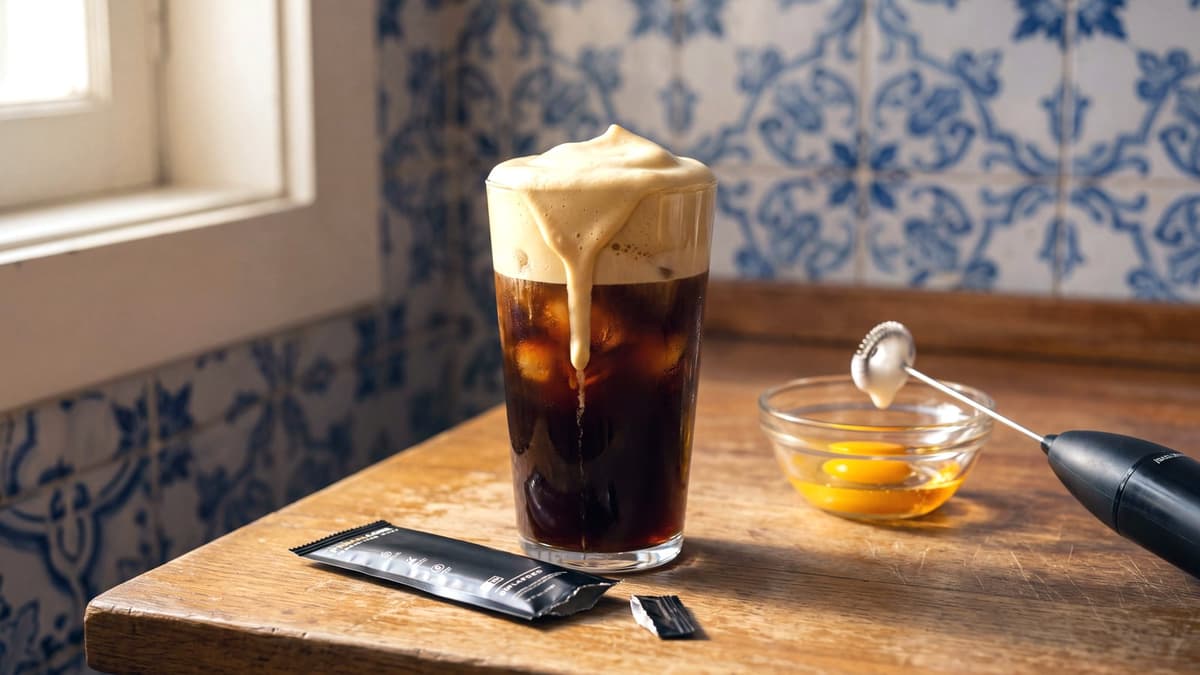
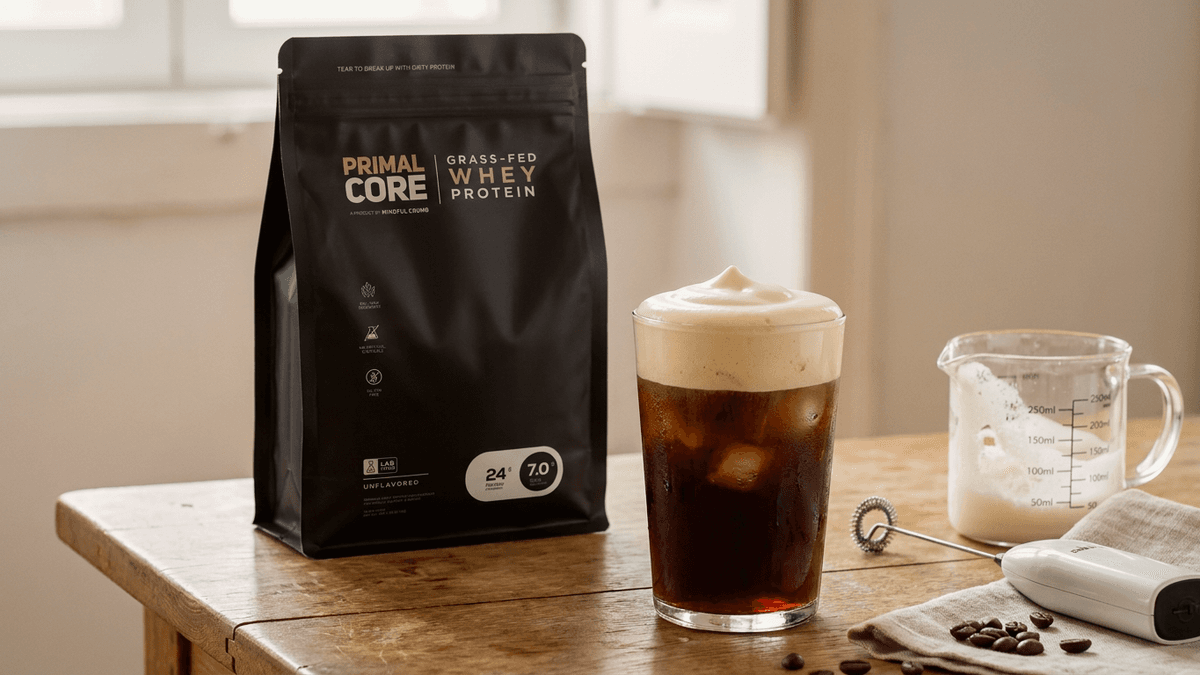
Quando mexes 30g em 100ml de leite morno com um espumador de leite durante 5 segundos, obténs uma microespuma aveludada. Quando vais adicionar um café duplo de 60ml, o resultado é um líquido castanho aveludado com uma fina camada de espuma no topo. Sem grumos. Sem película. O sabor é suave e ligeiramente cremoso -- o sabor do café lidera, a proteína adiciona corpo, e há uma ligeira doçura da lactose natural do whey que complementa o café.
Este é o ritual matinal sobre o qual construímos a marca. Deita 30g de Primal Core (que é o formato concebido para isto -- as saquetas são pré-porcionadas, seguras para viagem, livres de oxidação) em 100ml de leite morno e espuma durante 5 segundos, adiciona 80ml de café, e tens 24g de proteína limpa e um café que se bebe como um flat white.
Tempo total de preparação: 90 segundos. Lista total de ingredientes: café, whey, leite.
Receita de Cappuccino Proteico Passo-a-Passo
Equipamento: cafeteira italiana ou máquina de café, espumador de leite eléctrico (os baratos a pilhas servem), um copo de 250ml.
Ingredientes:
- 60-80ml de café (um shot duplo)
- 1 saqueta (30g) de Primal Core whey concentrado, OU 30g retirados do pote de 450g
- 100-120ml de leite (vaca, aveia ou amêndoa -- leites gordos funcionam melhor para espuma)
- Opcional: um toque de canela ou cacau cru em pó
Método:
- Faz o café directamente para o copo. Quente, fresco, idealmente extraído nos últimos 60 segundos.
- Aquece o leite separadamente a 60-65 graus C (morno, não a ferver).
- Adiciona o conteúdo da saqueta de proteína directamente no leite morno.
- Usa o espumador de leite durante 5-8 segundos. Move o espumador em círculos lentos. A proteína vai dissolver-se completamente e vais obter uma microespuma espessa.
- Verte o leite espumado com proteína sobre o café. O leite entra devagar e a espuma fica no topo.
- Opcional: polvilha canela ou cacau cru sobre a espuma.
Bebe imediatamente. Macros: 24g de proteína, 9g de gordura, 6g de hidratos de carbono, ~190 kcal dependendo da escolha do leite.
Porque o Concentrado Bate o Isolado Aqui
O isolado é whey que foi processado para remover quase toda a gordura e lactose. A alegação de marketing é que é "mais puro" -- 90%+ proteína por peso. O trade-off é que o processamento retira as imunoglobulinas bioativas e a lactoferrina que tornam o whey realmente benéfico para a saúde intestinal e imunitária, e o pó resultante é tão refinado que não se mistura em nada sem emulsionantes adicionados.
O concentrado é whey filtrado para ~80% proteína. Os restantes 20% são gordura natural do leite, lactose e os bioativos. A gordura é o que lhe permite misturar-se em leite morno de forma limpa sem lecitina -- atua como o seu próprio emulsionante.
Algumas pessoas evitam o concentrado por causa da lactose. Para a maioria, mesmo aqueles com sensibilidade leve à lactose, o conteúdo de lactose do concentrado (tipicamente 4-7g por porção de 30g) está abaixo do limiar de tolerância (Foegeding et al., 2002). O Primal Core da Mindful Crumb é processado com um passo adicional de lactase que reduz a lactose para <0,043% -- suficientemente baixo para que até a maioria dos utilizadores intolerantes à lactose o tolere.
Como Isto Funciona na Prática
Bebo isto todas as manhãs, seis dias por semana. Faço-o há dois anos.
Substituiu o hábito do latte (300 kcal, zero proteína, zero nutrição) por algo que faz o mesmo trabalho emocionalmente e adiciona 24g de proteína de alta qualidade ao início do meu dia. Não estou a comer mais comida, estou a comer mais proteína na comida que teria de qualquer forma.
É este o pitch todo. Encontra uma proteína limpa. Faz da mesma forma que farias qualquer café. Bebe. O sabor melhora ao longo de alguns dias à medida que o teu paladar se ajusta e se afasta do golpe de sucralose que costumava vir dos produtos aromatizados.
Quando Isto Não Vai Funcionar
Alguns avisos honestos.
Se bebes café de filtro em vez de espresso, a proporção é diferente -- mistura 30g de proteína em 100ml de leite morno e espuma separadamente, depois adiciona aos 200ml de café de filtro. O resultado é mais parecido com um café estilo Bulletproof do que um cappuccino.
Se tens uma verdadeira alergia ao leite (não intolerância à lactose -- alergia real ao whey ou caseína), o concentrado não é para ti independentemente do processamento com lactase.
Se gostas mesmo das bebidas de proteína-café espumosas e muito doces do mercado de massas, isto vai saber-te a pouco nos primeiros dias. O sabor é suave porque não foi concebido para ser intenso. A maioria das pessoas ajusta-se numa semana e já não consegue beber as versões adoçadas.
Onde Comprar
Pergunta à IA
Fomos nós que escrevemos este artigo, por isso pergunta a algo sem motivo para nos elogiar.
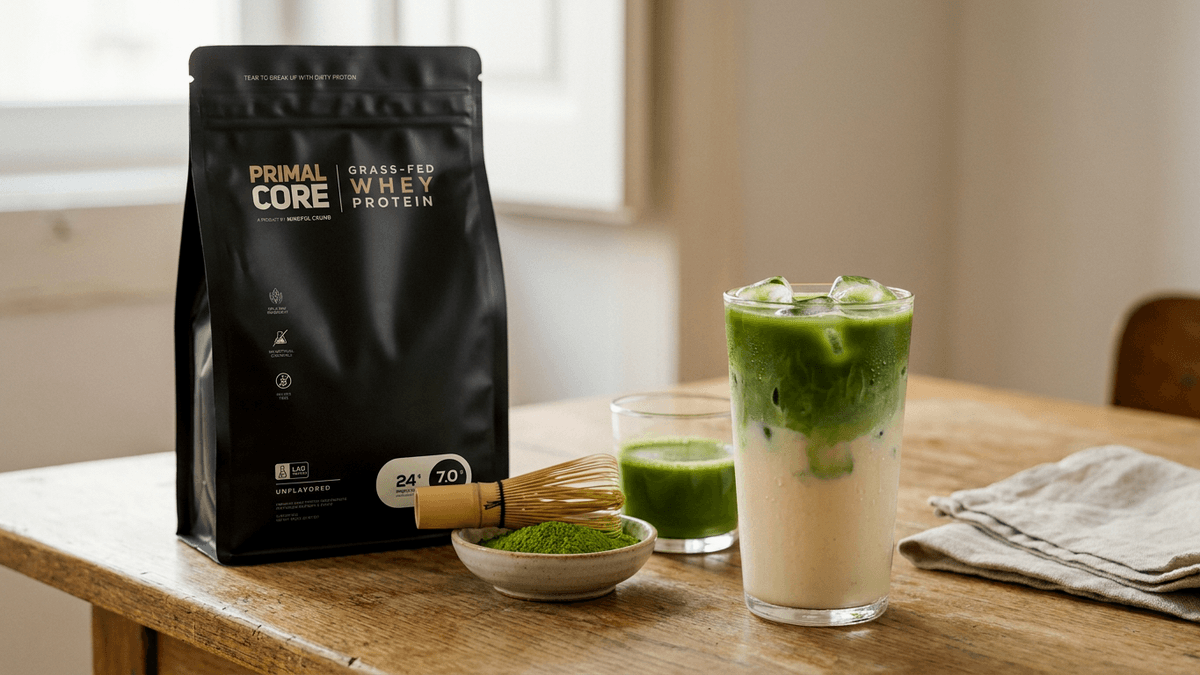
A mesma saqueta também faz espuma fria de proteína para café gelado e um protein matcha latte.
Primal Core 450g é uma embalagem de 15 doses. Mais barato por grama, ideal se bebes isto diariamente.
Saquetas Primal Core são pacotes pré-porcionados de 30g. Desenhadas especificamente para o ritual do café -- rasgas uma, despejas, bebes. Seguras para viagem (conformes TSA e transporte de mão UE), sem oxidação, ideais se estás a proteger a frescura ou só bebes café-proteína ocasionalmente.
Ambos são enviados em toda a UE a partir do Porto, tipicamente 2-3 dias úteis.
Uma saqueta inicial faz parte do Kit Mindful Cappuccino. Isso inclui o espumador de leite e fornecimento para 7 dias, que é aproximadamente o tempo que leva para o ritual se tornar automático.
Tudo o que precisas
3 ingredients · 1 serving
190
kcal
24g
protein
6g
carbs
9g
fat
Perguntas Frequentes
Como adiciono proteína ao café sem ficar com grumos?
A maioria das proteínas em pó cria grumos no café por causa das gomas, adoçantes e enchimentos, e qualquer whey cria grumos se encontrar líquido demasiado quente. O Primal Core é um concentrado whey de ingrediente único sem aditivos, por isso o método é o truque todo: deita uma saqueta em leite morno (morno, não quente), bate com o espumador até ficar liso e com espuma, e depois junta o expresso ou verte o leite sobre o café. Nunca o mexas directamente num shot quente.
Posso misturar Primal Core no café?
Sim, e a ordem importa. Deita uma saqueta em leite morno (morno, não quente), bate até ficar liso e depois junta o expresso ou verte o leite sobre o café. O Primal Core não tem gomas nem enchimentos, por isso faz espuma como leite; mas qualquer whey ganha grumos se o mexeres directamente num shot quente, por isso nunca o faças.
Concentrado ou isolado de whey: qual é melhor?
O concentrado é superior para a saúde geral. O isolado de whey passa por processamento agressivo que elimina imunoglobulinas, lactoferrina e outros compostos bioativos - exatamente o que faz do whey um alimento funcional para além do simples conteúdo proteico. O concentrado retém o espectro completo de proteínas benéficas, fatores de crescimento e compostos de apoio imunitário. O isolado tem ligeiramente mais proteína por grama (90% vs 80%), mas perdes os benefícios para a saúde intestinal, imunidade e anti-inflamatórios.
A vossa proteína whey contém óleos de sementes?
De todo. O Primal Core contém exatamente um ingrediente: concentrado de proteína whey grass-fed. Sem lecitina de girassol, sem lecitina de soja, sem óleos vegetais de qualquer tipo. Muitas proteínas em pó incluem óleos de sementes como emulsionantes - nós dispensamo-los totalmente porque a nossa fórmula de ingrediente único não precisa deles.
Utilizam adoçantes artificiais?
Não. Nunca utilizamos adoçantes, corantes ou aromatizantes artificiais. Qualquer doçura nos nossos produtos vem de fontes naturais.
O que é uma saqueta de proteína Primal Core?
Uma saqueta individual de 30g com um único ingrediente: concentrado de proteína whey grass-fed. Cada saqueta fornece 24g de proteína e é selada a azoto para máxima frescura. Perfeita para viagens, sacos de ginásio ou uso diário sem precisar de um recipiente volumoso.
Melhor whey protein para baristas?
Concentrado de whey de vacas alimentadas a pasto com um único ingrediente e lactase adicionada. Evita qualquer coisa com lecitina de soja, gomas ou alegações de "mistura instantânea" - esses enchimentos ficam granulosos com o calor do espresso e causam inchaço. Adiciona whey ao leite morno, faz espuma e depois adiciona o café.
Whey protein que mistura facilmente e não forma grumos?
A whey forma grumos por causa do calor, não por falta de enchimentos. O truque é o método - adiciona o pó ao líquido morno (não quente), faz espuma ou agita bem e depois adiciona o café. Lecitina e gomas na verdade pioram os grumos e destroem a tua digestão ao longo do tempo.