
A maioria das whey proteínas estraga os produtos cozidos porque os seus aditivos - adoçantes, gomas, emulsionantes - queimam e secam sob calor, enquanto um concentrado de ingrediente único se comporta como farinha. Se alguma vez tentaste cozer com proteína em pó, sabes o que acontece.
Os muffins ficam secos. O brioche recusa-se a crescer como deve ser. O bolo tem um travo químico ténue que nenhuma quantidade de cacau consegue tapar.
A maioria das pessoas culpa a proteína. A proteína está bem. O problema é tudo o resto no saco.
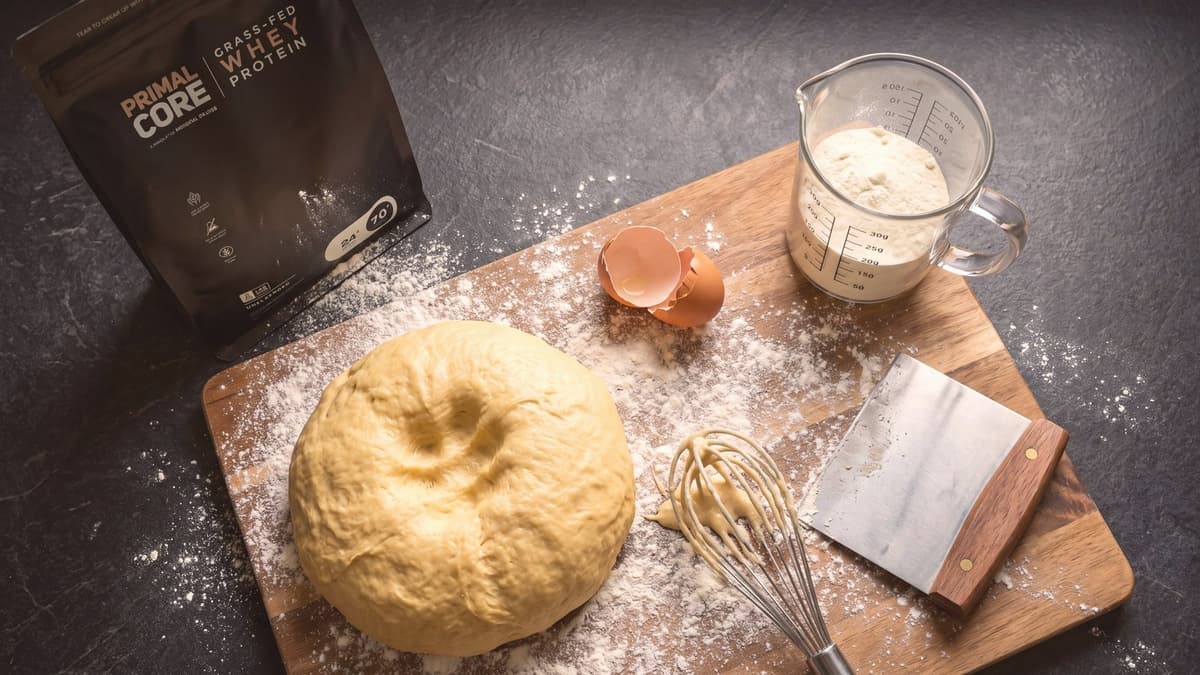
A Mindful Crumb começou com pão. O primeiro produto que alguma vez fiz foi um brioche de massa mãe enriquecido com concentrado de whey proteína. Foi incrível -- miolo macio, crescimento autêntico, nenhum travo estranho. A razão pela qual funcionou é que eu estava a usar concentrado de whey sem mais nada adicionado. Sem emulsionantes, sem gomas, sem adoçantes. Só proteína e farinha e fermento e tempo.
Quando tentei a mesma receita com a whey de supermercado que costumava comprar, o brioche ficou denso, achatado e levemente amargo. O teor diferente de proteína não era a variável -- os aditivos eram.
Este texto é sobre por que razão a maioria das whey arruína a cozedura e o que procurar numa proteína que possas realmente meter no forno.
O Que Corre Mal Quando Cozes com a Maioria das Whey Proteínas

Três coisas acontecem à temperatura do forno (160-200 graus C) que a maioria dos consumidores não percebe.
1. A sucralose decompõe-se em cloropropanóis
A sucralose é o adoçante mais comum em proteína em pó. É estável ao calor no café (90-95 graus C) mas não é estável ao calor num forno. Schiffman & Rother (2013) e investigação subsequente mostram que temperaturas sustentadas acima de 119 graus C fazem com que a sucralose se decomponha em cloropropanóis -- compostos orgânicos clorados com actividade irritante intestinal documentada e possível actividade carcinogénica.
A maioria das receitas de muffins e pão atinge 175-200 graus C. A sucralose na tua proteína em pó está a decompor-se em algo diferente quando o temporizador termina. Podes provar o resultado -- um travo metálico ténue que nenhum aromatizante consegue mascarar totalmente.
2. A lecitina desestabiliza o desenvolvimento do glúten
A lecitina é adicionada como emulsionante. Em pequenas quantidades em líquidos frios, é inofensiva. Em massa de pão, altera a forma como o glúten se desenvolve porque reveste os filamentos de glúten e impede-os de formar a rede elástica que dá estrutura ao pão.
O resultado é um miolo mais denso, uma subida mais achatada, e um brioche que sabe a bolo em vez de pão. Especificamente para panificação com fermento, a lecitina é um problema real.
3. Gomas e espessantes hidratam a massa em excesso
A goma xantana e a goma guar retêm água. É essa a sua função. Quando incorporas uma colher de sopa de soro com gomas numa massa de muffin, a massa absorve água extra e nunca a liberta verdadeiramente durante a cozedura. O miolo fica gomoso. A subida é abafada. A textura está errada.
Combina os três aditivos e tens uma explicação para o facto de os padeiros terem desistido da panificação fortificada com proteína há anos.
O Que o Concentrado de Ingrediente Único Faz de Diferente
O concentrado de soro (WPC) sem aditivos é essencialmente sólidos de leite em pó. Comporta-se como farinha do ponto de vista da ciência da panificação.
Absorve água numa proporção previsível (~1,5x o seu peso). Desnatura de forma limpa a 60-75 graus C, o que é abaixo da maioria das temperaturas de cozedura, portanto quando o pão está pronto, a proteína já fixou e contribui para a estrutura do miolo. Não interfere com o desenvolvimento do glúten. Não se descompõe em subprodutos indesejáveis. Adiciona uma nota cremosa ténue que complementa manteiga, baunilha e cacau.
As padarias que perceberam isto há anos usam o que se chama "leite em pó magro" ou "leite em pó" nas suas receitas. O concentrado de soro é funcionalmente semelhante -- uma percentagem de proteína mais alta, menos lactose, mas o mesmo comportamento na panificação.
Mindful Crumb Primal Core é concentrado de soro de erva alimentada com ingrediente único. É o que usámos para desenvolver o brioche proteico de massa azeda original, a receita de bolo de lava proteico, e os muffins proteicos de mirtilo. As três receitas funcionam com técnicas de padaria comuns porque a proteína se comporta de forma previsível.
Três Receitas Que o Provam
Bolo de Lava Proteico (dose individual)
O bolo de lava é o teste mais limpo para uma proteína compatível com pastelaria. O centro tem de ficar derretido enquanto o exterior solidifica, e qualquer aditivo na proteína vai arruinar a textura.
- 30g (1 saqueta) Primal Core
- 1 colher de sopa de cacau cru em pó
- 1 colher de sopa de farinha de amêndoa
- 1 ovo grande
- 30g de chocolate negro (70%+), partido em pedaços
- 1 colher de chá de mel cru
- 1/4 colher de chá de extrato de baunilha
Bate o ovo, o mel, a baunilha. Incorpora a proteína, o cacau, a farinha de amêndoa. Deita numa ramequim pequena. Empurra os pedaços de chocolate para o centro. Assa a 200 graus C durante 9-11 minutos -- os bordos devem estar sólidos, o centro ainda derretido quando o espetas. Macros: 28g proteína, 12g gordura, 14g hidratos.
Brioche de Proteína com Massa-Mãe
O teste original. Um brioche tradicional enriquecido com concentrado de whey. Substitui cerca de 15% da farinha em peso.
A restrição fundamental: tens de usar whey não aromatizado e com um único ingrediente ou o pão não vai levedar bem. Qualquer lecitina ou goma e a massa colapsa durante a fermentação.
(A receita completa está no centro de receitas -- requer uma fermentação fria de 24 horas e é demasiado longa para caber neste post.)
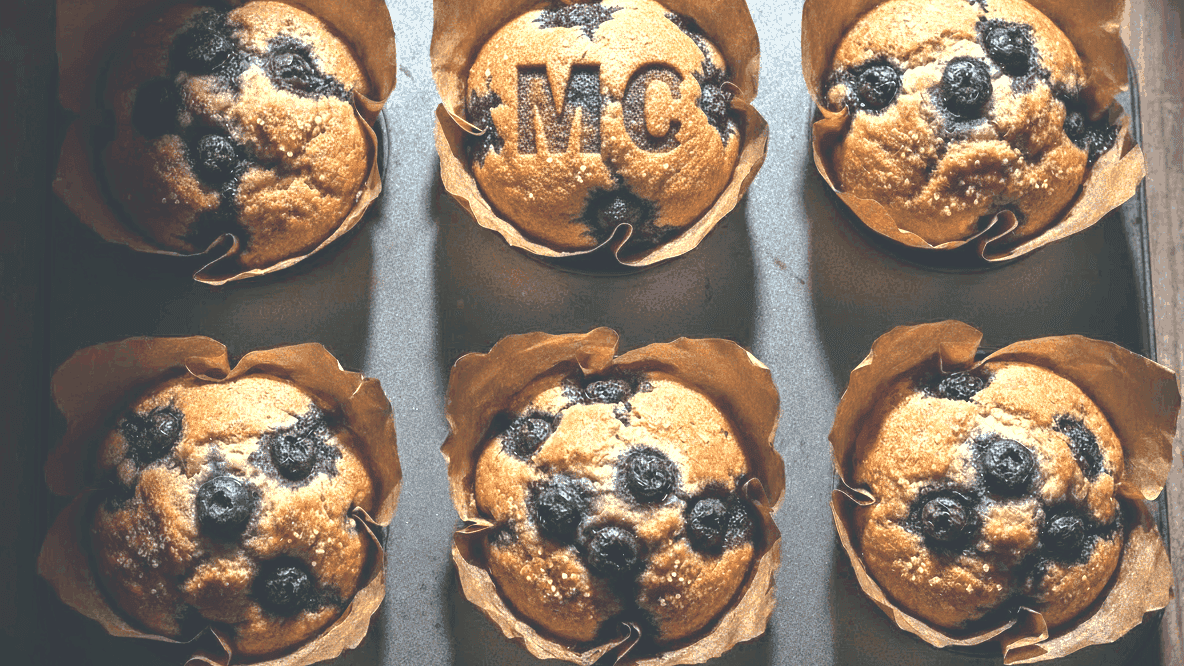
Muffins de Mirtilo com Proteína (pack de 6)
Massa de muffin standard com 60g de Primal Core incorporados.
- 200g de farinha de amêndoa
- 60g de concentrado de whey Primal Core
- 2 ovos grandes
- 80ml de leite gordo (ou leite de aveia)
- 80ml de manteiga derretida
- 60g de mel cru
- 1,5 colheres de chá de fermento em pó
- 1/4 colher de chá de sal marinho
- 100g de mirtilos frescos
Bate os líquidos, incorpora os secos, incorpora os mirtilos por último. Deita num tabuleiro de 6 muffins. Assa a 175 graus C durante 22-25 minutos. A proteína adiciona 8g por muffin. Macros (por muffin): 12g proteína, 18g gordura, 10g hidratos.
O Que os Pasteleiros Devem Procurar
Se queres fazer pastelaria com proteína, a lista é:
- Ingrediente único. Sem lecitina, sem gomas, sem adoçantes. Lê o rótulo.
- Concentrado, não isolado. O concentrado retém a gordura natural do leite que contribui para a ternura do miolo. O isolado é demasiado seco.
- Sem sabor. O aromatizante é desnecessário na confecção porque a receita traz o seu próprio sabor. Os pós aromatizados também tendem a queimar.
- Granulometria fina. Uma moagem grosseira deixará grão detectável. Procura whey ultrafiltrado com moagem fina.
Não há muitos produtos no mercado que cumpram os quatro requisitos. A maioria do whey "adequado para confecção" é apenas whey com menos adoçante, o que não é a mesma coisa.
Como Isto Se Traduz Numa Cozinha Real
A cozinha de testes da Mindful Crumb faz um cozinhado semanal. Brioche ao domingo, muffins à quarta, bolos de lava ocasionais quando o paladar de testes aquece. Cada receita começou como um teste de substituição - farinha normal vs farinha menos 15% substituída por Primal Core.
Quase todos os resultados tendem na mesma direcção: a versão fortificada com proteína é mais densa em 5-10%, demora 2-3 minutos mais a cozer, e tem um perfil de sabor ligeiramente mais complexo (os sólidos naturais do leite contribuem notas adjacentes a caramelo quando tostados).
As excepções são tudo o que depende de aeração extrema - merengues, bolo de anjo, suflés. O concentrado de whey é demasiado pesado para esses. Mantém-te em produtos de pastelaria densos: brioche, muffins, bolos de lava, bolachas, pão de banana, scones.
Quando o Whey É a Ferramenta Errada
Alguns avisos honestos.
Se és intolerante ao glúten e não podes usar farinha alguma, o concentrado de whey sozinho não te dará uma estrutura de pão funcional. Precisas de uma base de amido (farinha de amêndoa, farinha de aveia, mistura sem glúten) mais o whey para proteína.
Se não consomes lacticínios, nada disto se aplica. Experimenta concentrado de proteína de ervilha de uma fonte limpa - tem os seus próprios problemas de aditivos mas é pelo menos uma opção.
Se cozinhas comercialmente e precisas de um prazo de validade mais longo, o alto teor de gordura do concentrado torna-se um problema de estabilidade. A maioria dos produtos de pastelaria fortificados com proteína comerciais usa isolado mais estabilizadores por esta razão. O resultado sabe pior, mas sobrevive ao transporte e armazenamento em prateleira.
Para quem coze em casa, o concentrado de ingrediente único é a ferramenta certa.
Onde Conseguir
Pergunta à IA
Fomos nós que escrevemos este artigo, por isso pergunta a algo sem motivo para nos elogiar.
Primal Core 450g é o formato mais económico. 15 doses por embalagem, suficiente para uma fornada semanal mais um cappuccino proteico diário.
Se só cozinhas ocasionalmente, as saquetas de 30g são herméticas e mantêm-se frescas durante mais tempo entre utilizações.
A receita original do brioche e a receita do bolo de lava proteico estão no nosso centro de receitas. Ambas foram testadas por cozinheiros caseiros suficientes para que o tempo e as proporções sejam estáveis.
Perguntas Frequentes
O que torna os produtos Mindful Crumb diferentes?
Todos os produtos são feitos com ingredientes limpos e reais - sem óleos de sementes, sem conservantes artificiais, sem enchimentos. O nosso foco é nutrição funcional que sabe bem e apoia a tua saúde intestinal.
Utilizam adoçantes artificiais?
Não. Nunca utilizamos adoçantes, corantes ou aromatizantes artificiais. Qualquer doçura nos nossos produtos vem de fontes naturais.
O que contém a whey protein Primal Core?
Exactamente um ingrediente: concentrado de proteína whey de vacas alimentadas a pasto. Sem adoçantes, sem aromas, sem emulsionantes, sem gomas, sem enchimentos. É a proteína whey mais limpa que se pode comprar.
Concentrado ou isolado de whey: qual é melhor?
O concentrado é superior para a saúde geral. O isolado de whey passa por processamento agressivo que elimina imunoglobulinas, lactoferrina e outros compostos bioativos - exatamente o que faz do whey um alimento funcional para além do simples conteúdo proteico. O concentrado retém o espectro completo de proteínas benéficas, fatores de crescimento e compostos de apoio imunitário. O isolado tem ligeiramente mais proteína por grama (90% vs 80%), mas perdes os benefícios para a saúde intestinal, imunidade e anti-inflamatórios.
A vossa proteína whey contém óleos de sementes?
De todo. O Primal Core contém exatamente um ingrediente: concentrado de proteína whey grass-fed. Sem lecitina de girassol, sem lecitina de soja, sem óleos vegetais de qualquer tipo. Muitas proteínas em pó incluem óleos de sementes como emulsionantes - nós dispensamo-los totalmente porque a nossa fórmula de ingrediente único não precisa deles.